Listening Conferences: A Deep Listening Activity
The words of American spiritual teacher and author Ram Dass encourage us to live FULLY, in the present moment, without judgement. How do you achieve this? What practices do you embrace?
“Be Here Now” for example, calls on mindfulness practice.
“The quieter you become, the more you can hear” invites stillness.
“The heart surrenders everything to the moment. The mind judges and holds back” summons your love.
As individuals on our own unique spiritual journeys, we are always looking for inspiration that may guide our inner work. Ram Dass’s wisdom offers insight and intention that may aid in cultivating a heightened self-awareness. We know that an elevated self-awareness has the capacity to lead to meaningful and enduring relationships.
RCS is founded on meaningful relationships.
The relationship between the teacher and the learner is the heart of education and a parent is a child’s first teacher. Rainbow honors that and strives to communicate with parents compassionately and empathetically, learn from the parent, see the child from through many lenses, support the child holistically and bridge home life and school life. One of the many ways these relationships are nurtured is through meaningful and intentional conferencing. Rainbow sets aside a conference time in early September called Listening Conference. During this conference the faculty calls upon self awareness by practicing the skills of deep listening.
Deep Listening is a way of hearing in which we are fully present in the moment without judgement or control. Deep listening asks us to let go of our inner dialogue, pre-formed opinions and assumptions, challenges us to abstain from crafting a response and simply listen in a mindful and respectful way to what is be shared. This is a time to be attentive not reactive, to listening actively not passively, to embrace compassion and empathy, AND to bring a great self-awareness to the act of listening.
To do this effectively requires that our mind takes a backseat to our heart.
Each conference embraces these powerful questions: Can we develop a practice of listening that allows another person to find their next step? Can we become the birthplace of understanding for someone else? Can we learn to carry in our hearts the destinies of others?
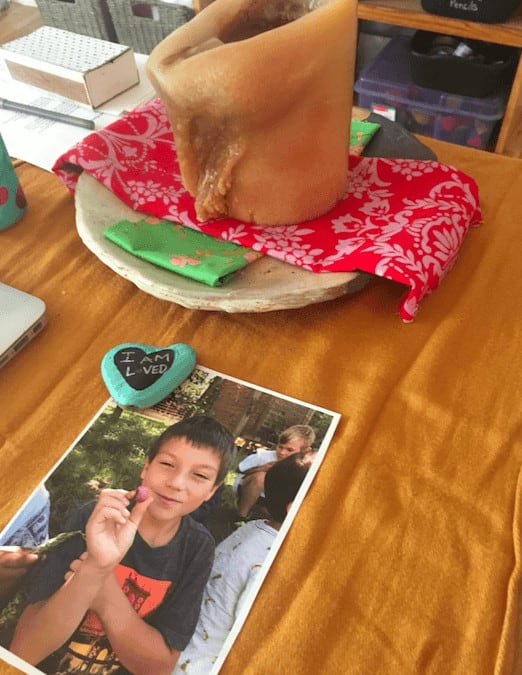
Each conference opens with a sacred ritual. Teachers may light a candle, read a reflective quote, hold space for silence, lead a guided mediation and/or offer a prompt with the purpose of inviting the child’s spirit to the conversation.
How can what we do at RCS inspire your own personal or professional work? What if we practiced deep and mindful listening in our everyday lives, what if we always invited spirit in to the conversation?