by Cynthia Calhoun | Sep 4, 2018 | News
Rainbow Has Solar Power
Have you seen what’s over on the roof of the auditorium? Getting solar power was one of those far-off dreams until…it became reality!
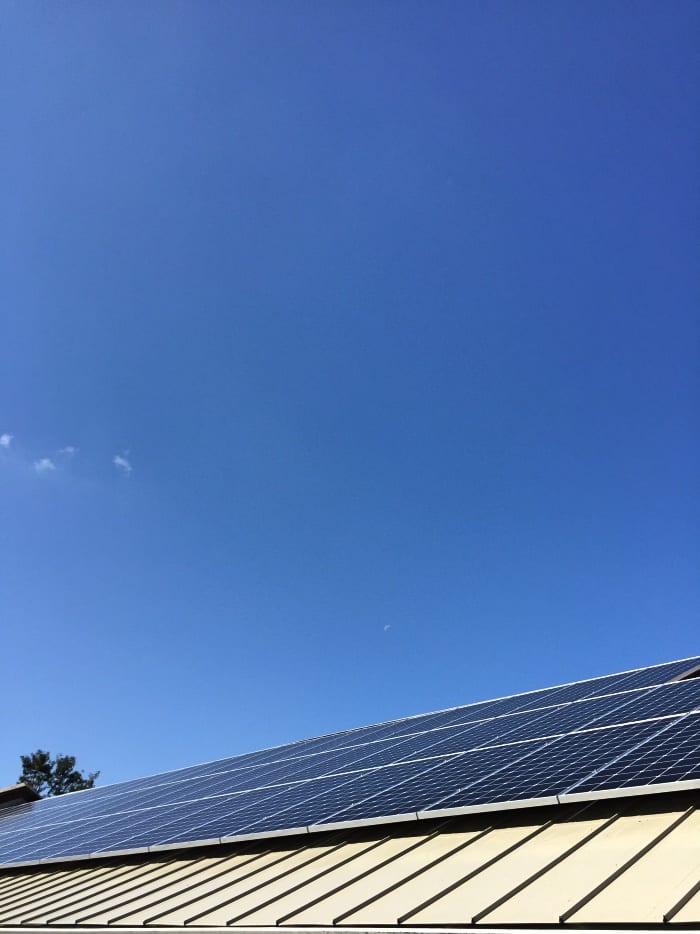
In 2017, an anonymous donor awarded Rainbow the funds to get solar panels installed. These are located on the east side of the auditorium. This donation will help to reduce the school’s reliance on fossil fuels.
In fact, the installation of these solar panels will provide a benefit of 60+ years. The bulk of Rainbow’s utility bills go toward the auditorium. It’s a big space. Heating and cooling can get expensive.
There’s also the environment to consider. Rainbow will reduce its carbon footprint by huge margins. The solar panels help to reduce the school’s utility expenses while helping the planet. In about 30 years, the panel efficiency will go down some, but will still yield significant energy savings.
Interconnection
Over the course of the process, one of our Rainbow parents had been in touch with representatives from Duke and other organizations to get the interconnections turned on. “Interconnection” means how a “distributed generation system, such as solar photovoltaics (PVs), can connect to the grid.” (Source)
A local solar installation company, Sugar Hollow, installed the solar panels late in 2017. The school had to wait until 2018 to turn on the interconnection. This was due to a rebate from Duke Energy, which also helped with significant savings for the school.
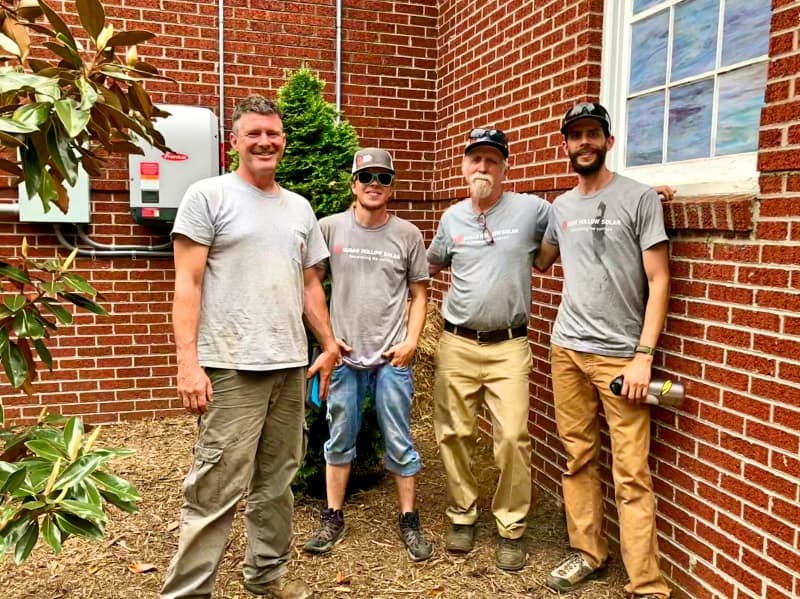
When Sugar Hollow installed the solar panels, they felt really connected to the school and what it stands for. Sugar Hollow is a living wage certified company and their philosophy parallels Rainbow’s mission:
At Sugar Hollow Solar, we care deeply about moving our society towards a more sustainable future – not just in the environmental sense but in how it relates to overall quality of life, now.
The panels they used for installation were manufactured in the US, as well. As a company, they work hard to source everything here in the US.
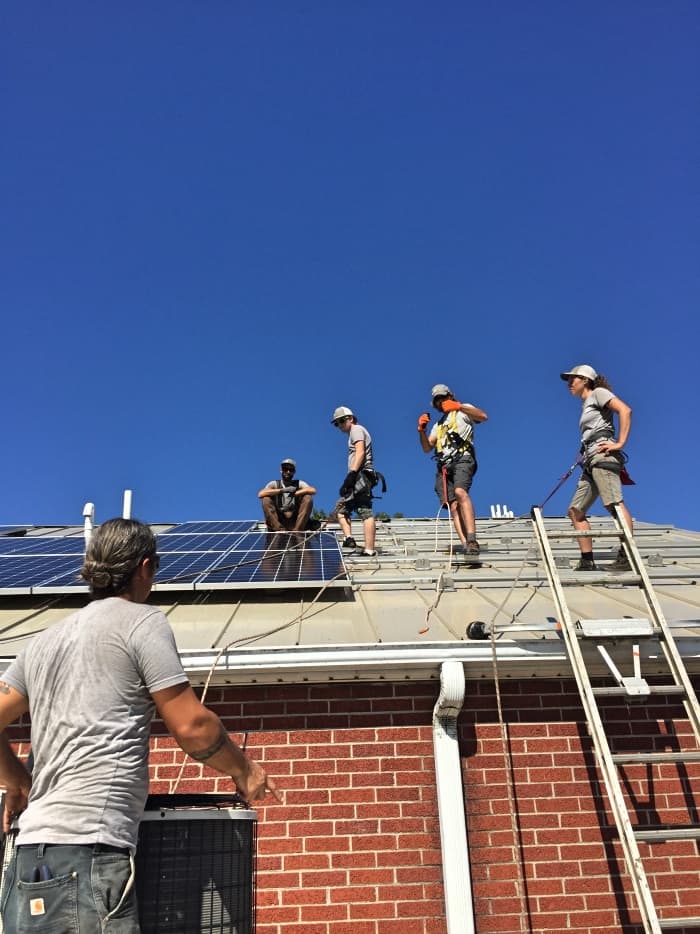
The Sugar Hollow team installing solar panels on top of the auditorium.
Because this was the first year that Rainbow started the interconnection process, it took awhile to get the power systems connected, approved and ready to go. When it came time to “flip the switch,” the whole school community was so thrilled and the anticipation was palpable. Rainbow elected to have a school-wide celebration to commemorate the event.
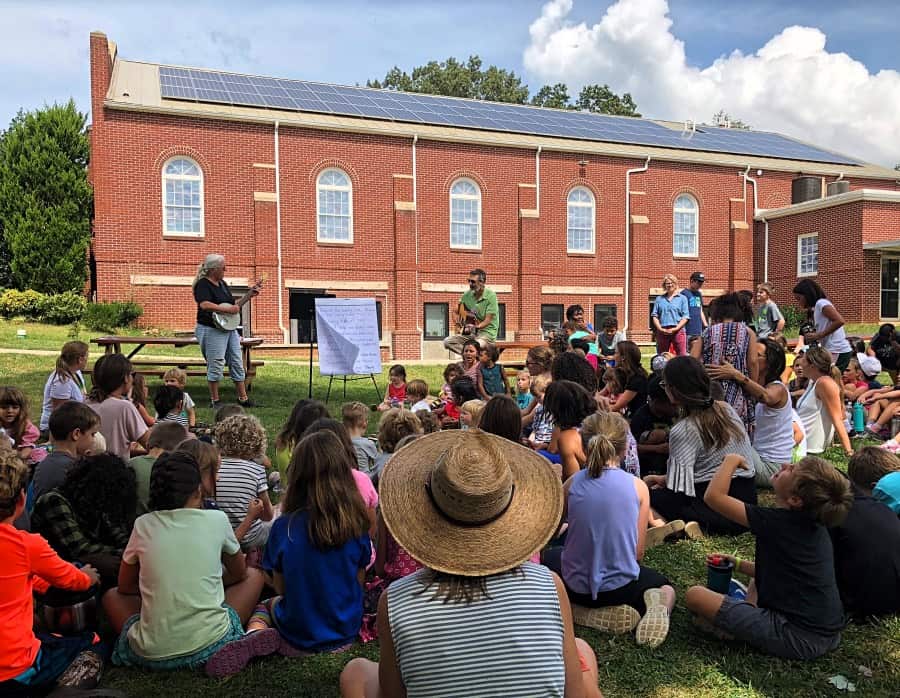
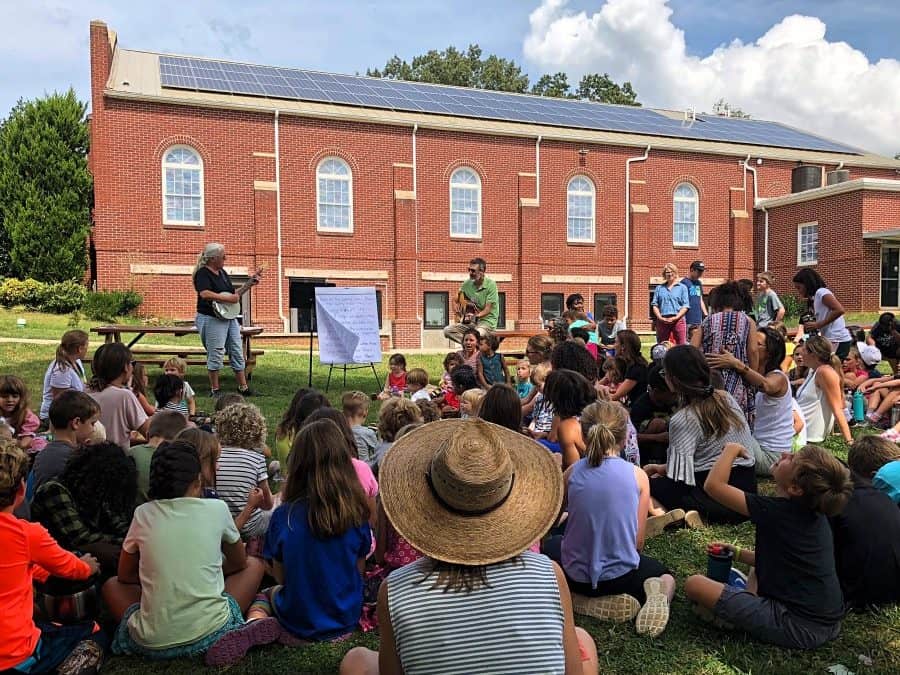
Students gathered at the auditorium to view the solar panels and have a “solar song circle” – it was RCS’ first song circle of the year.
Sugar Hollow also joined us for that celebration. Now, students will be able to tell exactly what the solar panels are doing moment by moment that demonstrate power output and usage. Check out the Solar Power Resources section on our website. It has the link to the energy performance of the solar panels.
Since the founding of Sugar Hollow, they have surpassed 1.5 gigawatts hours of energy generation – from the sun! That’s like planting 28,931 trees!! We have so much gratitude for these folks and the work they do!

by West | Jul 16, 2018 | News
Freedom and Creativity
Summer is a time when folks often invite freedom and creativity back into their busy lives. Maybe they pick up a project that has taken a back seat, take a workshop, or reconnect with a lost skill, art or craft. Maybe they learn, read, or try something new. Summer is a great time to nurture the young inventor in each child.
The long days of the season allow more time to drop into open-ended, free and constructivist play. Making time for STEM concepts, for inventing and engineering can tap into imaginations, foster creativity and enhance problem-solving capacities. You can try offering this space to them by spending some time exploring, asking questions, creating and building. Allow for simple invention and engineering projects by providing tools and materials such as items found in a junk drawer, recyclables, or simple office supplies.
Once you have ignited their passion for inventing, try stretching their thinking with various books.
What do you do with an Idea? By Kobi Yamada
This is a great book a child’s brilliant idea to bring it to the world. After reading, you can begin by asking what an animal needs to survive. Then you might ask what more the animals need to grow and thrive. Continue the discussion by likening animal growth to “idea growth.” State that our ideas can grow, thrive, survive, and evolve by nurturing them. Follow up with a discussion about the author’s message: stick with your idea, follow it through, persevere and your idea could change the world.
Not a Box
Next time you read with your child, you can try reading Not a Box by Antoinette Portis. This is a fabulous book about a rabbit with a very BIG imagination. After completing the book, you can discuss with your child how imagination and creativity are magical elements of who they are. Talking about different perspectives allows children to see that showing and sharing are part of what makes them unique and special.
Next, lay out a box of recyclables or knickknacks and let your child choose one or more items to repurpose. Ask your child to reimagine how this ordinary object can become extraordinary. Encourage them to use their artistic skills to reimagine it by creating something new. You may also want to extend their learning by inviting them to use the materials and resources to create a 3-D representation of their new invention. Once they have finished, it’s always quite powerful to spend time reflecting about it together.
Implications of Your Work
Children appreciate “thinking outside of the box.” They thrive off of creation and love to deep dive into their own imaginations. They approach STEM activities, such as this one, in the most authentic way when they know that their learning environment is supportive and safe. Children are most creative when the learning environment highlights many perspectives, emphasizes process over product, and failure as opportunity.
by West | Jun 19, 2018 | News
Rites of passage are important, sacred ceremonies that highlight a transitional period in a person’s life.
In many cultures, tribes and soceities around the world, children engage in various rites of passage. Often these are times when a child is recognized for passing though the threshold toward adulthood. Graduation at Rainbow Community School serves as an integral rite of passage for our graduating Omega Middle Schoolers.
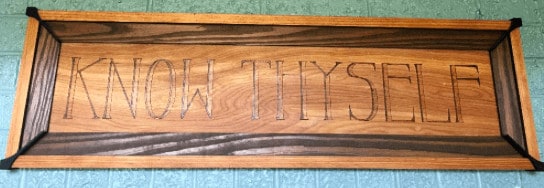
Preparation for this rite officially begins as they join the Omega program. Subtle and more obvious practices support each Omegan’s readiness. For example, each day that middle schoolers pass through a physical threshold. As enter the building, they pass under a wooden panel inscribed with “Know Thyself.” Additionally, their arrival is also marked with a sacred time called Centering; this time is used for grounding, centering, pondering life’s big questions. Lessons, activities and learning experiences throughout the day not only foster a culture of connectedness but support the work of nurturing the child to individuate- to
Know Thyself.
These opportunities, although grounded in the safety of community, encourage personal identity development, person spirituality and ultimately- wholeness. According to decades of research by Dr. Lisa Miller, head of clinical psychology at Columbia’s Teachers College, teens who have the benefit of developing a personal spirituality are 80% less likely to suffer from ongoing and recurring depression and 60% less likely to become substance abusers. To that end, it is reasonable to suggest that spirituality is indeed the cornerstone for mental health and human well-being. Intentional rites of passage are but one way to nourish that health.
To KNOW THYSELF is to answer these questions:
Who am I?
Who are you?
Why am I here?
What is my purpose?
Graduating Omegans write commencement speeches that reflect on their time at Rainbow and acknowledge their gratitude, growth, challenges, hopes and dreams. Each student, as part of the rite, share these speeches publicly. This public sharing is an amazingly brave yet vulnerable challenge.
But more importantly, the words of wisdom spoken by these young adults are nothing less than profound.
They are informed by years of social, emotional and spiritual engagement and learning. They are guided by opportunities to explore life’s big mysteries and ponder personal purpose. They are rooted in a a collective AND personal identity.
If you are curious what happens when soul is invited into the classroom, please click here to listen to Noah Mraz’s graduation speech.
Please also consider:
- What are the implications of integrating rites of passage, existential questioning and the spiritual domain into your own work with children?
- What are you already doing that serves the spiritual development of your students? What more can you do?