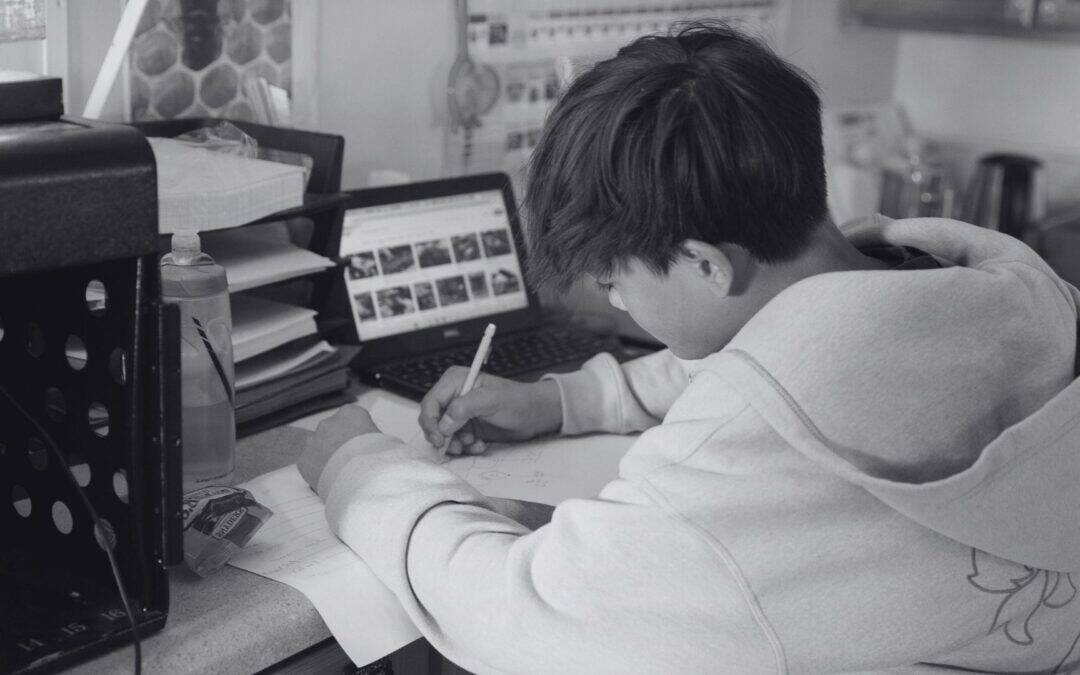
Executive Functioning Skills

Executive Functioning Skills

The Director’s Kaleidoscope: Exploring the many colorful aspects of learning
at Rainbow Community School

Executive Functioning Skills

Introduction to Executive Functioning

Hi, my name is Susie Fahrer, and I am the Executive Director of Rainbow Community School and Omega Middle School. One of the topics that is often discussed with our teachers and families is supporting a concept called “executive functioning skills” in the classroom. This is a term that has come to light to really embrace a set of skills or habits of learning that support a young person and their capacity for long-term planning, flexible thinking, motivation, task organization, prioritization, all of the tools that really end up being life skills, regardless of their choice of career path. They’re the tools that help us all move through the world, particularly a world now with such a high-paced level of information, to process and attend to with a level of confidence and capacity.

Classroom Structures that Support Executive Functioning

So what does that look like in the classrooms at Rainbow? Well, for many of our students, all the way starting in preschool up through our middle school, the structure of their classroom is designed for clarity of time management, scheduling, and expectations. So that looks like having some type of daily schedule visible for the students, typically one that they often engage with and dialog about with their teachers. This step alone helps our students anticipate the flow of their day, prepares them for times when a change in their typical schedule is coming and helps them understand, the general first, then nature of their school experience and helps us move through both really desirable tasks with a level of anticipation and challenging tasks with a level of capacity that we understand they are a period in time throughout a more global experience of our day.

Using Timers and Visual Tools

Equally, many teachers use timers and visual tools like a sand timer or a timer that might show a countdown of a block of time. Now, again, this is not to build a sense of urgency, but quite the opposite: to help students recognize and plan for the amount of time they have for a particular task.

For a child who is facing something that they are struggling to be motivated to participate in, maybe because it’s a challenging task or one that requires particular skills that they’re still developing, a timer can be a real relief. We might suggest, “Okay, all I need you to do is work on this task for the next five minutes, and then I’m going to check in with you and see how you’re doing.” That alone creates a relationship with the teacher and a response that offers a level of support, recognition, and affirmation that, yes, this task is hard, but “I also believe that you are capable and can do it.”

For our students that sometimes get lost in a project, seeing that there is a timer that is counting down the amount of time can help prepare them for that transition that’s coming. Most likely, when we are deep in learning, it might mean that we aren’t going to completely finish a project, and understanding how to pause in the midst of something, close it out, and prepare it for the next time you have the ability to drop deeply into that work is another skill that we grow in our students.

Building Planning and Organization Skills

We use things like calendars and planners, and as students get older, this might even be, engagement with digital platforms that help them see the scope of a week, the scope of a month, both with, due dates that they’re in charge of, as well as, the amount of time they might be given both in school and expectations outside of school for completing large projects.

This type of planning is a critical skill that they’re going to need far beyond our doors.

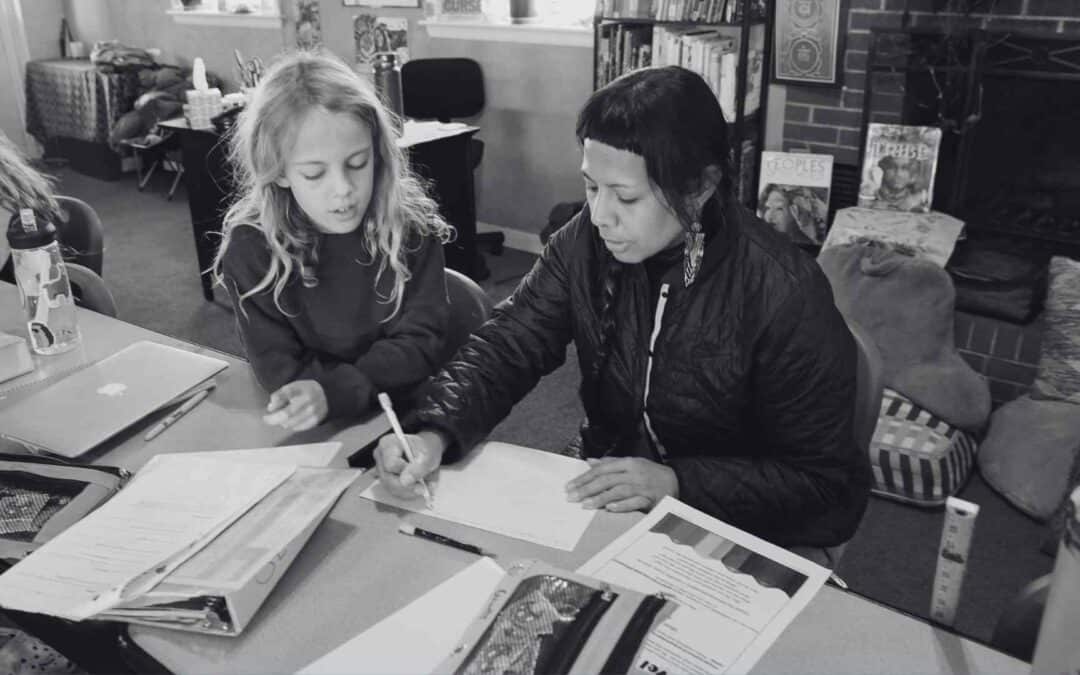
Equally, students spend time in conversations about prioritizing tasks. A highlighter can be a student’s best friend, a very simple tool, but it can help note which aspects of a larger project are necessary right now. Or how many problems of this math activity are critical for you to finish in “this amount of time that we have together.”

Those kinds of tools, again, can help students prioritize where they’re putting their energy and learn that skill, where initially it’s coming with the facilitation of a teacher or an adult in the classroom. Eventually that tool, those tools are being taken with the students so that they can apply them on their own as they engage in tasks with a little bit more autonomy in the future.

Technology, AI, and Executive Functioning

It goes without saying that the skills of executive functioning are also ever-evolving, particularly with the inventions of AI and the capacity to start to engage technology as a tool. At Rainbow, we are conscious consumers of technology and recognize that the role of AI in supporting students with efficacy in breaking tasks down and chunking their larger project-based learning activities is a real asset.

Yet at the same time, we want to ensure that the heart of what they’re learning, the sensation of pushing through the capacities for rigor, the thought process it takes to prioritize and plan, that those tools are still being built in them, regardless of the aids that are available and continue to become available in the future.

Supporting Executive Functioning at Home

If you have questions about executive functioning, that’s something that our teachers are experts on, and we look forward to talking with you.

Also attached are some suggestions on how to support your child at home with executive functioning skills. As always, we welcome you to our campus and look forward to connecting with you soon. Be well.

Learn More

Continue exploring ideas from our Director’s Kaleidoscope series, including topics like executive functioning, student autonomy, and project-based learning.
Play Based Learning: Why Play Is the Foundation of Education

Play Based Learning: Why Play Is the Foundation of Education

The Director’s Kaleidoscope: Exploring the many colorful aspects of learning
at Rainbow Community School

Play in Childhood

Hi, my name is Susie Fahrer, and I’m the Executive Director of Rainbow Community School and Omega Middle School.

One of the things that we often associate with childhood is play. As a school, we recognize that play is something that is critical to children’s learning. In our Early Childhood Program, our students spend time outdoors and in their classrooms that are designed for imagination, creativity, and autonomy, to come out and develop through play-based learning.

What does play-based learning look like?

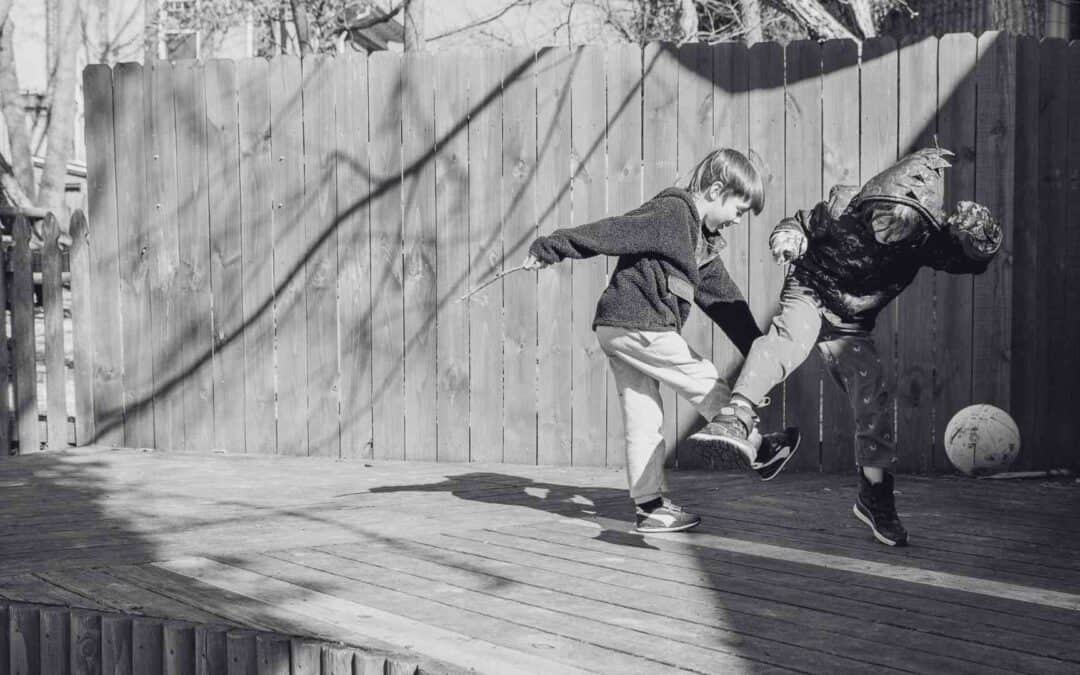
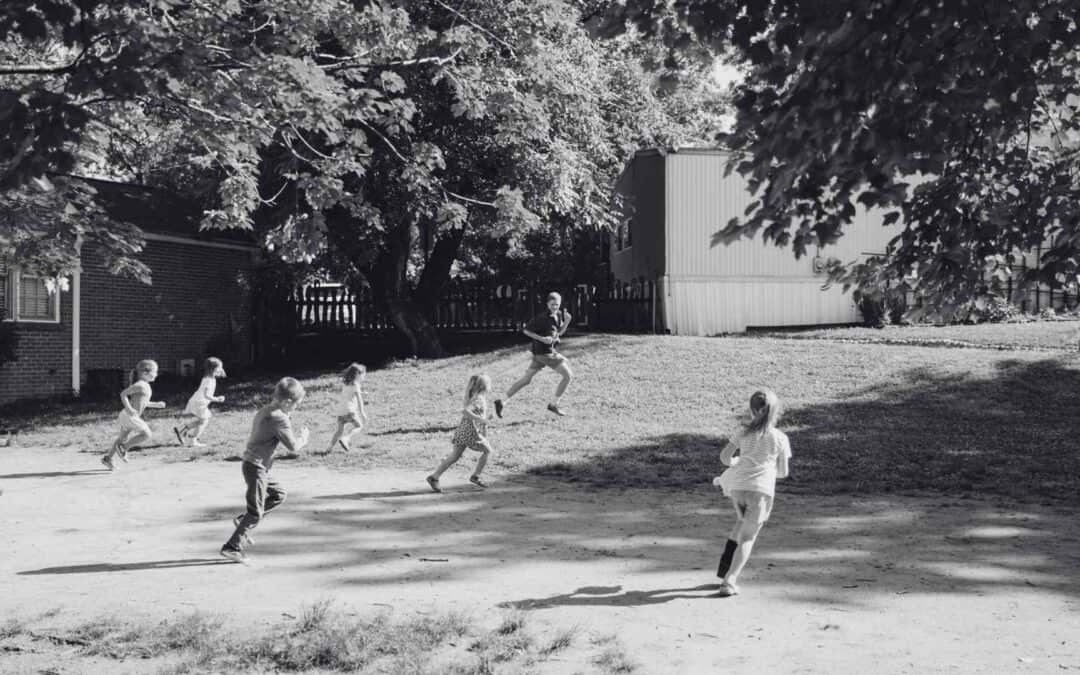
So what does that really look like? Well, on the playground, our children often engage the spaces around them and their peers in storytelling, in creative use of the materials.

A mud kitchen becomes a restaurant. The sandbox becomes a place of building community and castles. The structures for climbing might be mountaintops, or we might even see children transform themselves, imagining that they are animals, exploring the world around them – engaging with the trees, the rocks, and the grass.

Problem Solving Through Play

All of this is showcasing a child’s natural ability to see themselves as problem solvers, to think curiously about the spaces around them. In the classroom, this is the time when Play-Doh becomes an engagement of number, shape, size, and all of those pre-mathematical concepts. Block-building explores scientific knowledge of balance, structure, physics, and movement.

Students see story and language all around them. The creative play area might become a bank or a store. They start to explore these ideas of community, which they’re making meaning out of, every day in their daily lives.

Teachable Moments

Our teachers are trained to take these moments and really use strategies of questioning, dialogue, and play as a way to engage our students in deeper learning, but also as a way for them to be leaders and thinkers on their own.

Think about a time when you were learning something, and someone simply told you how to do it. That can be really efficient and sometimes necessary. But now imagine a time when you struggled through something. You were doing it on your own, you were exploring it, or perhaps it was an activity. Maybe it was your first time skiing or learning how to drive a car.

These were all things that took your ability to engage and “try.”

Play as a foundation of learning

Play-based learning is the beginning of those dispositions. As students matriculate, the imagination continues. But it’s built into project-based learning, their ability to explore literacy through creating projects that showcase the critical elements of a story, or the idea that they can create games that help practice mathematical skills.

It increases their social relationships through learning, but it also continues to build their confidence in recognizing that learning is about taking positive and playful risks.

Teachers and Staff Engage in Play

Equally, we create spaces for our staff here to engage playfully with one another. On Wednesdays, we have professional development, and part of that process is creating spaces for open-ended thinking, collaboration on lesson planning, and, really, at the heart of it, using the disposition of play to bring joy to the work we do with ourselves and with our children.

I hope that part of what you connect to out of this video is an opportunity to think about how you can bring more play not only into your engagement with your child, but also into your own life.

An Invitation

We all have those experiences where play has uplifted something about what we’ve learned, what we do, and how we engage with the world around us. It’s a powerful tool for supporting creativity, joy, and the capacity for each of us to recognize the ownership of our own learning. If you want to learn more, look at the attached file.

You can engage in a tour with us. Come and visit. Or if you’re already here, as always, my door is open. Let’s have a conversation about how you can use play in engaging your child in their learning journey here at Rainbow. Have a wonderful day!

Learn More

Continue exploring ideas from our Director’s Kaleidoscope series, including topics like executive functioning, student autonomy, and project-based learning.

Brain Breaks: A Technique for Meeting Student Potential

Brain Breaks: A Technique for Meeting Student Potential

The Director’s Kaleidoscope: Exploring the many colorful aspects of learning
at Rainbow Community School

What Are Brain Breaks?

Hi, my name is Susie Fahrer, and I am the executive director of Rainbow Community School and Omega Middle School. One of the things you’ve probably heard people talking about when they’re discussing a powerful learning environment is this concept that has been termed “brain breaks,” and what’s interesting about that is brain breaks are often described as moments in time when a learner maybe moves into a physical activation, steps away from a task, moves their body, maybe changes their breathing pattern, perhaps, does something that elevates their heart rate, or maybe just something that creates laughter or a different train of thought.

Brain Breaks as Brain Energizers and Optimizers

While these are essentially called brain breaks, maybe they should really be called brain energizers or optimizers, because the reality is, while the brain is shifting its focus from the task at hand, it is designed to really support learners in synthesizing information and creating deeper neuro pathways.

Supporting Sustained Mental Focus

You know, there are different reasons and different places, as you can imagine, for needing a shift in how our brains are working. So perhaps it’s about the sustaining of a mental task. For students as they matriculate, one of the things we work on is growing their capacity for longer periods of stimulation. So for some, that might be longer rigor around focusing on a writing task, or for some, that might be sustaining the mental energy to really work all the way through a multi-step mathematics problem.

How Brain Breaks Help Students Reintegrate and Learn

What a brain break can do is allow a student a strategy for stepping back from the energy of sustained mental acuity, give their brain a different focus, and then reintegrate, ready and more optimized for learning. Equally, we might think about these strategies using support for creativity. I’m sure many of you have had that experience where you’re working on a creative task, possibly in the brainstorming phase, and maybe just feeling really stuck.

Brain Breaks and Creativity

Well, the reality is, when we uproot ourselves and don’t force that creativity to come through and find a slightly different way of moving our bodies, breathing through a few exercises, talking to a friend, having a social stimulation, and then returning to that creative task, maybe even taking a walk. Those things will help our bodies and brains process and move out of that stuck period.

Optimizing Learning and Full Potential

So now we’re talking about optimization not only of sustained mental energy, but also of our creative energy and our ability to really bloom our full potential. We use brain breaks here at Rainbow – brain energizers, brain optimizers – in all of our classrooms in developmentally appropriate ways. Eventually, our students learn to engage these strategies for themselves as needed within their learning spaces.

Using Brain Breaks at Home

If you’re interested in learning more about strategies you can use at home, please check the attached document. Again, we always welcome you. Come on in. Take a look at our classrooms. If you’re already here, come and have a conversation about how you can use brain breaks at home to support your child, particularly when they’re in a mental task that might be a little bit of a stretch for them. Our door is always open. Look forward to chatting with you. Take care.

Learn More

Continue exploring ideas from our Director’s Kaleidoscope series, including topics like executive functioning, student autonomy, and project-based learning.

The Student-Teacher Relationship

The Student-Teacher Relationship

The Director’s Kaleidoscope: Exploring the many colorful aspects of learning
at Rainbow Community School

Exploring the Role of Student–Teacher Relationships

Hi, my name is Susie Fahrer, and I am the Executive Director of Rainbow Community School and Omega Middle School. One of the things that I get asked often when I’m sitting with a family, exploring the options for the educational choice and journey of their child, is about the ways that teacher and student relationships are developed. 

The Student–Teacher Relationship

Many of us can recall back from our own educational experience a teacher who took the time to get to know us personally. We probably felt validated. We probably felt highly motivated to perform in that classroom because we understood that the teacher was there not only to encourage us to be learners, but also to help us advocate for ourselves and our full potential. At Rainbow, we have the privilege of a variety of ways that we foster really meaningful relationships between a child, a teacher, and their full classroom community.

Listening Conferences: Building Strong Partnerships with Families

It all begins every year with something called a Listening Conference. This is a time when we invite families in to sit with the educators in the classroom and share about the journey and values of the family. This partnership is so critical for our teachers to be able to then take what they’ve learned about this child’s journey thus far, and push forward their full-potential, support-areas of challenge and sensitivity, and grow them not just as learners, but as humans.

The Rainbow Seven Domains™

As you’ve probably noticed, one of the primary components of a Rainbow education is our Seven Domains model. This model is built to enhance the capacity of every teacher to really learn, witness, and connect to the children that they have in front of them in any given year. 

Understanding the Whole Child

When we think about each learner above and beyond who they are and how they show up just in the mental domain, but also as social and emotional beings, the way they engage the natural world, their ability to express creatively and connect creatively, using their physical outlets and growth points, engaging their spirituality and the world of wonder and awe and community and connectivity.

Developing Powerful Student–Teacher Relationships

These are all things that dovetail and enhance their educational experience. Research suggests that the more a teacher can develop a really powerful relationship with the child, the more likely the child is to step into highly motivated experiences. They’re going to face challenges in a slightly different way when they know the adults around them are building the environment for positive risk-taking, that we’re celebrating mistakes as learning opportunities, and that they see that they can inherently grow and learn, fail and rise in ways that are supported by the adults around them. 

Motivation, Risk-Taking, and Growth in Early Childhood

At Rainbow in preschool, the teachers are masters at looking around the classroom, watching the students engage in hands-on learning and play, and then designing skill-building with the students, leading in areas of interest. Already, an engaged brain is going to be able to push further in skill development when they have not only areas of excitement and interest, and wonder, but also teachers who are adaptable and able to engage those moments for learning. 

The Learning Environment

As we move into our elementary classrooms, you’ll see the students start to become more partners in their learning environment. Now again, the areas of risk-taking grow – the more a child is faced with opportunities of rigor and challenge. 

Multi-Sensory Learning and Individual Support

The teachers at Rainbow take the time to understand how they can best support each child through multi-sensory learning and different and various opportunities for engagement. So the child who’s maybe more willing to face a challenging task through a physical engagement is supported in that domain, while a child who’s going to show their best thinking in a quiet space for writing, and that type of expression is also going to be supported. Equally, we’re going to provide the spaces for children to grow in their areas of challenge and opportunity. They see their teachers as partners in their learning journey, as people there to support their best efforts.

Creating an Optimal Learning Environment

That’s critical in really creating not only an optimal learning environment for a full classroom, but for every child to start to see themselves as a really powerful learner. We want that to be embedded in their identity development. 

Supporting Agency and Passion in Adolescence

As students matriculate into adolescence, our educators in our middle school program are truly trained to understand the adolescent brain and to optimize those learning experiences for our young people, who at this point are really seeking some opportunities for agency, guided choice, and investment in their own learning. Their passions are starting to develop, and our teachers have the ability to engage those passions with meaningful course content. We’re also there to open up their world to new possibilities as they’re moving into adolescence. There’s a whole world that’s opening up in front of them as they think about moving into high school and beyond.

Preparing Students for the Future

We want our students to feel really prepared and able to engage in their best learning as they move beyond our doors. As you start to explore the best possible fit of educational environments for your child, the relationship and development of really powerful connections with their educators is going to be at the heart of their success. We’re so grateful to have so many wonderful teachers here at Rainbow.

An Invitation to Experience Rainbow Community School

We would love for you to come and join us here and meet the educators. See this in action, and if you’re already a part of the community, we hope that you’ll continue to look ahead and see the next step in your child’s journey. Thanks so much for listening. Enjoy the day.

Download and print our free resource guide to learn more about Questions that Foster Meaningful Relationships.

Learn More

Continue exploring ideas from our Director’s Kaleidoscope series, including topics like executive functioning, student autonomy, and project-based learning.

What if We All Led with Compassion?

What if We All Led with Compassion?

The Director’s Kaleidoscope: Exploring the many colorful aspects of learning
at Rainbow Community School

Leading With Compassion

Hi, my name is Susie Fahrer, and I am the Executive Director of Rainbow Community School and Omega Middle School. Several years ago, I ran a workshop in partnership with a friend called “What If We All Just Led with Compassion? That title has stuck with me over the years as an educator, considering all the ways that school has the ability to cultivate compassion within our young people.

Cultivating Compassion at Rainbow

At Rainbow, we have lots of intentional strategies for building the capacity of our children to think, communicate, and learn with compassion. So it all begins in our earliest childhood classrooms and our preschool with a program called the “Zones of Regulation.” This is a program that was adopted at Rainbow because it so beautifully provides a foundation for understanding the emotional experience of a human.

Understanding Emotional Experience in Early Childhood

As you know, we all experience a really wide range of emotions. And for our littlest learners, we really want them to build a relationship to all the ways they express themselves, as well as understanding the nature of each emotion that they experience. So to that end, we make sure that our young students understand that there are no bad emotions.

The Zones of Regulation

There are just emotions that really are not meant to sustain them for long periods of time. So the Zones of Regulation provides a map that’s color-coded and allows our students to see different types of emotions that they experience, and code them to a color. So, for example, sadness might be a blue emotion. While frustration might be a red emotion.

Learning Strategies for Regulation

And really, our goal is to always give them strategies to come back to the more easeful experience of the emotions within a green setting. And so they learn things like breathing. They learn things like pausing and expressing their needs. They learn things like tuning into their body and seeing what their body is telling them that they need.

Building Toward Nonviolent Communication

And all of these pieces begin a really strong foundation that then builds as students matriculate with us and move into a more formal understanding of nonviolent communication. Now, for many of you, you might be familiar with the strategies of nonviolent communication, but this is not just a tool for young people. It’s a tool that all of us adults included at Rainbow Community School practice and utilize regularly.

Emotions, Needs, and Conflict

It allows us to build on the idea of understanding the different types of emotions and matching them to the needs that we have. The reality is that so many times when we experience conflict, it is because our needs are not being met. And one of the nuances of nonviolent communication is this understanding that our needs can never be in conflict with one another.

Practicing Nonviolent Communication on the Playground

It is merely the strategy we’re using to meet those needs. So for our students, when they experience a conflict out on the playground, perhaps they’re playing a game, and someone feels that they are unjustly called out of that game, or “They’re not playing fairly” is often a term we hear across those elementary ages. And maybe they walk away from the game upset, or perhaps they’re told they’re not allowed to play with their friends.

Expressing Feelings and Making Requests

Well, this is all a great experience for our young people to practice nonviolent communication. It asks them to express what they’re feeling. Perhaps they’re feeling disconnection or confusion, or worry because they’re afraid of the impact this conflict has had on their friendships in the classroom. And maybe their need is for a little bit of understanding, or patience, or to be heard, or to have an understanding of the exact rules we’re playing by.

Compassion, Scholarship, and Learning Readiness

And ultimately, they learn to make these requests so that we can build a more inclusive culture for our students. And the capacity for them to move out into the world and build conversations of regulation, support, and clarity. These skills that we’re cultivating in our young people are not just about social-emotional development. They are inherently impacting our students’ ability to be scholars and thinkers.

An Invitation to Visit and Connect

You know, let’s consider for a minute how critical it is for your emotional status to be regulated, for our brains to be grounded in order to truly learn and understand the knowledge that’s being imparted to us in school, in our workplaces, right? And so these skills are enhancing the experience of every child within Rainbow Community School, not only to lead with compassion for themselves and for others, but also to be ready for the powerful learning experiences that come when we are regulated, grounded, and ready for a day of classroom discovery, wonder, and awe.

Thank you so much for listening to a little bit about how we cultivate compassion at Rainbow Community School. We welcome you to visit our school. If you haven’t had a chance to swing by, or if you’re already a member, you know my door is always open to have conversations that further our ability to work in partnership towards cultivating compassion, care, and a culture of belonging.

Download or print our free resource guide on Exploring the Values of Compassionate Communication to learn more.

Learn More

Continue exploring ideas from our Director’s Kaleidoscope series, including topics like executive functioning, student autonomy, and project-based learning.