
Executive Functioning Skills

Executive Functioning Skills

The Director’s Kaleidoscope: Exploring the many colorful aspects of learning
at Rainbow Community School

Executive Functioning Skills

Introduction to Executive Functioning

Hi, my name is Susie Fahrer, and I am the Executive Director of Rainbow Community School and Omega Middle School. One of the topics that is often discussed with our teachers and families is supporting a concept called “executive functioning skills” in the classroom. This is a term that has come to light to really embrace a set of skills or habits of learning that support a young person and their capacity for long-term planning, flexible thinking, motivation, task organization, prioritization, all of the tools that really end up being life skills, regardless of their choice of career path. They’re the tools that help us all move through the world, particularly a world now with such a high-paced level of information, to process and attend to with a level of confidence and capacity.

Classroom Structures that Support Executive Functioning

So what does that look like in the classrooms at Rainbow? Well, for many of our students, all the way starting in preschool up through our middle school, the structure of their classroom is designed for clarity of time management, scheduling, and expectations. So that looks like having some type of daily schedule visible for the students, typically one that they often engage with and dialog about with their teachers. This step alone helps our students anticipate the flow of their day, prepares them for times when a change in their typical schedule is coming and helps them understand, the general first, then nature of their school experience and helps us move through both really desirable tasks with a level of anticipation and challenging tasks with a level of capacity that we understand they are a period in time throughout a more global experience of our day.

Using Timers and Visual Tools

Equally, many teachers use timers and visual tools like a sand timer or a timer that might show a countdown of a block of time. Now, again, this is not to build a sense of urgency, but quite the opposite: to help students recognize and plan for the amount of time they have for a particular task.

For a child who is facing something that they are struggling to be motivated to participate in, maybe because it’s a challenging task or one that requires particular skills that they’re still developing, a timer can be a real relief. We might suggest, “Okay, all I need you to do is work on this task for the next five minutes, and then I’m going to check in with you and see how you’re doing.” That alone creates a relationship with the teacher and a response that offers a level of support, recognition, and affirmation that, yes, this task is hard, but “I also believe that you are capable and can do it.”

For our students that sometimes get lost in a project, seeing that there is a timer that is counting down the amount of time can help prepare them for that transition that’s coming. Most likely, when we are deep in learning, it might mean that we aren’t going to completely finish a project, and understanding how to pause in the midst of something, close it out, and prepare it for the next time you have the ability to drop deeply into that work is another skill that we grow in our students.

Building Planning and Organization Skills

We use things like calendars and planners, and as students get older, this might even be, engagement with digital platforms that help them see the scope of a week, the scope of a month, both with, due dates that they’re in charge of, as well as, the amount of time they might be given both in school and expectations outside of school for completing large projects.

This type of planning is a critical skill that they’re going to need far beyond our doors.

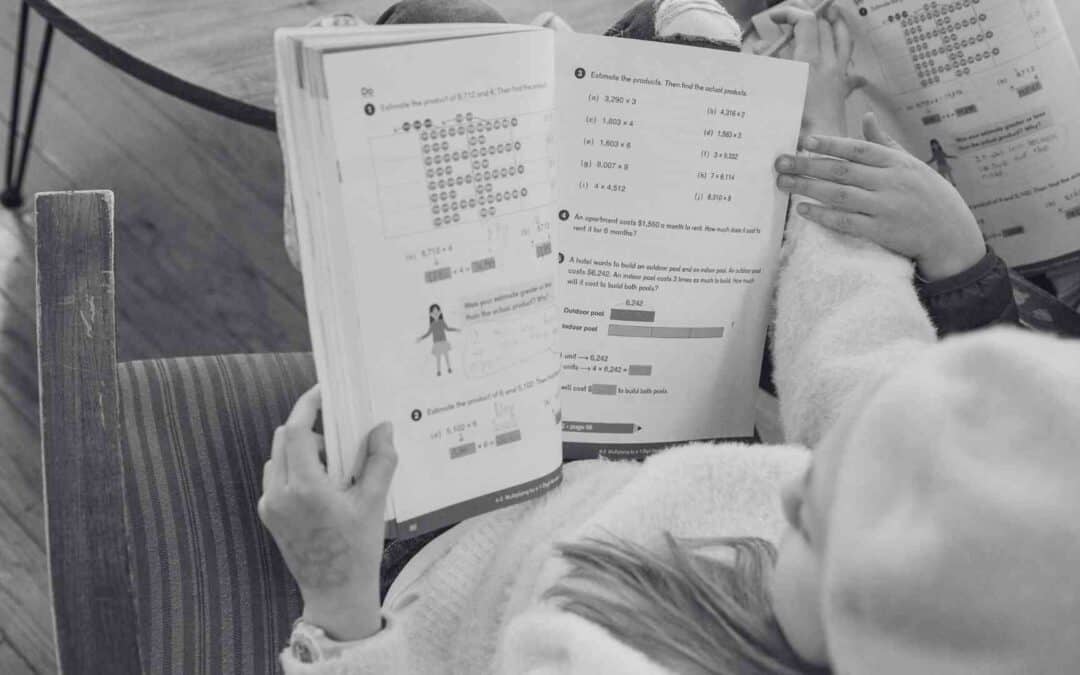
Equally, students spend time in conversations about prioritizing tasks. A highlighter can be a student’s best friend, a very simple tool, but it can help note which aspects of a larger project are necessary right now. Or how many problems of this math activity are critical for you to finish in “this amount of time that we have together.”

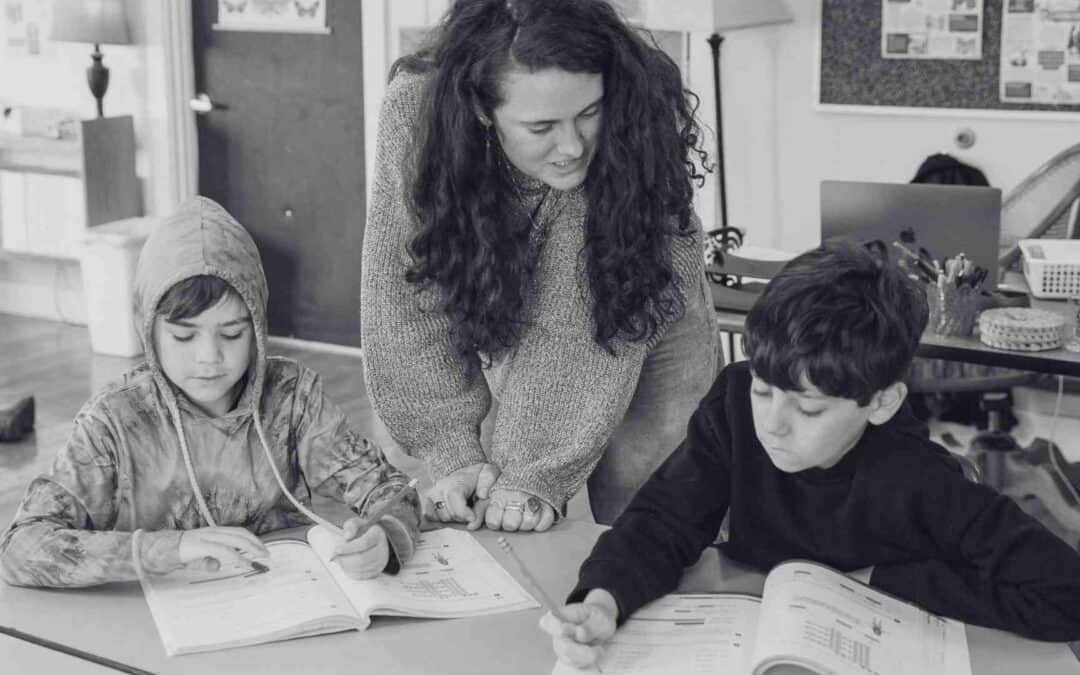
Those kinds of tools, again, can help students prioritize where they’re putting their energy and learn that skill, where initially it’s coming with the facilitation of a teacher or an adult in the classroom. Eventually that tool, those tools are being taken with the students so that they can apply them on their own as they engage in tasks with a little bit more autonomy in the future.

Technology, AI, and Executive Functioning

It goes without saying that the skills of executive functioning are also ever-evolving, particularly with the inventions of AI and the capacity to start to engage technology as a tool. At Rainbow, we are conscious consumers of technology and recognize that the role of AI in supporting students with efficacy in breaking tasks down and chunking their larger project-based learning activities is a real asset.

Yet at the same time, we want to ensure that the heart of what they’re learning, the sensation of pushing through the capacities for rigor, the thought process it takes to prioritize and plan, that those tools are still being built in them, regardless of the aids that are available and continue to become available in the future.

Supporting Executive Functioning at Home

If you have questions about executive functioning, that’s something that our teachers are experts on, and we look forward to talking with you.

Also attached are some suggestions on how to support your child at home with executive functioning skills. As always, we welcome you to our campus and look forward to connecting with you soon. Be well.

Learn More

Continue exploring ideas from our Director’s Kaleidoscope series, including topics like executive functioning, student autonomy, and project-based learning.

The Value of An Electives Program in the Adolescent Experience

The Value of An Electives Program in the Adolescent Experience

The Director’s Kaleidoscope: Exploring the many colorful aspects of learning
at Rainbow Community School

Why Electives Matter in Middle School

Hi, my name is Susie Fahrer, and I am the Executive Director of Rainbow Community School and Omega Middle School. One of the privileges we’ve had at Rainbow is the time to really consider what the development of a middle school program should look like, when you are taking into consideration the critical needs of the adolescent experience. 

The reality is, we have a program at this point that ensures that as our sixth graders are welcomed into the community, they have the level of support and attention to building things like executive functioning skills, habits for learning, and a connection to the level of rigor that increases as students matriculate in the schooling system in ways that helps really develop a strong movement into the 7th/8th program where we see that foundation resulting in students having much more independence in how they manage their time, how they coordinate their learning, the ways in which they approach project based learning, which is the primary component of how we learn in our middle school years, and ultimately really build out the skills needed for thriving in high school and beyond.

Supporting Adolescent Autonomy and Independence

You know, recently, one of the things that we’ve seen in research is that our adolescents really need ways, places and spaces where they can be given the opportunity to be trusted with their own learning, to have some autonomy, to practice exploring what aspects of learning really light them up, to be given a little bit of space, to be in charge of their own learning environment. In Omega Middle School, one of the primary ways that comes into play, when we think about the expansive nature of learning, is through our electives program. 

A Three-Year Electives Program

Our electives program is a three-year set of courses designed to really give our students space in all of the domains: physical, creative, natural, mental, and really support a dynamic set of classes and experiences that the students themselves get to elect, with, naturally, some guidelines held by the institution – again, that guided ability to have some independence with some support systems. 

So, you know, really determining that over three years, they have a certain number of courses that they have to engage with in the mental domain or courses they have to engage with in the natural domain, in the physical, and in the creative, but also maintaining a significant amount of personal choice, and when that happens, & how that happens.

Discovering Interests and Building Confidence

Then, of course, courses that are designed to really uplift them and allow them to see skill sets that are areas of particular interest. What we see in offering that level of partnership in their learning experience is that by the time our students are graduating eighth grade, they see their teachers as learning partners.

They’ve built the skills to really articulate areas of expertise, areas of opportunity as learners, they have a better sense of how to choose a high school that will fit their needs because they’ve had such a diverse level of experiences as middle schoolers, and they’ve been supported along the way, but they haven’t been, told exactly how to do it.

Preparing Adolescents for Lifelong Thriving

What we find is that’s really the sweet spot in helping our adolescents build those core experiences that ensure lifelong thriving. If you’re interested, and I hope you are, come and check out our Omega Middle School program. Come and look at our coursework and our electives. It’s really dynamic. It’s a place where learning is joyful and fun.

And we are so excited to welcome you and your adolescent to our school community. Hope to see you soon.

Explore further and download or print our free resource, Ideas to Support Guided Choice in Adolescence.

Learn More

Continue exploring ideas from our Director’s Kaleidoscope series, including topics like executive functioning, student autonomy, and project-based learning.

Mistakes in the Math Classroom

Mistakes in the Math Classroom

The Director’s Kaleidoscope: Exploring the many colorful aspects of learning
at Rainbow Community School

Mistakes in the Math Classroom

Many students grow up believing that being good at math means being fast and always getting the right answer. In reality, research shows that making mistakes is one of the most powerful ways students build deep mathematical understanding and confidence as problem solvers.

Hi, my name is Susie Fahrer, and I am the Executive Director of Rainbow Community School and Omega Middle School. Today, we’re going to drop into the concept of successful mathematical instruction and self-concept.

Rethinking What Success in Math Looks Like

One of the things that I recall when I was younger in elementary school, and like many students I see today, I was under the impression that successful mathematics, and successful students, and successful mathematicians were folks who were fast, always accurate, and really picked things up quickly. They were the ones who finished their pages of mathematics first.

As I matriculated, that sometimes prevented me from feeling particularly successful as a mathematician because I was slower. I often had to write out my thinking, and I sometimes made mistakes.

So what I’ve learned over the years, particularly as I became a math educator, is that I could fall in love with mathematics when I let go of the idea that math is only about speed, accuracy, and efficiency.

Building Deep Mathematical Thinkers

When we really think about what we want to build within our mathematicians, we actually want students who understand concepts with depth and understand how to problem-solve when they don’t get an accurate answer.

Efficiency and speed are often something that can be built over time and can be helpful, but that is not how we want to define success. We want students to be deep mathematical thinkers and problem solvers.

How Rainbow Supports Mathematical Understanding

Here at Rainbow, one of the ways we support that is through some of the programs that we use for mathematics instruction.

For our students in kindergarten through fifth grade, we use a program called Singapore Math. While it is designed typically to be used for schools that have significant periods of time for mathematical instruction, we adopted it because we recognize that the use of this program, with its approach that begins with building concepts, concrete representations of mathematical concepts, moving to pictures, understanding the representations of the concept, and then moving to abstract, with the use of number and algorithm, is really profound in building the types of mathematicians that are effective problem solvers and can attend to more complex computations in their future years of instruction.

Applying Math to Real-Life Situations

Equally, we find that as our students matriculate to middle school and engage in a program called Connected Math, they’re taking these really deep, foundational skills as mathematicians and being asked to apply them to real-life context situations.

This supports a deeper understanding of how mathematical concepts apply to everyday life, whether that means understanding how to calculate a percentage on a restaurant bill for tax purposes, creating budgets for groceries, or understanding measurement and time.

These are hands-on, everyday mathematical concepts that can increase in complexity. Our students are understanding why they are important and how they will be used.

Supporting Advanced Math Learners

For students who have a really high level of math proficiency and achievement, they are able to move to a program that is efficient and maybe even a little bit quicker with their math instruction.

However, they are also able to face those complexities and those mistakes with a sense of rigor and curiosity.

Learning Through Mistakes

Recent research suggests that, as mathematical instructors, we want to be able to provide environments for our students to learn through mistakes.

Not only does this give students the opportunity to analyze a mathematical problem and really understand the stages and steps and find places of typical error, but it also debunks the myth that a strong mathematician is always going to be accurate.

A strong mathematician understands that when a mistake is made, they have the tools and the capacity to unpack it and find out how to fix it for the future.

Supporting Mathematical Thinking at Home

I hope this inspires some different ways to think about what successful mathematics can look like for your child. Attached, you’ll find some ideas on how to build mathematical engagement with young people.

As always, we invite you to come and visit our school and see our mathematics classrooms in real time. If you’re already here, talk to your teachers about how mathematical instruction is being crafted for your child and build a partnership with them so you can support those conversations at home.

We’re excited to partner with you around mathematics and all types of instruction here at Rainbow.

Hope you have a wonderful day.

Learn More

Continue exploring ideas from our Director’s Kaleidoscope series, including topics like executive functioning, student autonomy, and project-based learning.

The Importance of Relationships in Schools – Warm Demanders

The Importance of Relationships in Schools – Warm Demanders

The Director’s Kaleidoscope: Exploring the many colorful aspects of learning
at Rainbow Community School

Introduction: The Importance of Relationships – Warm Demanders – in Schools

Hi, my name is Susie Fahrer, and I am the Executive Director of Rainbow Community School and Omega Middle School. This morning, I am thinking about the concept of building relationships with students in schools with families.

As you can imagine, a relationship is one of the most critical elements in determining a young person’s success throughout their educational experience. Those are relationships that they develop with their teachers, with their administrators, and the ways in which the school staff is able to partner with families. Seeing those partnerships and understanding, for students, that they have many adults within a community to build trust and connection with, is an inherent part of creating a really powerful, long-term matriculation for a child.

One of the reasons it’s so critical is because we’re finding more and more that the science of building relationships is connected to the capacity of all of us to be our best selves, to achieve at our highest levels. This is in direct correlation to being able to learn, grow, develop, and meet your potential.

Understanding the “Warm Demander”

One of the ways that we talk about this here at Rainbow is a term that is relatively new to me, but one that, when I describe it, I imagine many of us will think of a person that fits this description. And it’s – the term is called a “warm demander.”

What it really describes is a person in your life who is able to build a relationship that creates clarity, structure, resources, and support to meet extremely high expectations. To understand what your potential is, to believe in yourself, to be reflected back that you can do incredibly challenging things, that you are resilient, and you are capable. Then, to be the coach on the sidelines, providing the resources to help you get there, and eventually to help you internalize those strategies.

My Experience with a Warm Demander

When I think back on my school experience, I was privileged to have many wonderful teachers. But the one that stands out for me, as a warm demander, was my sixth-grade teacher.

For me at that time, schooling was kindergarten through sixth grade in an elementary setting. At the same time, sixth grade became a time in our lives when we were really sort of being ushered into preparations for middle school.

My teacher at first surprised me in the ways in which I moved into that classroom and felt a sense of business, felt a sense of purpose, felt a sense of challenge. It was intimidating a little bit at first. But because this teacher was so skilled in building relationships with me and my peers and cultivating experiences where we could try something that felt really difficult, eventually, over time, we built out our endurance to achieve it. It’s something that I attribute highly to my capacity to have moved into middle school with success.

Encouraging Your Child with Warm Demanders

I encourage you to think through experiences that you’ve had where someone has been that really clear, consistent, supportive message to you and helped you succeed.

Then think about what it would be like to put your child in an environment where they are surrounded by warm demanders – folks who see their potential. Folks who reflect that back to them. People who recognize that our young people need to be challenged to do things for themselves.

We are here as a resource and a facilitator, but there’s so much that our children can do. When we give them the space to attempt, have positive risks, sometimes fail, but have the people around them that will be there to provide all of the necessary encouragement and affirmation to try again.

Learn More About Warm Demanders

If you’re interested in learning more about warm demanders, there are resources attached. And of course, always come visit us. Come chat with me if you’re already a member of the community and want to learn more about being a warm demander, but we welcome you to join us here at Rainbow.

Understand the power of relationships as it relates to your child’s education. We are grateful for the opportunity to serve our community. Be well.

Learn More

Continue exploring ideas from our Director’s Kaleidoscope series, including topics like executive functioning, student autonomy, and project-based learning.

The Power of Learning Outdoors

The Power of Learning Outdoors

The Director’s Kaleidoscope: Exploring the many colorful aspects of learning
at Rainbow Community School

Rethinking What Makes a Learning Environment Powerful

When you think about designing a space for truly powerful education and human development, what comes to mind? Often, we consider factors such as how we engage with technology, the curriculum we offer, or the level of professional development our teachers have.

And yes, these factors are critical in supporting a successful learning environment. But there’s something incredibly simple and accessible to all of us that research shows provides deep nourishment for academic success: spending time outside.

Learning Beyond Four Walls

For students at Rainbow Community School, outdoor learning is woven into the fabric of our curriculum. From the earliest childhood settings, students spend time outdoors studying seasonal changes, going on nature walks, engaging with the canopy around them, and exploring the rhythms of weather and landscape.

These experiences help children attune not only to the natural world, but to their own growth and development.

Nature as Curriculum

Being outside inherently creates a hands-on learning experience. As students matriculate through the grades, the level of complexity in their outdoor learning increases.

They move from observation to integration, cultivating a farm-to-table experience, growing their own food, engaging in composting systems, studying local ecosystems, and exploring the rivers, mountains, and geology of our region.

Outdoor learning extends beyond our campus, connecting students to real-world field studies that deepen their sense of place and purpose.

The Research Behind Outdoor Learning

Educational research continues to affirm what we see daily at Rainbow: that time outdoors amplifies a child’s capacity for curiosity, awe, and wonder. It nurtures critical thinking and builds the dispositions of a healthy learner.

Beyond the cognitive benefits, there’s also a spiritual connection that emerges when students spend time outside: a quiet sense of belonging to something greater, a reconnection with rhythm and balance.

A Sensory Awakening

You’ve probably experienced this yourself—the subtle shift that happens when you step outdoors. Maybe it’s the first breath of fresh air as you leave your home, the breeze across your skin, or the vivid colors of the changing seasons.

Each moment outdoors invites us to slow down and become present. The songs of birds, the rustle of leaves, the textures of the landscape – all awaken our senses and remind us of the living world we are part of.

Bringing Outdoor Learning Home

In this month’s Kaleidoscope, we’ve included resources to help families bring the benefits of outdoor learning into their own homes. These are simple, accessible ways to integrate time outdoors into daily life, no matter your setting or schedule.

Even five minutes outside can transform your mood, reset your attention, and bring a brighter sense of possibility to your day.

An Invitation to Step Outside

I hope that this gives you just a moment to remember that even five minutes outside can change your whole disposition, and can bring a brighter sensation and opportunity to the learning that’s here before you.

May you have a wonderful time exploring the natural world.

Learn more and download or print our free guide on Integrating Nature Connections into Family Routines.

Learn More

Continue exploring ideas from our Director’s Kaleidoscope series, including topics like executive functioning, student autonomy, and project-based learning.