The Value of An Electives Program in the Adolescent Experience

The Value of An Electives Program in the Adolescent Experience

The Director’s Kaleidoscope: Exploring the many colorful aspects of learning
at Rainbow Community School

Why Electives Matter in Middle School

Hi, my name is Susie Fahrer, and I am the Executive Director of Rainbow Community School and Omega Middle School. One of the privileges we’ve had at Rainbow is the time to really consider what the development of a middle school program should look like, when you are taking into consideration the critical needs of the adolescent experience. 

The reality is, we have a program at this point that ensures that as our sixth graders are welcomed into the community, they have the level of support and attention to building things like executive functioning skills, habits for learning, and a connection to the level of rigor that increases as students matriculate in the schooling system in ways that helps really develop a strong movement into the 7th/8th program where we see that foundation resulting in students having much more independence in how they manage their time, how they coordinate their learning, the ways in which they approach project based learning, which is the primary component of how we learn in our middle school years, and ultimately really build out the skills needed for thriving in high school and beyond.

Supporting Adolescent Autonomy and Independence

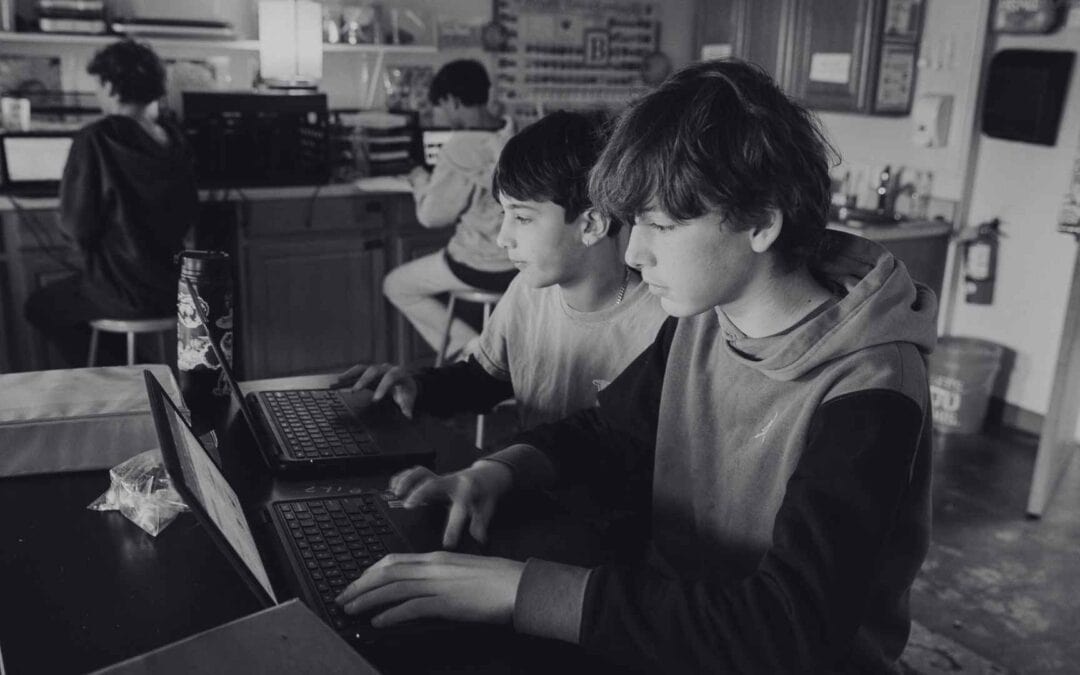
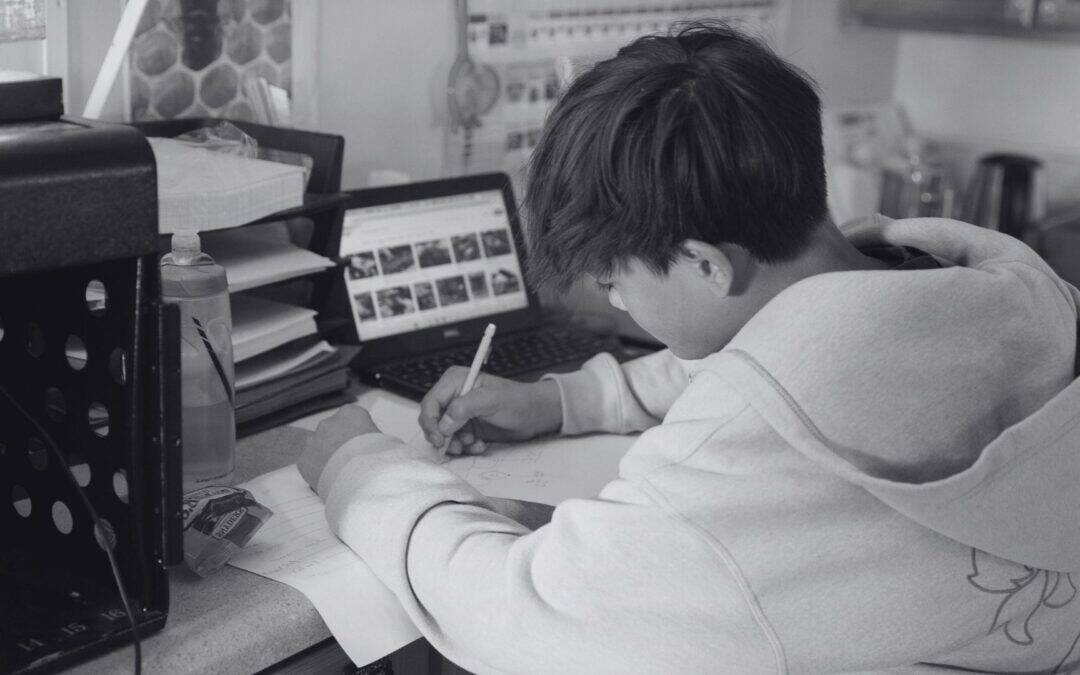
You know, recently, one of the things that we’ve seen in research is that our adolescents really need ways, places and spaces where they can be given the opportunity to be trusted with their own learning, to have some autonomy, to practice exploring what aspects of learning really light them up, to be given a little bit of space, to be in charge of their own learning environment. In Omega Middle School, one of the primary ways that comes into play, when we think about the expansive nature of learning, is through our electives program. 

A Three-Year Electives Program

Our electives program is a three-year set of courses designed to really give our students space in all of the domains: physical, creative, natural, mental, and really support a dynamic set of classes and experiences that the students themselves get to elect, with, naturally, some guidelines held by the institution – again, that guided ability to have some independence with some support systems. 

So, you know, really determining that over three years, they have a certain number of courses that they have to engage with in the mental domain or courses they have to engage with in the natural domain, in the physical, and in the creative, but also maintaining a significant amount of personal choice, and when that happens, & how that happens.

Discovering Interests and Building Confidence

Then, of course, courses that are designed to really uplift them and allow them to see skill sets that are areas of particular interest. What we see in offering that level of partnership in their learning experience is that by the time our students are graduating eighth grade, they see their teachers as learning partners.

They’ve built the skills to really articulate areas of expertise, areas of opportunity as learners, they have a better sense of how to choose a high school that will fit their needs because they’ve had such a diverse level of experiences as middle schoolers, and they’ve been supported along the way, but they haven’t been, told exactly how to do it.

Preparing Adolescents for Lifelong Thriving

What we find is that’s really the sweet spot in helping our adolescents build those core experiences that ensure lifelong thriving. If you’re interested, and I hope you are, come and check out our Omega Middle School program. Come and look at our coursework and our electives. It’s really dynamic. It’s a place where learning is joyful and fun.

And we are so excited to welcome you and your adolescent to our school community. Hope to see you soon.

Explore further and download or print our free resource, Ideas to Support Guided Choice in Adolescence.

Learn More

Continue exploring ideas from our Director’s Kaleidoscope series, including topics like executive functioning, student autonomy, and project-based learning.

Mistakes in the Math Classroom

Mistakes in the Math Classroom

The Director’s Kaleidoscope: Exploring the many colorful aspects of learning
at Rainbow Community School

Mistakes in the Math Classroom

Many students grow up believing that being good at math means being fast and always getting the right answer. In reality, research shows that making mistakes is one of the most powerful ways students build deep mathematical understanding and confidence as problem solvers.

Hi, my name is Susie Fahrer, and I am the Executive Director of Rainbow Community School and Omega Middle School. Today, we’re going to drop into the concept of successful mathematical instruction and self-concept.

Rethinking What Success in Math Looks Like

One of the things that I recall when I was younger in elementary school, and like many students I see today, I was under the impression that successful mathematics, and successful students, and successful mathematicians were folks who were fast, always accurate, and really picked things up quickly. They were the ones who finished their pages of mathematics first.

As I matriculated, that sometimes prevented me from feeling particularly successful as a mathematician because I was slower. I often had to write out my thinking, and I sometimes made mistakes.

So what I’ve learned over the years, particularly as I became a math educator, is that I could fall in love with mathematics when I let go of the idea that math is only about speed, accuracy, and efficiency.

Building Deep Mathematical Thinkers

When we really think about what we want to build within our mathematicians, we actually want students who understand concepts with depth and understand how to problem-solve when they don’t get an accurate answer.

Efficiency and speed are often something that can be built over time and can be helpful, but that is not how we want to define success. We want students to be deep mathematical thinkers and problem solvers.

How Rainbow Supports Mathematical Understanding

Here at Rainbow, one of the ways we support that is through some of the programs that we use for mathematics instruction.

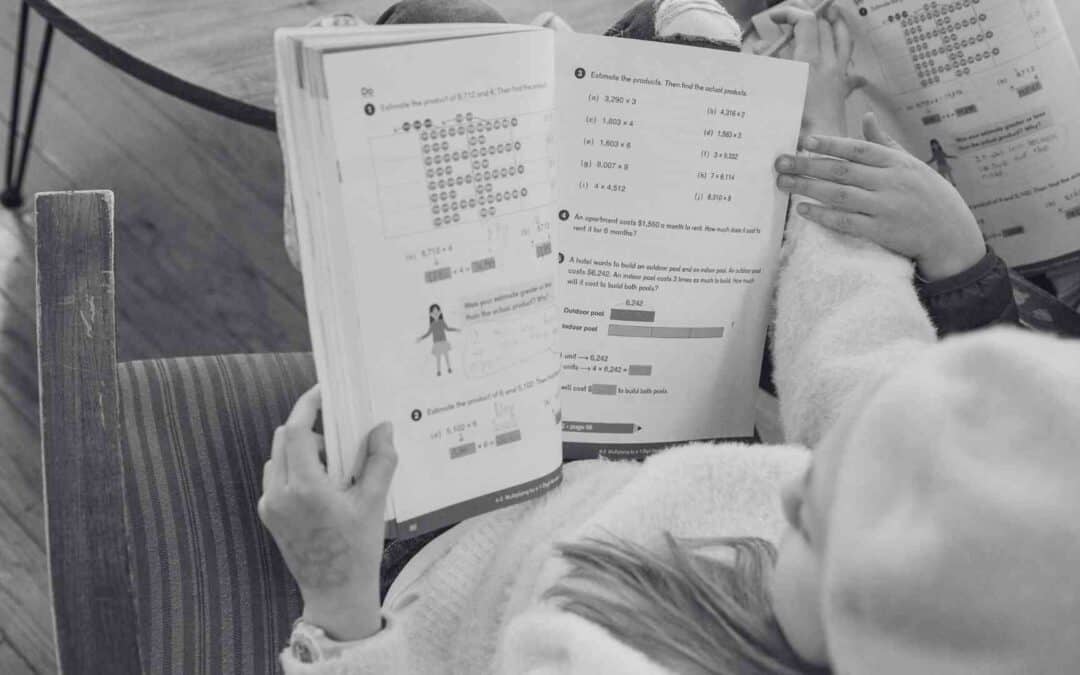
For our students in kindergarten through fifth grade, we use a program called Singapore Math. While it is designed typically to be used for schools that have significant periods of time for mathematical instruction, we adopted it because we recognize that the use of this program, with its approach that begins with building concepts, concrete representations of mathematical concepts, moving to pictures, understanding the representations of the concept, and then moving to abstract, with the use of number and algorithm, is really profound in building the types of mathematicians that are effective problem solvers and can attend to more complex computations in their future years of instruction.

Applying Math to Real-Life Situations

Equally, we find that as our students matriculate to middle school and engage in a program called Connected Math, they’re taking these really deep, foundational skills as mathematicians and being asked to apply them to real-life context situations.

This supports a deeper understanding of how mathematical concepts apply to everyday life, whether that means understanding how to calculate a percentage on a restaurant bill for tax purposes, creating budgets for groceries, or understanding measurement and time.

These are hands-on, everyday mathematical concepts that can increase in complexity. Our students are understanding why they are important and how they will be used.

Supporting Advanced Math Learners

For students who have a really high level of math proficiency and achievement, they are able to move to a program that is efficient and maybe even a little bit quicker with their math instruction.

However, they are also able to face those complexities and those mistakes with a sense of rigor and curiosity.

Learning Through Mistakes

Recent research suggests that, as mathematical instructors, we want to be able to provide environments for our students to learn through mistakes.

Not only does this give students the opportunity to analyze a mathematical problem and really understand the stages and steps and find places of typical error, but it also debunks the myth that a strong mathematician is always going to be accurate.

A strong mathematician understands that when a mistake is made, they have the tools and the capacity to unpack it and find out how to fix it for the future.

Supporting Mathematical Thinking at Home

I hope this inspires some different ways to think about what successful mathematics can look like for your child. Attached, you’ll find some ideas on how to build mathematical engagement with young people.

As always, we invite you to come and visit our school and see our mathematics classrooms in real time. If you’re already here, talk to your teachers about how mathematical instruction is being crafted for your child and build a partnership with them so you can support those conversations at home.

We’re excited to partner with you around mathematics and all types of instruction here at Rainbow.

Hope you have a wonderful day.

Learn More

Continue exploring ideas from our Director’s Kaleidoscope series, including topics like executive functioning, student autonomy, and project-based learning.

2014 Welcome Letter to Parents

2014 Welcome Letter to Parents

RCS_letterhead_7_16_13

August 6, 2014

Dear Rainbow Parents,

This is my favorite communication of the year – the letter welcoming you to the upcoming school year!  As an educator, I can tell you that the beginning of the school year is as full of excitement and anticipation for the staff as it is for the students.  Every year brings so much promise.

Ashoka Changemaker School

Last year’s welcome letter predicted that Rainbow Community School was entering a new era.  Indeed, it was a banner year.  We earned multiple local, state, and national awards, the most notable at the state level being the first Green School of Excellence in North Carolina, and at the national level becoming an Ashoka Changemaker School.

As a result of our Changemaker status, we are being asked to present at national conferences and to write for important educational blogs, such as Edutopia.  Rainbow is being recognized as the cutting-edge leader in education that we are.  Of course, the biggest, most dramatic change over the last year was doubling the size of our campus!

In one year we shifted from being a small school with unpredictable enrollment, to being near capacity for enrollment and having the ability to powerfully affect the future for our children, our community, and for education on a broader scale.  It truly is the beginning of a new era.

We have accomplished something rare for a non-profit organization by going through tremendous change, yet coming through it with more stability than ever before.  Pat yourselves on the back for being a part of it and making it happen!

Contacting Alumni

With all this change, it is important now, more than ever, to be true to who we are.  We will be contacting alumni families, both recent and from as far back as possible, to remind them that they are always welcome on campus and forever a part of the community.

We will strive to share our good fortune as much as possible by partnering with, and donating to, Children First/Communities in Schools, providing tutoring at Deaverview Housing Project, and by doing other valuable service work; plus we will begin providing auditorium space to the wider community at our new facility.

Speaking of the new facility, please see the update on the Rainbow Rising Capital Campaign.  Thanks to your donation dollars, the donated time and expertise of Christopher Fox Builders and Rowhouse Architects, and Max Mraz’s (facility manager) coordination, the first phase of construction is 95% complete, under-budget, and ahead of schedule! (Yes, it has been a busy summer!)

We will have a certificate of occupancy before school begins for the auditorium and for the new Omega (7th/8th grade) space which will be on the new campus.  What a huge transformation… and the biggest phase of construction is yet to come.

Parent Summit Night – Sept. 29

Please mark your calendar now for Monday evening, September 29.  We are requesting that at least one parent from every family attend the Rainbow Parent Summit that night.

Typically, we schedule this required meeting for February, but this year we are moving it all the way up to September 29 because much of that night will be focused on creating a facilities plan for the future of Rainbow.

How Can Rainbow Fully Serve Your Family?

We will be going into the next phase of construction in January, and need your dreams, desires, and creative ideas before then – both regarding the future of our facilities, and also our program.  How can Rainbow more fully serve your family? More information on this board-hosted event will be coming from board chair, Claudia Konijn.

Based on feedback from parents, the administration has grown so that we can better serve the school’s needs.  Cynthia Calhoun, woman of many talents, will still be teaching Spanish 1/3 time, and for the other 2/3 she will be heading up community coordinating and communications, including social media, marketing, and running the website.

We have also been fortunate to hire Sara Stender for part-time development management for the fall fundraising campaign.

The faculty continues to grow and become even more dynamic with each year!

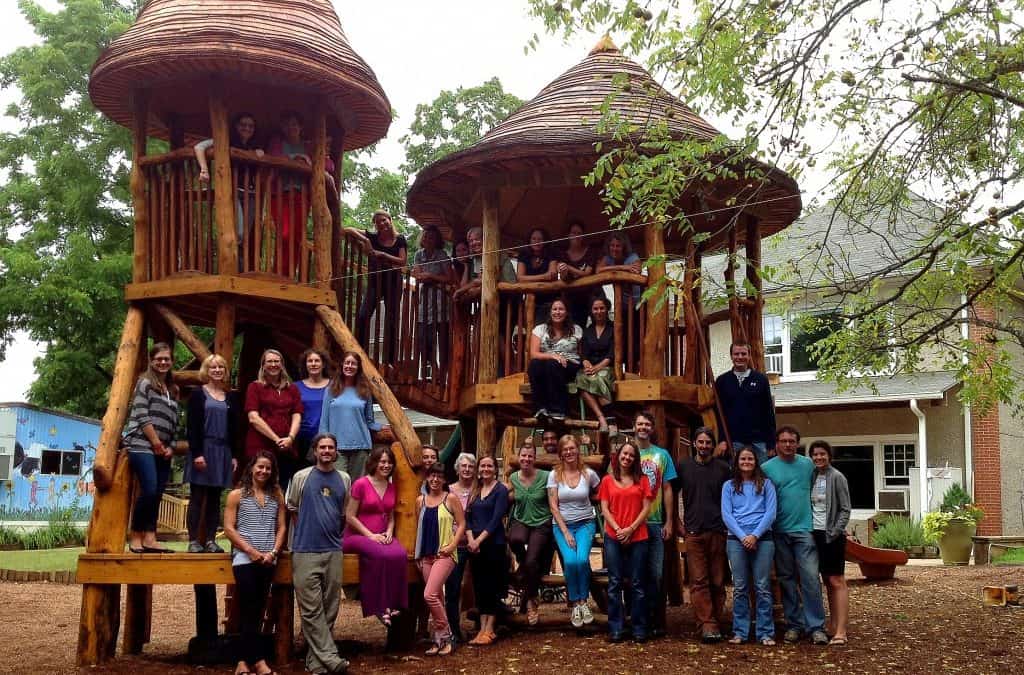
Biographies of new staff members can be seen on the Rainbow website. The teachers have been busy preparing their classrooms, updating curriculums, and attending summer trainings.  The staff will spend the 10 days before school starts together, preparing ourselves in every domain, including spiritually.

Visible Thinking and Singapore Math

Throughout the year the staff engages in extensive training.  This upcoming year, we continue to sharpen our skills in Harvard Graduate School’s Visible Thinking tools and Singapore Math.

The new staff training theme for the upcoming year is in the area of teaching kids how to have agency through engineering and systems thinking.  You will receive much more information on this, but what we mean by the word agency in this context is having power and being able to make a difference.

Teachers will be learning about the maker movement and how kids can learn to engineer electronics, robotics, and to think in terms of systems and how best to affect change through innovation.

Susie’s fourth grade class will pilot this program this year.  If your child isn’t in fourth grade, feel free to stop by her fourth grade classroom to see their “tinkering table” which is essentially a kid-friendly work bench and to ask Susie what “tinkering” has to do with giving kids power.

Student Support Services

Also new for the upcoming year, we have completely revamped the student support services program.  Every student needing special support will be paired with an advocate who will help the student and the family with the support plan, communication, and advocating for each student’s needs.

An excellent student support program doesn’t just benefit students with special needs, but enhances the educational experience of all children by creating classrooms where all kids experience success.  The student support team is now headed by Ali Banchiere.  We have added a counselor to the team.  Blake Smith, formerly counselor at Carolina Day School, will be working on a limited schedule to put together the initial pieces of a budding counseling program at Rainbow.

All of this and much more is carefully crafted to create an environment for your child(ren) to thrive at Rainbow in 2014/15 – a safe space where there are magical arms of a whole community enfolding them and all the resources necessary for children to take risks and try out their agency.

Of course, that looks quite different at different levels of development – from three year olds learning to zip their own coats, 3rd graders navigating their first social dramas, 6th graders experimenting with new personas, and Omegans peering into their soul and preparing themselves for high school and beyond.  What will the future bring?

Thank you for joining Rainbow for this journey.

As executive director, I am honored, humbled, to be a part of such an awesome community and a vibrant future, as reflected in the eyes of your children.

Please – please – don’t assume I am too busy to have a conversation on the deck or to see you in my office.  (Although we have grown so much – over 400 people including kids, parents, staff — you may need to remind me of your name!) One-on-one conversations are the best opportunities to connect and my favorite part of my job.  I care, and I am here.

Let’s get ready for another great year.

Blessings on the journey,

2012_Renee


Renee Owen

Executive Director