Brain Breaks: A Technique for Meeting Student Potential

Brain Breaks: A Technique for Meeting Student Potential

The Director’s Kaleidoscope: Exploring the many colorful aspects of learning
at Rainbow Community School

What Are Brain Breaks?

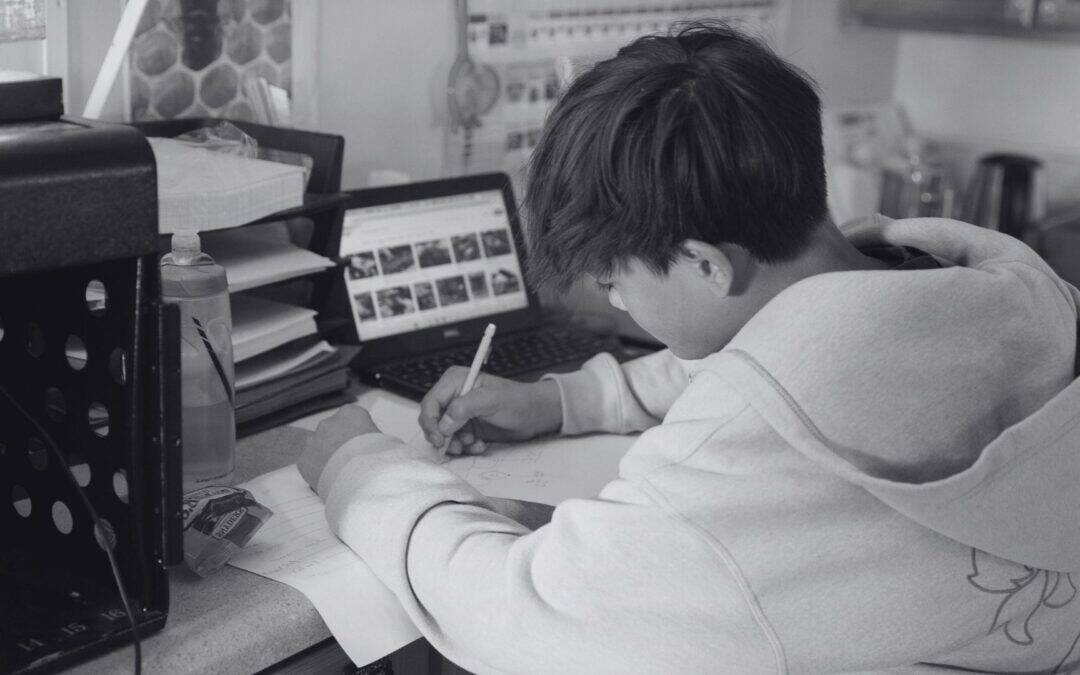
Hi, my name is Susie Fahrer, and I am the executive director of Rainbow Community School and Omega Middle School. One of the things you’ve probably heard people talking about when they’re discussing a powerful learning environment is this concept that has been termed “brain breaks,” and what’s interesting about that is brain breaks are often described as moments in time when a learner maybe moves into a physical activation, steps away from a task, moves their body, maybe changes their breathing pattern, perhaps, does something that elevates their heart rate, or maybe just something that creates laughter or a different train of thought.

Brain Breaks as Brain Energizers and Optimizers

While these are essentially called brain breaks, maybe they should really be called brain energizers or optimizers, because the reality is, while the brain is shifting its focus from the task at hand, it is designed to really support learners in synthesizing information and creating deeper neuro pathways.

Supporting Sustained Mental Focus

You know, there are different reasons and different places, as you can imagine, for needing a shift in how our brains are working. So perhaps it’s about the sustaining of a mental task. For students as they matriculate, one of the things we work on is growing their capacity for longer periods of stimulation. So for some, that might be longer rigor around focusing on a writing task, or for some, that might be sustaining the mental energy to really work all the way through a multi-step mathematics problem.

How Brain Breaks Help Students Reintegrate and Learn

What a brain break can do is allow a student a strategy for stepping back from the energy of sustained mental acuity, give their brain a different focus, and then reintegrate, ready and more optimized for learning. Equally, we might think about these strategies using support for creativity. I’m sure many of you have had that experience where you’re working on a creative task, possibly in the brainstorming phase, and maybe just feeling really stuck.

Brain Breaks and Creativity

Well, the reality is, when we uproot ourselves and don’t force that creativity to come through and find a slightly different way of moving our bodies, breathing through a few exercises, talking to a friend, having a social stimulation, and then returning to that creative task, maybe even taking a walk. Those things will help our bodies and brains process and move out of that stuck period.

Optimizing Learning and Full Potential

So now we’re talking about optimization not only of sustained mental energy, but also of our creative energy and our ability to really bloom our full potential. We use brain breaks here at Rainbow – brain energizers, brain optimizers – in all of our classrooms in developmentally appropriate ways. Eventually, our students learn to engage these strategies for themselves as needed within their learning spaces.

Using Brain Breaks at Home

If you’re interested in learning more about strategies you can use at home, please check the attached document. Again, we always welcome you. Come on in. Take a look at our classrooms. If you’re already here, come and have a conversation about how you can use brain breaks at home to support your child, particularly when they’re in a mental task that might be a little bit of a stretch for them. Our door is always open. Look forward to chatting with you. Take care.

Learn More

Continue exploring ideas from our Director’s Kaleidoscope series, including topics like executive functioning, student autonomy, and project-based learning.
The Student-Teacher Relationship

The Student-Teacher Relationship

The Director’s Kaleidoscope: Exploring the many colorful aspects of learning
at Rainbow Community School

Exploring the Role of Student–Teacher Relationships

Hi, my name is Susie Fahrer, and I am the Executive Director of Rainbow Community School and Omega Middle School. One of the things that I get asked often when I’m sitting with a family, exploring the options for the educational choice and journey of their child, is about the ways that teacher and student relationships are developed. 

The Student–Teacher Relationship

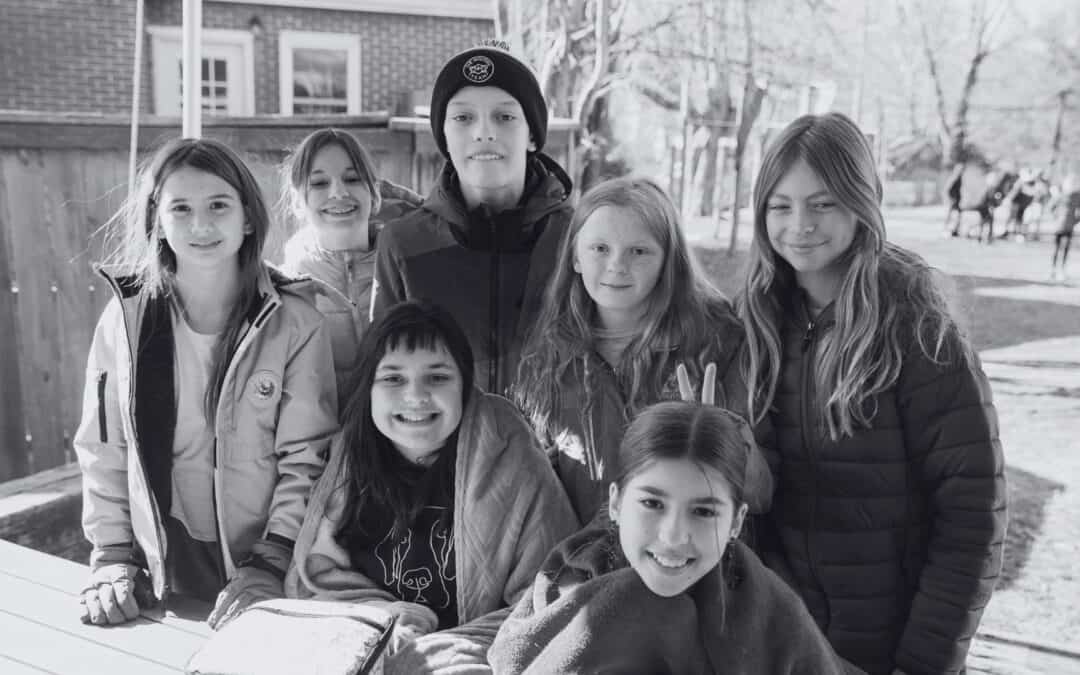
Many of us can recall back from our own educational experience a teacher who took the time to get to know us personally. We probably felt validated. We probably felt highly motivated to perform in that classroom because we understood that the teacher was there not only to encourage us to be learners, but also to help us advocate for ourselves and our full potential. At Rainbow, we have the privilege of a variety of ways that we foster really meaningful relationships between a child, a teacher, and their full classroom community.

Listening Conferences: Building Strong Partnerships with Families

It all begins every year with something called a Listening Conference. This is a time when we invite families in to sit with the educators in the classroom and share about the journey and values of the family. This partnership is so critical for our teachers to be able to then take what they’ve learned about this child’s journey thus far, and push forward their full-potential, support-areas of challenge and sensitivity, and grow them not just as learners, but as humans.

The Rainbow Seven Domains™

As you’ve probably noticed, one of the primary components of a Rainbow education is our Seven Domains model. This model is built to enhance the capacity of every teacher to really learn, witness, and connect to the children that they have in front of them in any given year. 

Understanding the Whole Child

When we think about each learner above and beyond who they are and how they show up just in the mental domain, but also as social and emotional beings, the way they engage the natural world, their ability to express creatively and connect creatively, using their physical outlets and growth points, engaging their spirituality and the world of wonder and awe and community and connectivity.

Developing Powerful Student–Teacher Relationships

These are all things that dovetail and enhance their educational experience. Research suggests that the more a teacher can develop a really powerful relationship with the child, the more likely the child is to step into highly motivated experiences. They’re going to face challenges in a slightly different way when they know the adults around them are building the environment for positive risk-taking, that we’re celebrating mistakes as learning opportunities, and that they see that they can inherently grow and learn, fail and rise in ways that are supported by the adults around them. 

Motivation, Risk-Taking, and Growth in Early Childhood

At Rainbow in preschool, the teachers are masters at looking around the classroom, watching the students engage in hands-on learning and play, and then designing skill-building with the students, leading in areas of interest. Already, an engaged brain is going to be able to push further in skill development when they have not only areas of excitement and interest, and wonder, but also teachers who are adaptable and able to engage those moments for learning. 

The Learning Environment

As we move into our elementary classrooms, you’ll see the students start to become more partners in their learning environment. Now again, the areas of risk-taking grow – the more a child is faced with opportunities of rigor and challenge. 

Multi-Sensory Learning and Individual Support

The teachers at Rainbow take the time to understand how they can best support each child through multi-sensory learning and different and various opportunities for engagement. So the child who’s maybe more willing to face a challenging task through a physical engagement is supported in that domain, while a child who’s going to show their best thinking in a quiet space for writing, and that type of expression is also going to be supported. Equally, we’re going to provide the spaces for children to grow in their areas of challenge and opportunity. They see their teachers as partners in their learning journey, as people there to support their best efforts.

Creating an Optimal Learning Environment

That’s critical in really creating not only an optimal learning environment for a full classroom, but for every child to start to see themselves as a really powerful learner. We want that to be embedded in their identity development. 

Supporting Agency and Passion in Adolescence

As students matriculate into adolescence, our educators in our middle school program are truly trained to understand the adolescent brain and to optimize those learning experiences for our young people, who at this point are really seeking some opportunities for agency, guided choice, and investment in their own learning. Their passions are starting to develop, and our teachers have the ability to engage those passions with meaningful course content. We’re also there to open up their world to new possibilities as they’re moving into adolescence. There’s a whole world that’s opening up in front of them as they think about moving into high school and beyond.

Preparing Students for the Future

We want our students to feel really prepared and able to engage in their best learning as they move beyond our doors. As you start to explore the best possible fit of educational environments for your child, the relationship and development of really powerful connections with their educators is going to be at the heart of their success. We’re so grateful to have so many wonderful teachers here at Rainbow.

An Invitation to Experience Rainbow Community School

We would love for you to come and join us here and meet the educators. See this in action, and if you’re already a part of the community, we hope that you’ll continue to look ahead and see the next step in your child’s journey. Thanks so much for listening. Enjoy the day.

Download and print our free resource guide to learn more about Questions that Foster Meaningful Relationships.

Learn More

Continue exploring ideas from our Director’s Kaleidoscope series, including topics like executive functioning, student autonomy, and project-based learning.

Kaleidoscope August 2021

Kaleidoscope August 2021

Kaleidoscope Header

The first full week of school is here and I find myself filled with gratitude. Already students and families are finding the rhythms of drop off, pick up and everything in between. There is a happy and hopeful energy all around campus as students co-create their classroom culture, mascots, and learning routines.

Communication is central to the success of our community. In collaboration with weekly publications like Rainbow Reminders and regular classroom newsletters, Kaleidoscope captures the bigger picture of what is happening on campus and exciting news for Rainbow’s future.

The opening weeks of school can feel like information overload. While the return to school is often filled with many highlights, it can also feel like we have shifted into high gear. School preparations, paperwork, Covid protocols, and campus procedures start to blend together, and it can be difficult to keep up. Here are a few ways to help you regroup, and make sure you have all the information you need.

Parent Handbooks

Our preschool, K-8, and Covid Handbook can all be found on our website. These documents have lots of information. We respectfully request that you read the handbook aligned with your child’s grade level and the Covid Mitigation Document. All families should submit an acknowledgement form that these documents have been read.

  • Calendar – Our school calendar is located on our website. Upcoming events are also published regularly in Rainbow Reminders and classroom newsletters.
  • Parent Plus Portal – This is our school database. This will be the tool used to share school wide forms, communication, and alerts. It is also the location of your child’s narrative report (P-8) and grades (6-8 only).
  • We are here to help – Please know it is always ok to reach out to administration, or your child’s teacher, if you are in need of support. These resources are great, and sometimes it can be critical to talk things through or speak to someone directly. During the day you can call the main office line and/or text or call Kate B. or Susie directly.

Listening Conferences

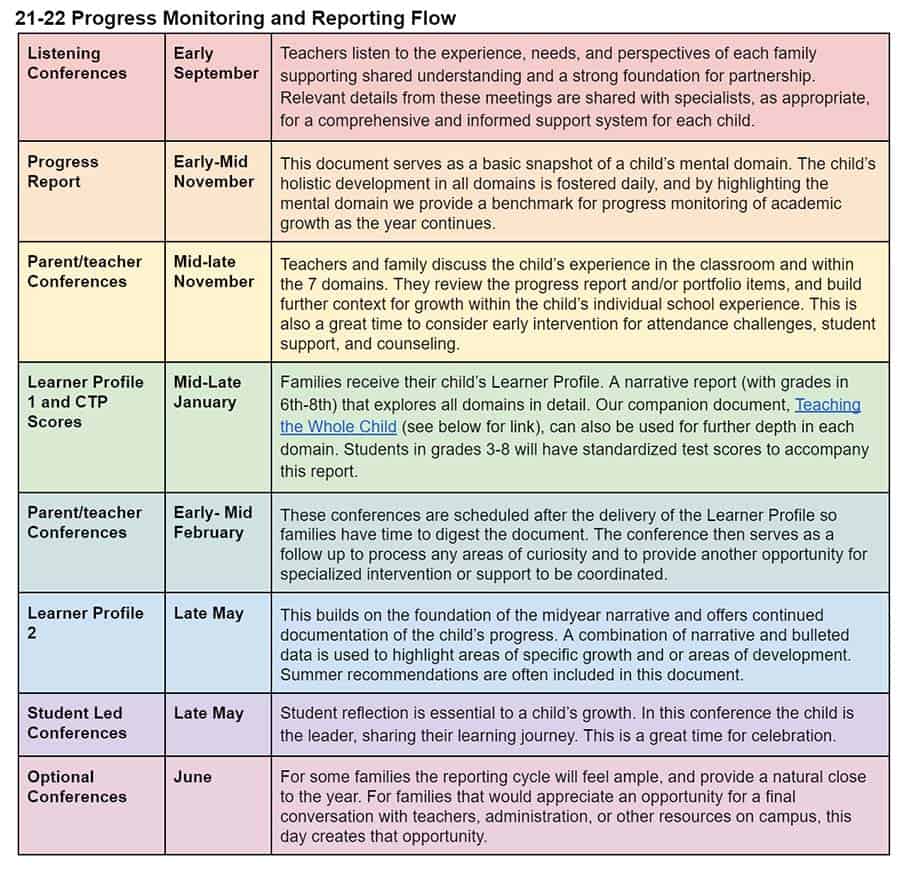
Our narrative and conference reporting flow is designed to build a strong story arch to your child’s learning journey. Next Thursday and Friday, September 2 & 3, will be the first step along that path with Listening Conferences. This is a time for families and teachers to build a shared understanding of how best to support each child’s holistic growth this year. The teacher primarily takes on a listening role. The intent is to learn from the expertise of the family in establishing a safe, aligned, and responsive space for each child to develop. Below is a graphic that shares the primary reporting flow between teachers and families.

progress monitoring and reporting flow

Read more about Teaching the Whole Child here.

Feedback

Feedback is one of the many ways we grow to serve you better. One way we gather feedback is through an anonymous end of year survey that is completed by students, staff, and families. One trend that came out of this feedback was a desire to have more clarity with our resources through Student Support and Counseling. These two pages were added to the Preschool and K-8 Handbooks to help with building that transparency.

Another trend framed parent’s desire to learn more about how Rainbow’s holistic approach evolves as students matriculate. Particular interest focused on Omega Middle School and how the 7 domains integrate with a dynamic and rigorous academic experience to build a strong foundation for high school and adolescent development. This topic is truly inspirational, and a point of pride for Rainbow. We will be bringing visibility to the learning trajectory from preschool through 8th grade through highlights in Rainbow Reminders, subsequent in depth explorations in Kaleidoscope, and more.

Safety

Safety is central to a thriving community. Fortunately, one silver lining to pandemic education is that we have built a strong foundation in personal and collective responsibility for our wellness. Moving into this year, I hope we will continue to embrace the motto, “We Are In This Together” recognizing that we each have a role to play in maintaining our community health.

Masks are a primary tool in the fight against Covid-19 transmission and the commitment to keeping kids in school. Current guidance distinguishes the pathway for school exclusion as a result of Covid contact based on masking. Therefore, we would like to request the following compliance with masking protocol. If any family needs help with purchasing masks, please reach out to Love In Action.

  • Use a mask that fits snuggly but comfortably around the nose, jaw and chin.
  • Use a mask that does not require consistent adjustment throughout the day.
  • Gators are used with the addition of a disposable mask or double layered for appropriate fit and thickness.
  • Masks with a ventilator are not used on campus.

Health Checks are now completed at home before school starts. You have likely seen our sandwich boards with the health screening questions. Please be reminded that students should not be on campus if they are not well or if they have contact with someone with Covid or Covid-like symptoms. Sometimes it can be difficult to determine the true status of your child’s health. Reach out to Susie, Jessy, or Kate at any time for support in determining your health status. Text is the best way to reach us with important updates on health status so we can attend to this information in a timely manner.

Traffic flow on campus should always move slowly to ensure the safety of our community. The upper and lower campus parking lots are one way driving.

  • Upper campus enters from Haywood Rd. and exits onto State Street.
  • Lower campus traffic enters from State Street and exits on Pennsylvania Ave.
  • Omega pick up can result in a long car rider line. If you are the first to arrive, please pull all the way to the edge of the lot by Pennsylvania Ave. The cottage will be on your right hand side. We will bring your child to you. Additionally, parents can park in the Omega lot and we will walk students to your car. These two steps will help ensure we don’t have a pick up line that backs onto State Street.
  • Traffic directions are also part of our walkway systems. When dropping off or picking up for preschool or afterschool by the butterfly house, please observe the one-way walking patterns and physically distance if there is a line.

Affinity groups are another way that we are supporting safety and wellness within our community. An affinity group is a designated “brave space,” where everyone in that group shares a particular identity. This identity can be based on race, gender, sexual orientation, language, nationality, physical/mental ability, socio-economic class, family structure, religion, etc. Affinity groups can be a place for people in a community to come together to learn more about their identifiers and to feel more connected based on those identifiers. At Rainbow, we collectively reaffirm our commitment to a culture of caring for all by beginning these Affinity spaces for our least represented populations. We will be sharing more with the community about this initiative in the coming weeks.

This is just the beginning and our Dynamic Governance model helps us foster engagement and feedback on behalf of all stakeholders as the year continues. A reminder that today (8/24 at 3:30pm) is our first Equity Circle of the school year and that our first Parent Council meeting is this Friday (8/27 at 9:30am). The Finance Team begins the following week and Pollinators will be up and running soon with tentative meetings scheduled for Tuesday, September 7th from 9:00-10:30 and another meeting on Tuesday, September 14th from 9-11. Look for these and more opportunities to get involved in Rainbow Reminders.

In Gratitude for All That Is and All That Will Be,

Susie Fahrer
Executive Director