by Renee Owen | Jun 19, 2017 | CEO's Kaleidoscope, Director's Blog, Publications
Happy end of year, everyone! You did it!
If you are a parent, you did it all. Through sickness, crankiness, bad weather, and whatever particular trials your family endured, you got your precious ones to school…and most of you got them here on time, with lunch in hand. You made huge financial sacrifices to pay tuition. And on top of all that, you donated and volunteered in order to sustain Rainbow as a healthy community.
If you are a grandparent reading this, you are probably highly involved. According to our information, you have probably paid some tuition, and have most likely donated to keep this school thriving. You understand the value of an extended family – not just the value of providing your grandchild with an intergenerational family, but also the value of surrounding your grandchild with a vibrant community.
If you are a faculty member, a teacher, you are completing another rotation in the grand theme of life – transformation. In your own way you have birthed, nurtured, and raised a new crop of loved ones, only to watch them move away from you. Once again, you remember that when you truly love someone, you set them free.
If you are a student, you are probably not reading this. But whether you are 4 or 14, you will have had the opportunity to reflect upon your growth this year. Who were you nine months ago? Who are you today? So much about you has changed, yet you – the thing about you that makes you indescribably unique, your soul – remains eternal.
And so it is, that each of us with our own perspectives and our own inner lives came together for a year and became as one – one community growing, morphing – each of us unique pieces of something greater than ourselves, something that would have been different were any one of us not a part of it.
Coming and Going
This is also the time of year that we bid adieu to students who are graduating or not returning next year as well as to faculty members who are moving on. Our wish is to send each of you onward full of beautiful memories and feeling prepared for your next adventure. Faculty members who are moving on are Ange Moore who is moving to California, but will be back to help with our More Than Mindfulness Conference on October 6 and 7; Bryan Gillette (preschool), Micah Gardner (preschool), Dave Leflar (5th grade), Gloria Ray-Sheberle (5th grade), Danny Peters (3rd grade), and Itiyopiya Ewart (1st grade) who is having a baby!
Most of you have probably heard that Doreen Dvorscak, one of our revered kindergarten teachers, is retiring from Rainbow this year. Doreen has been here for 12 years. She has taught every current Rainbow student who has been here since kindergarten. For twelve years she has brought the magic of childhood to young Rainbow children with her theatrical passion, clever wit, compassionate spirit, and clear insight. A butterfly garden is being planted in her honor near Max’s Gazebo so that Doreen’s magic can stay with us long after her time here has come to a close. As Doreen always says, “Once a Mariposa, always a Mariposa”! Doreen leaves behind a powerful legacy, one we will cherish and hold dear as we move forward into a new era for the Kindergarten Mariposas.
Looking beyond the 16-17 School year
There is nothing more important than having the right people working with your children.
Someone once asked me what I look for when hiring faculty, and I replied, “I look for inspired educators who are both highly developed in all seven domains as well as master teachers.” Sandra and I truly invest so much of our emotional energy into the hiring process, which can be very intense. So we are very happy to announce that we have completed the hiring process for the 17-18 school year! We hired six new assistant teachers, almost all of whom have lead teaching experience. Because they share and embrace our holistic educational philosophy, they are each extremely excited to be working at Rainbow. Besides our fresh crew of new assistant teachers, we have also hired a new lead after school teacher in preschool – Lauren Levine.
We had one lead elementary teacher to hire this year, and we were flabbergasted when someone who we consider to be a famous teacher applied to teach at Rainbow. Rainbow Community School is incredibly fortunate to welcome Paula Denton as our fifth grade lead teacher. Paula taught grades 3rd – 6th for eleven years in Massachusetts at The Greenfield Center School. As a “demonstration school” that trains teachers in best practices, the Greenfield Center School only hires and retains the finest teachers. Paula holds a PhD in education from Amherst and was on the faculty at Antioch for six years. Paula has trained thousands of educators across the country. She is author of two award-winning books on education, “The First Six Weeks of School” and “The Power of Our Words.” You will find “The First Six Week of School” on many Rainbow teachers’ bookshelves with covers falling off and dozens of dog-eared pages, as it is considered by many holistic educators to be the most important book about teaching ever written. Paula created “The Responsive Classroom” teacher training programs, which have been required for all Rainbow teachers in the past. She is a foremost expert in positive discipline and holistic, integrated teaching. Paula is a “superstar” educator, but most importantly, she is compassionate, loves children, and is very passionate about being a classroom teacher. We are extremely honored that Paula has decided to work at Rainbow Community School.
What goes on during the summer?
By this time of year, the administration has one foot in completing this year, and one foot in the 2017-18 school year. This summer the administration and the board will be doing our own versions of soul-searching. The board immerses itself into a multi-day retreat. They look back on our progress and take a deep dive into divining Rainbow’s future. They recraft the strategic plan and prepare the vision.
Meanwhile the administration pours over data – financial, academic, and performance data. We reflect on the end of year survey that you, our dedicated parents, provide to help us understand what your experience was like as a family, what we need to do differently, and what we need to treasure. (If you haven’t filled out that survey quite yet, go ahead and complete it HERE.) We re-design systems in an ongoing effort to continuously improve. Operations go into full gear, getting everything prepared for the school year – materials ordered, new staff readied, technology repaired and upgraded, and so much more. With the end of the fiscal year on June 30th, the business office calculates our financial standing and prepares for our financial review and annual report, while Max and Shaun give the facilities a makeover. Teachers spend three days together working on curriculum in June, and then they are in and out all summer long, preparing their classrooms, preparing for the children, getting lesson plans ready, and doing professional development. Our biggest push begins around August 1st, as we prepare for the teachers to return on August 14th. Then the whole staff and faculty meets and trains for about 10 days, preparing for your children. Thank goodness preschool is in session all summer long, because those precious preschoolers bring such joy to those of us on administration. We can get lonely on an empty summer campus. After all, we work here because we love children!
The Poignancy of Endings
At the close of the year, when reviewing all we have gained, all the ways we have changed that we could never have predicted, it becomes startlingly clear that the only thing left to say is… thank you. Thank you for raising children we can’t help but love from the moment they enter the classroom to the moment they step up to the microphone to deliver their 8th grade speech at graduation. Thank you for creating these creatures that inspire us with purpose and passion every day. I can speak for each of us who work here at Rainbow when I say that your children are the ones we owe our transformation to this year, and next year, and the year after that. They move us beyond what we could have ever imagined. So now that we’ve arrived at yet another ending, let’s take the time to celebrate, to express our gratitude, to foster our connections, and to bask in each poignant moment as it comes and as it goes.
With love,
Renee Owen

by Renee Owen | Apr 20, 2017 | Blogs, CEO's Kaleidoscope, Director's Blog, Publications
Welcome to spring at Rainbow Community School! It’s a time of joyful activity, like overnight field trips and lots of celebrations and feasts. For teachers this can be a bitter sweet time. Last night, one teacher reflected that by this time of year her class is so cohesive and productive, and she has gotten to know them so well, that she gets sad to think the year will be ending soon. It’s a time to capture as much learning as possible, while the children are in top-notch learning mode.
What I learned about emotions
Our most recent celebration, Annual Domain Day, took place on St. Patrick’s Day this year. Students chose one domain to explore and then spent the whole day playing games, working through challenges, and diving into discussions that brought out the essence of that particular domain. One very unique aspect about Domain Day is how students spend their day learning, problem-solving, and creating in multi-age groups. Separated from many of their usual cohorts, students open up to connecting with children of different grades, forging friendships while doing Qigong, making up skits, and tracing pinecones. By the end of the day children have a sense of their position along the Rainbow path. The change in routine acts as a change in perspective, and many children are more willing to try new things and to stretch their limits than usual.
Everyone teaches on Domain Day, including Max and administrators, so students also get the treat of experiencing new teachers. This is a gift of a day for faculty and staff as well. Every single faculty and staff member works to make Domain Day happen, and the passion, effort, and collaboration needed to organize it is thrilling, uniting, and deeply meaningful for us all. Personally, I helped to lead the emotional domain group, and I learned so much! Admittedly, the emotional domain can be a challenge for me. Naming emotions and expressing them is not my strength. But I learned from a third grader that if I am having trouble expressing an emotion, cat sounds can be very effective! Try it! Meow! Purr… Scratch! I also learned something profound from a fourth-grade student who said that if we drew a venn diagram, we could describe emotions as what occurs as the connection between physical sensations and thoughts.
My experiences on Domain Day this year confirmed what I am always saying; what I love about working at Rainbow is how we adults learn as much, or even more, from the children as they do from us!
What does it mean to be an organization that promotes social justice?
I encourage you to click here to view my interpretation of the board’s Ends Policy, which reads, “To promote social justice.” As a parent do you agree that the ambitious ends and ongoing goals listed in this document are worthwhile endeavors? For example, how do you feel about integrating social justice into our curriculum and culture so deeply that age-appropriate conversations about class privilege and racial injustice become comfortable? I am also curious if you think it is possible for an organization to remain politically neutral, while simultaneously promoting social justice? Personally, I think the answer to this question is to focus on positions, not people. For example, if we were to discuss an anti-immigration law in the context of social justice, we would focus on the law itself, and not on the politicians making the law. We actually already teach this technique to our students as part of a conflict mediation process and it works to help choose accountability over blame. How do you navigate questions of politics and justice with your children?
Speaking of immigration…
Like virtually every school community and organization in the country, we have people who are undocumented immigrant parents who have a child, or children, who were born as legal US citizens. 66% of all undocumented immigrants have lived in the United States for over 10 years, becoming embedded parts of the fabric of our communities. These parents are terrified that they will be arrested and that their child will be taken by DSS to be turned over to foster care while at school. Can you imagine having such a fear while dropping off your child at school every day? In April CIMA (Compañeros Inmigrantes de las Montañas en Acción) will be holding a training for local teachers to understand how they can provide sanctuary for their immigrant students and support their families in times of immense uncertainty. Some of our Rainbow teachers will be in attendance, so they can learn to protect our students and families. I hope this information is helpful. By supporting those who are most vulnerable, we become stronger as a united community.
Thank You for showing up to support those in need!
I am so excited to share that the first year of the Voluntary Equitable Tuition (VET) program got off to a great start! So far, 48 people(families?) signed up to participate, raising more than $17,000 that will go towards financial aid, helping to make Rainbow a more equitable and inclusive organization. That is a great start. Those of you who participated not only gave other families the opportunity to experience a great education, but you also made those of us who work here feel so incredibly grateful to be a part of such a wonderful community. THANK YOU!
Meet the neighbors
As you know, Rainbow purchased the house and ½ acre at 29 Allen St with plans to rent it out until needed for school use. I am pleased to announce that a Rainbow family is now our tenant. Scott and Becca Hardin-Nieri, and their children Olivia (7th grade) and Nicholas (4th grade) moved in on March 1. Welcome! If your child forgets something on the playground, now you know who to call. (Just kidding.) But that’s not it. 29 Allen Street has another “renter” too. Sunil Patel of Patchwork Urban Farms (PUF) will be organically farming the land on that property. PUF is a brilliant project aimed at creating sustainable local food sources. Sunil’s “farm” is made up of a patchwork of lots located all around town which he farms with the various land owners’ permission. Having PUF at Rainbow will be educational for the children and good for our community. In addition, it will save us on the fossil fuels and noise pollution mowing that lot would have required in the first place! PUF is another example of how great ideas (and a lot of love and hard work) really can save the Earth.
I am becoming a four-legged, and also more hip
During spring break, I am having arthroscopy surgery on my left hip. It is not a hip replacement. However, it can actually be a more difficult recovery than a hip replacement. I will not be able to return to work until about April 11, and I will still be on crutches by the end of April. I apologize for any inconvenience that may occur due to my absence and limited mobility. Our campus is very challenging for those with mobility issues, so this will be a good opportunity for me to experience that first-hand. It’s always good to develop empathy for one another! Good thing I learned so much from those children on Domain Day and now understand my emotions better than I used to!
The theme for spring: everything changes! I hope your spring provides plenty of exploration for you and your children, including plenty of time in the glorious outdoors to experience the physical changes all around. When you have a minute, I invite you to save a special moment to talk about internal changes with your families too. We all grow. We all change. But our children do so at an alarming and magnificent rate with a magic and exuberance all their own.

by Renee Owen | Jan 20, 2017 | Blogs, Director's Blog, Heart of the Matter, Home Page News, Publications
The Times: Yes, They Are A-Changing
What is Postmodernism and What Skills will our Children Need in the New Era?
Looking back over history, the transition from one era to another seems like it happened overnight, but in reality, each transition takes lifetimes, and the people who lived during those times of transitions couldn’t fully understand what was happening. It is becoming clear, however, that we are living in such a time of transition. The Modern Era is behind us and a new era is ahead. In this Heart of the Matter, I’d like to examine closely both the Modern Era from which we’ve come as well as the values and skills our students will need in order to thrive in the Postmodern Era through which we are currently emerging.
Read the full article here: The Times: Yes, They Are A-Changing
by Jessy Tickle | Dec 5, 2016 | Blogs, CEO's Kaleidoscope, Director's Blog, Publications
 Kaleidoscope, November 2016
Unfortunately, it has been too long since I have written you. I meant to release an edition of Kaleidoscope in early November, but, frankly, the election put me off-kilter. And with all the smoke in the air, it felt like the world was on fire.
Thanksgiving break was an important time to gather spiritual strength–to remember that love will always see us through.
 While most of us were enjoying the comfort of our home with loved ones during Thanksgiving, two Rainbow families sacrificed comfort and safety to stand for something they believed in. Caryn and Bob Hanna with their 5th grader Bryce and RCS alumnus, Danielle, along with Wendy Sause and her two children, Elijah and Bronwyn (also RCS alumni) made their way to Standing Rock to support the native people there and to advocate for a dream of the earth, as Thomas Berry calls it – a dream that is actually about waking up. A dream where we wake up to the reality of the earth and our place within it. Humans are made of the same elements of earth. We ARE earth, and to destroy her is suicide. It is hard to wake a slumbering giant that is accustomed to the comforts of sleep. I still feel groggy, but every day, the children help to wake me up. They have a dream of the earth. They believe in earth’s endless abundance and ability to provide all they need for their future, including clean water. Thank you everyone who contributed to the Rainbow Warrior campaign to bring supplies up to Standing Rock. Your children and grandchildren thank you. Personally, when my grandchildren are grown and ask, “What did you do to save the earth?” I hope to have a response.
Pollinating a flowering community
If you haven’t donated to the annual campaign yet, now is the time. A pollinator (volunteer fundraiser) will be calling you in the next few days. It will feel good to tell them, “I already donated, thanks!” There is no greater cause to donate to than your children and your community. Your donation keeps Rainbow flourishing.
Rainbow is branching out
In late October, six faculty members traveled to Cleveland, Ohio, to present at the Spirituality in Education conference. We presented the Rainbow Seven Domains learning model, and we gave a session on centering. Both were very well received. Upon reflection, Eddy Webb, second grade teacher, said that presenting at the conference made him realize how much what we do at Rainbow is needed. It inspired him to be on the Rainbow Institute Advisory Team, which has its first meeting today; Tuesday, November 29 at 5pm. RI is a new arm of Rainbow that is dedicated to being a resource and a stimulus for a holistic education revolution, in the belief that holistic education leads to human flourishing. The main activities of the Institute will be educating adults, namely teachers, in holistic methods. We believe that every child has the right to have access to a loving, holistic education. The goal of the institute is to make that possible by spreading it. If you would like to be on the Rainbow Institute advisory team, you are welcome to attend the meeting.
I considered our More Than Mindfulness conference on October 12th as the launching of the Rainbow Institute. Judging from the returned surveys, it was a beautiful success, and participants are hungry to learn more about how they can bring holistic education into their classrooms. The conference was primarily attended by college professors, mental health professionals, and teachers from charter, public, and private schools. Many attendees commented on how marvelous your children were in the classroom as they observed centering. Mountain Xpress did a great article on the conference: http://mountainx.com/living/education-as-a-sacred-art/.
More Expansion
Rainbow Institute is a conceptual expansion, but we are also expanding physically. We completed the purchased of the ½ acre at 29 Allen Street, and renovations will be complete soon. The 3/2 house will be available to rent for $1800/month, OBO. Of course, we would love to rent it to a Rainbow family if you or anyone you know is looking for a property walking distance from the school.
Planning for the Future
Board member, Darrah Noble, is heading up a new Rainbow facilities design team with the purpose of planning for our future. How will we complete our arts facilities and one-day hopefully have room for expanding grades? When will after-school have a permanent building? These are a few pieces of the puzzle they hope to solve. If you want to be on this committee, please let the office know.
Wellbeing requires effort
October 26 and 27, I had the honor of being invited to Chicago to work with 25 other leaders from around the country on a design for a National Children’s Wellbeing Initiative. The Initiative is a partnership between Ashoka and the Robert Wood Johnson Foundation, one of our nation’s largest and most influential foundations. To my delight, this model for children’s wellbeing is holistic, including spirituality. It recognizes that wellbeing is about more than physical needs (the very bottom of Maslow’s hierarchy), but that every child deserves a healthy inner life. The Robert Wood Johnson Foundation would like the holistic child wellbeing model to be implemented broadly in multiple sectors, including education, health, mental health, social services, and even entertainment. Therefore, they invited national public health officials, PhD’s in diverse fields, award-winning social entrepreneurs, and even people from children’s entertainment (a vice president from Sesame Street) to work on this important initiative. Imagine if all children could grow up with wellbeing, what a wonderful world it would be.
Social Justice requires intentionality
Since adding “social justice” to our mission statement, the cry for justice has resounded even louder around us. As you know, I am currently a doctoral student at Columbia Teachers College. I recently received a letter from the faculty of the college that spoke to their commitment to social justice. It is so well-written that I share part of it with you (with some edits). Please read it as if it were written directly on behalf of the sentiment of the Rainbow faculty:
As faculty, we work at an institution with a commitment to social justice and we value this commitment now more than ever. We must first recognize that the acts of hate are not a new era in U.S. history. The struggle to actualize rights is ongoing for many people. The United States has a long history of racism, xenophobia, and misogyny. For example, even as the 15th amendment was added to the U.S. constitution, Black people continued to be positioned as disposable, being criminalized and removed from civil society. The impact of mass incarceration on black and brown communities, anti-Muslim sentiment, and transphobic policies reflect the everyday lived struggles of our peers and community members.
This is a moment to regroup. It is a time to speak out against hate and to reaffirm our commitment to a more just and equitable society. We need more than ever to see ourselves as a large and diverse but uneven community and come together for one another. We must take a hard look at ourselves, our own assumptions and prejudices, the effects of our own actions and inactions, and what we have been willing to live with. On an everyday level, this will mean, particularly for those in more privileged positions, watching out for acts of prejudice and hate (both implicit and explicit) and intervening to protect and support people who are targeted. This means we will keep our doors open to support students, faculty, and broader community members who feel targeted. This means expanding our practices to be more mindful of our discourse and the way in which we engage with others. And this means doing more to support change in our classrooms and community. This involves educating ourselves and taking action against institutions and policies that seek to remove or interfere with the rights of historically marginalized groups. As faculty, we express our concern and realize we must do the same that we ask of you.
There is only one certainty in our work as social justice advocates–and that is our commitment and action towards equity and protection of vulnerable populations. We hope to attend to this commitment with renewed zeal and energy.
With that, I sign off on this Kaleidoscope. Thank you for reading. It means so much to be a part of a community that is constantly working toward human flourishing and fulfillment. It is a balancing act to have anger about injustice, yet be peaceful in one’s heart and work productively toward good. Some call this balance “blessed unrest.” As always, our children inspire us every day to strike a balance – to maintain blessed unrest. It is for them we do this work, and it is because of them, we are fulfilled by it.
by Renee Owen | Nov 16, 2016 | Director's Blog
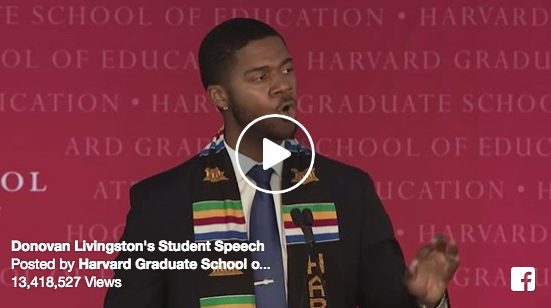
by Taryn Finley of The Huffington Post
Last month, Rainbow added “social justice” to our mission statement. Now, more than ever, education needs to be a force for empowerment, rather than indoctrination. This young teacher’s incredible spoken word poem begins with the Horace Mann quote, “Education is the great equalizer of the conditions of man.” He then reminds us that when Horace Mann said that, his people were hung for learning to read. He goes on from there. It’s powerful.
by Renee Owen | Apr 29, 2016 | Blogs, CEO's Kaleidoscope, Director's Blog, Publications
Kaleidoscope, April 2016
The Maypole gets wrapped on Monday at the annual Rainbow May Day Celebration – a quintessential Rainbow event. Fairies, elves, ancient dances, strawberries and cream – anyone who can slip away for the morning from 10:30 to about 11:30 will be filled with the delights of spring and the gift of life. You are all invited!
The LONG Summary of the March 22 Community Circle
The last Kaleidoscope I published was right before the March Community Circle, which was about “Cracking the Nut.” How can we keep tuition affordable, while increasing teacher salaries and improving equity? We started the meeting with an overview of how the budget is developed each year at Rainbow, stressing that since 80% of our expenses are staff salaries and expenses, any raises in staff pay directly increases tuition. We noted that our overall financial standing is very solid as a non-profit organization.
There seemed to be general agreement that the need to pay our teachers at least equal to district public school teachers is paramount, and whether the money for that comes from fees or increased tuition, people are behind that effort in spirit. In fact, people have made the point that paying our teachers fairly is an equity issue.
However, there was also concern that increasing tuition would create a hardship on many current families who might not be able to stay through years of tuition increases, and as one parent expressed at the meeting, they don’t want Rainbow to become a culture of the elite, where only those of the highest income brackets attend. As I put it in one of the slides in my presentation, we want a culture of community, not a culture of commodity – the latter being more like a business, and the former a culture where a community of people are working together to create a successful nonprofit organization and to provide the healthiest and most loving atmosphere possible for our children. If tuition increases too much, would that increase the risk of a more transactional/commodity-based community developing?
How much would tuition increase annually in order to meet the current goal to raise teacher salaries to the level of district teachers within four years, along with other strategic plan goals, such as increasing diversity?
Approximately 7% a year, for four years. To provide some context, the national average for private school annual increase is 5.4%. For the 2016-17 school year, Rainbow tuitions are increasing 6.8% on average.
To simply maintain regular staff raises, we need to increase tuition about 4%/year. The extra 3% increase amounts to about $360 per family/per year on average, or about $30/month.
The most confusing aspect of the meeting was having teacher pay linked with increasing equity and diversity.
The primary reason for this linkage is that if teacher salaries increase dramatically, the higher cost of attending will make RCS even less equitable, further exasperating its inaccessibility to those of lower and moderate incomes.
What is the connection between equity and diversity?
Equity is not the same as equality. Equality means that everyone is treated exactly the same. Equity means that those who have fewer advantages are given a chance to have some of the same opportunities as those with more advantages. In a society where people are born into very inequitable situations, we all struggle with the issue of inequity: It’s inherent in our society, but an organization that believes in mitigating societal issues rather than exasperating them, would logically try to make its own culture as equitable as possible. In a private school, financial aid is an example of a tool that promotes equity. Those who can’t afford to pay 100% of tuition receive a discount. Roughly 25% of our school population already receives a tuition discount, including staff children.
What do we mean by diversity?
Diversity comes in many forms, including religious, ethnic, racial, socio-economic, and gender identification, to name a few. We think/hope Rainbow is a fairly open and safe environment for most forms of diversity. However, racial diversity is severely lacking, and socio-economic diversity could be improved.
Why do we want diversity?
At the community circle, I presented a list of six primary reasons – too much to delve into within this newsletter. One reason is that we are a holistic school with a mission to develop leaders who will build a more compassionate world. We teach primarily using experiential learning, which means kids learn through experience. While we can cognitively teach students to be open, accepting, and empathetic of people of all types of races, incomes, etc, if they are not experiencing that diversity, it is very hard to embody that acceptance.
Is there a connection between racial diversity and socio-economic diversity?
In Asheville, yes. While the rest of the country is becoming more racially diverse, Asheville has one of the most severe gentrification circumstances in the country, making it whiter with each passing day. It’s been especially devastating for the African-American population. A mere few years ago, black people made up approximately 18% of our population. That number has sunk to as low as 8% by recent estimates. Of the black people who remain here, 59% are below the poverty line, and about 50% live in housing projects — some of the worst statistics for black people in the country. This is one of the reasons Asheville is extremely segregated along racial and income lines. There are very few middle class or wealthy African Americans in Asheville. Therefore, to build a more racially diverse population at Rainbow, statistically, we would have to offer affirmative action/financial aid funds, meaning increasing our socio-economic diversity as well. However, please don’t assume that all students of color at Rainbow are on financial aid, as that is not the case!
Isn’t there more to building a diverse school community than offering financial aid?
There sure is, which is one reason why we have a Director of Equity, why faculty have been focused on training around equity and racial understanding, and why we are auditing our classrooms and curriculum with an eye to equitability. Campus needs to feel like a safe, comfortable, and open atmosphere for all races. That includes having enough diversity that people don’t feel they are token members of a particular race.
Should our strategy be to increase teacher salaries first, and then focus on diversity?
I have had several people ask this, and it’s a fair question. Of course income is important to our teachers, but so is equity. These are people who got into teaching to change the world! That is why they are such great, passionate teachers. The staff doesn’t see this as an either/or situation. We aren’t going to EITHER raise teacher salaries OR improve equity; we need to do both. As one teacher put it, “I only want to work at a school that holds equity as a number one value.” Teachers know that to properly serve your child, they need to be a part of a community that walks the talk of one of our core pillars, as stated in our method: “We model within our community the kind of world in which we aspire to live.” Our teachers believe that all children should have access to an education like we have here. While we are practical about not being able to accept anyone and everyone on a sliding fee scale, we believe we can do better than we are now.
The good news is that all of the above is possible as long was we proceed at a modest pace.
Some of the revenue-gaining methods presented and discussed at the community circle to both increase teacher salaries and improve equity were:
-Increase the annual campaign
-Implement an extra fee that is on a sliding fee scale.
-Increase revenues outside the parent body by opening the Rainbow Institute to bring in large outside grants and also revenues for services. (To be continued…more on this in the next Kaleidoscope.)
We may do a combination of all of the above in order to mitigate tuition increases. Be assured that we will take this one step at a time. Our board and administration do an excellent job of managing our finances, and we will not take on any extra expenses without having the revenue in place. The plan that is adopted, with include a year-by-year analysis and opportunity to adapt.
As I said above, I have had many people approach me to say how important it is to them to pay our fabulous teachers fairly, and they were very willing to pay more tuition in support of that effort. That’s awesome! The teachers feel so supported! That spirit is what makes our community special. We also hope to find solutions to keep those families who can’t afford higher tuition here.
New ideas
Some good new ideas came out of the circle. My personal favorite was the idea to give parents the opportunity to make a donation any/every month along with their TADS payment. This would probably greatly increase the amount of funds donated each year. Margaret is trying to figure out if this is possible through the TADS platform.
Another idea that an expert in sustainable systems later gave to the board, is to calculate the value of attending school at Rainbow Community School, and work backwards from that. Of course, the value is much higher than the tuition that is actually being charged. New families coming in may choose to pay the full value, and current families could choose to continue at the current tuition trajectory.
OTHER NEWS
News of planning a high school
Yes, it is in our strategic plan to examine the feasibility of opening a high school within 7 to 10 years, but many of you have been very excited to learn that we were applying to the national XQ competition for the chance to win 10 million dollars for the purpose of starting a high school. I am honored to announce that our high school design is one of 347 that made it into the semi-finals out of the original 1200 teams. While we need to be realistic about our chances of being one of the five teams who wins $10,000,000; the competition has forced us get our high school concept on paper, which will be a huge advantage in the future, when/if the opportunity to open a high school presents itself. Some of you have asked if we do win the XQ competition, how long before the high school would open. XQ has not defined their preferred timeline, but it is rumored to be about three to five years.
How about those Lectica Scores? Hopefully, you got to read the exciting announcement about Rainbow scoring higher than any other school in the nation. Here is a link to the letter.