by Renee Owen | Sep 1, 2015 | Director's Blog
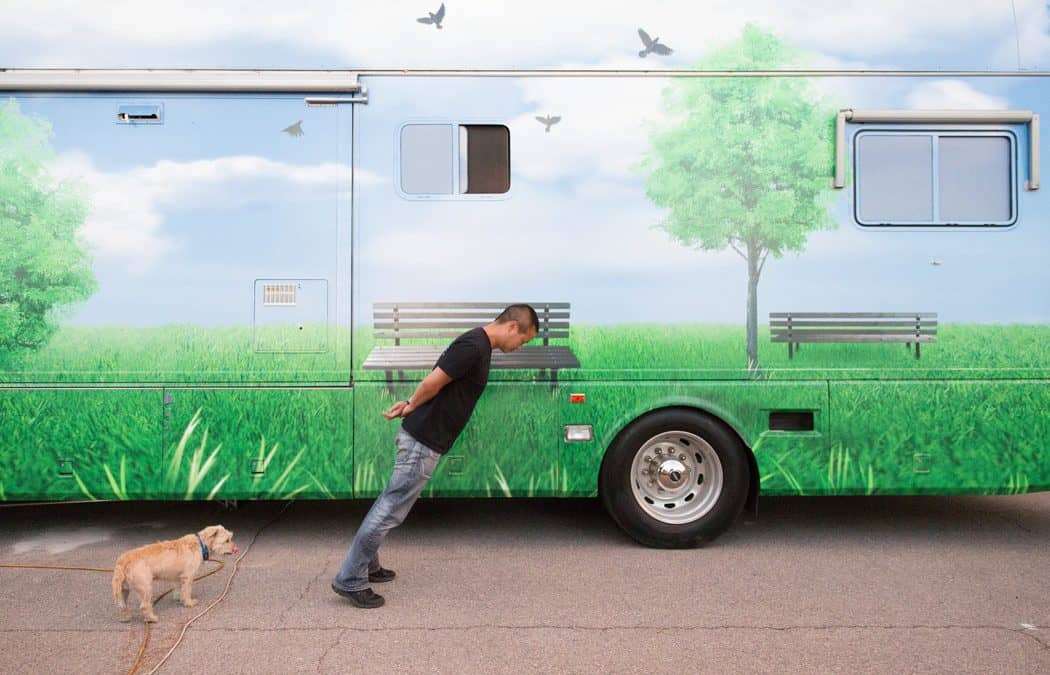
Link to New York Times: At Zappos, Pushing Shoes and a Vision
People often marvel at how well Rainbow runs. We have an incredible philosophy, curriculum, teachers, community, etc; but all of that doesn’t produce results without great systems. Five years ago, Rainbow adopted “Sociocracy,” also called “Dynamic Governance” — a governance system that collapses the hierarchy at specific times, so that everyone has an equal voice. Not only is this very empowering, but it seeds incredible innovation. It is a critical reason why Rainbow has become the innovative educational leader that it is.
There has been a lot in the media lately about Holocracy — the non-hierarchical governance system that Zappos has adopted. It’s not going so well, as this New York Times article notes. What is different between Holocracy and Sociocracy? The problem is that Holocracy “throws out the baby with the bathwater” by completely doing away with the hierarchy. Hierarchy, for all it’s problems (lack of innovation, lack of empowerment), has one really huge advantage — it’s VERY efficient. Sociocracy, on the other hand, is the best of both worlds. It retains the efficiency of hierarchy, while adding a level of systems that flatten the hierarchy for appropriate times. People have a voice in how the organization is run, they take on leadership and ownership, AND everything runs very efficiently. Best of all, in today’s world of fast-paced change, Sociocracy systems make Rainbow incredibly adaptable. As new ideas are introduced or problems arise that need to be solved (internal or external), innovative and effective solutions and strategies are quickly, often seamlessly, adopted.
by Renee Owen | Sep 12, 2014 | Director's Blog
How Can a School Promote a Culture of Innovation?
As I enter the “Omega” (7th and 8th grade) classroom at Rainbow Community School, a large Buckminster Fuller-designed dymaxion world map is on the floor, the basis for a game where students are moving around chips that represent various world resources.
Incorporating Systems Thinking
Two students with laptops are meeting with Jason Cannoncro, one of the lead teachers, about a grant proposal they are writing to create a local non-profit organization that will give homeless people work on the many organic farms in Asheville. Several students are puzzling over models they are creating of sustainable energy systems. One girl is playing a radio powered by a tiny solar panel system she designed herself.
How Can We Design Systems to Ensure All Humans Have Their Needs Met?
The curriculum at Rainbow Community School has been carefully designed and refined to prepare students for the culminating middle school unit described above.The essential problem that students ask and begin to solve in that unit is,
“How can we design our systems and our culture to ensure that all humans on Earth have their needs met, without depleting planetary resources?”
The Native Americans thought of sustainability in terms of seven generations. They might have asked the essential question for the unit in this format: “How can we provide dignity for each human and all living beings for the next seven generations?”In this unit students are asked to think about human equity and fulfillment, and how to get there. They are required to develop designs and prototypes for inventions that help sustain the natural world, while providing for a high quality of living. Students who are successful within this multi-faceted, complex unit are the next generation of innovators. How does Rainbow Community School prepare its students for this culminating unit?
You can find out how RCS prepares its students and more on part IV here.
RCS Director, Renee Owen has a series of Educating the Innovation Generation articles.
Click below to see the other parts:
Educating the Innovation Generation – Part I
Educating the Innovation Generation – Part II
Educating the Innovation Generation – Part III
by Renee Owen | Apr 1, 2014 | Director's Blog
Why create innovators?
Rainbow’s mission statement ends by saying we are developing students who will be “leaders in building a more compassionate and environmentally sustainable world.”
Anyone enrolling their child at Rainbow must resonate with the urgency of this goal. One would have to have blinders on to ignore the stream of evidence and quotes from leading scientists, sociologists and experts in almost every field who declare that sustainability is the most important vision for human survival.
From Tony Wagner, “The solution to our economic and social challenges is the same: creating a viable and sustainable economy that creates good jobs without polluting the planet. And there is general agreement as to what that new economy must be based on. One word: innovation.”
This is a three-part Heart of the Matter on preparing children to be innovators. In the first part, we will explore how rapidly our world is changing and try to adjust our own thinking to the new paradigm of innovation. In Part Two we will examine why innovation is important and how innovators are developed. Finally, in Part Three we will unveil the barriers to innovation in our current traditional school system and society. We will understand the methods Rainbow uses to encourage innovation, and how parents can support that effort at home.
Download the rest of Part I here
Innovation Generation Part II