Brain Breaks: A Technique for Meeting Student Potential

Brain Breaks: A Technique for Meeting Student Potential

The Director’s Kaleidoscope: Exploring the many colorful aspects of learning
at Rainbow Community School

What Are Brain Breaks?

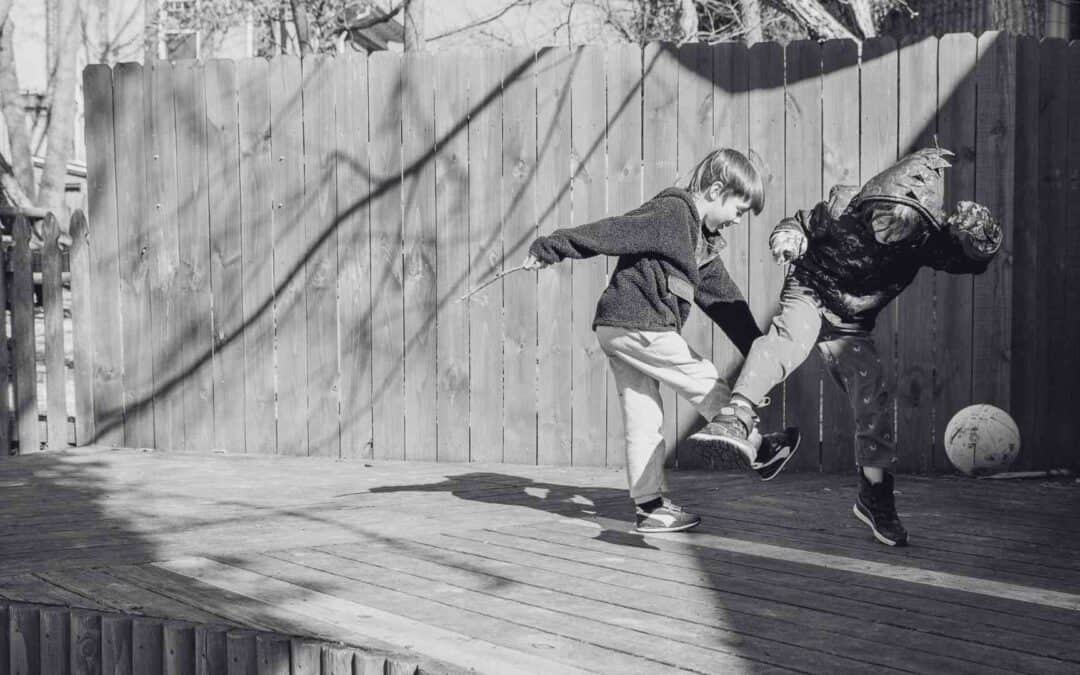
Hi, my name is Susie Fahrer, and I am the executive director of Rainbow Community School and Omega Middle School. One of the things you’ve probably heard people talking about when they’re discussing a powerful learning environment is this concept that has been termed “brain breaks,” and what’s interesting about that is brain breaks are often described as moments in time when a learner maybe moves into a physical activation, steps away from a task, moves their body, maybe changes their breathing pattern, perhaps, does something that elevates their heart rate, or maybe just something that creates laughter or a different train of thought.

Brain Breaks as Brain Energizers and Optimizers

While these are essentially called brain breaks, maybe they should really be called brain energizers or optimizers, because the reality is, while the brain is shifting its focus from the task at hand, it is designed to really support learners in synthesizing information and creating deeper neuro pathways.

Supporting Sustained Mental Focus

You know, there are different reasons and different places, as you can imagine, for needing a shift in how our brains are working. So perhaps it’s about the sustaining of a mental task. For students as they matriculate, one of the things we work on is growing their capacity for longer periods of stimulation. So for some, that might be longer rigor around focusing on a writing task, or for some, that might be sustaining the mental energy to really work all the way through a multi-step mathematics problem.

How Brain Breaks Help Students Reintegrate and Learn

What a brain break can do is allow a student a strategy for stepping back from the energy of sustained mental acuity, give their brain a different focus, and then reintegrate, ready and more optimized for learning. Equally, we might think about these strategies using support for creativity. I’m sure many of you have had that experience where you’re working on a creative task, possibly in the brainstorming phase, and maybe just feeling really stuck.

Brain Breaks and Creativity

Well, the reality is, when we uproot ourselves and don’t force that creativity to come through and find a slightly different way of moving our bodies, breathing through a few exercises, talking to a friend, having a social stimulation, and then returning to that creative task, maybe even taking a walk. Those things will help our bodies and brains process and move out of that stuck period.

Optimizing Learning and Full Potential

So now we’re talking about optimization not only of sustained mental energy, but also of our creative energy and our ability to really bloom our full potential. We use brain breaks here at Rainbow – brain energizers, brain optimizers – in all of our classrooms in developmentally appropriate ways. Eventually, our students learn to engage these strategies for themselves as needed within their learning spaces.

Using Brain Breaks at Home

If you’re interested in learning more about strategies you can use at home, please check the attached document. Again, we always welcome you. Come on in. Take a look at our classrooms. If you’re already here, come and have a conversation about how you can use brain breaks at home to support your child, particularly when they’re in a mental task that might be a little bit of a stretch for them. Our door is always open. Look forward to chatting with you. Take care.

Learn More

Continue exploring ideas from our Director’s Kaleidoscope series, including topics like executive functioning, student autonomy, and project-based learning.

The Student-Teacher Relationship

The Student-Teacher Relationship

The Director’s Kaleidoscope: Exploring the many colorful aspects of learning
at Rainbow Community School

Exploring the Role of Student–Teacher Relationships

Hi, my name is Susie Fahrer, and I am the Executive Director of Rainbow Community School and Omega Middle School. One of the things that I get asked often when I’m sitting with a family, exploring the options for the educational choice and journey of their child, is about the ways that teacher and student relationships are developed. 

The Student–Teacher Relationship

Many of us can recall back from our own educational experience a teacher who took the time to get to know us personally. We probably felt validated. We probably felt highly motivated to perform in that classroom because we understood that the teacher was there not only to encourage us to be learners, but also to help us advocate for ourselves and our full potential. At Rainbow, we have the privilege of a variety of ways that we foster really meaningful relationships between a child, a teacher, and their full classroom community.

Listening Conferences: Building Strong Partnerships with Families

It all begins every year with something called a Listening Conference. This is a time when we invite families in to sit with the educators in the classroom and share about the journey and values of the family. This partnership is so critical for our teachers to be able to then take what they’ve learned about this child’s journey thus far, and push forward their full-potential, support-areas of challenge and sensitivity, and grow them not just as learners, but as humans.

The Rainbow Seven Domains™

As you’ve probably noticed, one of the primary components of a Rainbow education is our Seven Domains model. This model is built to enhance the capacity of every teacher to really learn, witness, and connect to the children that they have in front of them in any given year. 

Understanding the Whole Child

When we think about each learner above and beyond who they are and how they show up just in the mental domain, but also as social and emotional beings, the way they engage the natural world, their ability to express creatively and connect creatively, using their physical outlets and growth points, engaging their spirituality and the world of wonder and awe and community and connectivity.

Developing Powerful Student–Teacher Relationships

These are all things that dovetail and enhance their educational experience. Research suggests that the more a teacher can develop a really powerful relationship with the child, the more likely the child is to step into highly motivated experiences. They’re going to face challenges in a slightly different way when they know the adults around them are building the environment for positive risk-taking, that we’re celebrating mistakes as learning opportunities, and that they see that they can inherently grow and learn, fail and rise in ways that are supported by the adults around them. 

Motivation, Risk-Taking, and Growth in Early Childhood

At Rainbow in preschool, the teachers are masters at looking around the classroom, watching the students engage in hands-on learning and play, and then designing skill-building with the students, leading in areas of interest. Already, an engaged brain is going to be able to push further in skill development when they have not only areas of excitement and interest, and wonder, but also teachers who are adaptable and able to engage those moments for learning. 

The Learning Environment

As we move into our elementary classrooms, you’ll see the students start to become more partners in their learning environment. Now again, the areas of risk-taking grow – the more a child is faced with opportunities of rigor and challenge. 

Multi-Sensory Learning and Individual Support

The teachers at Rainbow take the time to understand how they can best support each child through multi-sensory learning and different and various opportunities for engagement. So the child who’s maybe more willing to face a challenging task through a physical engagement is supported in that domain, while a child who’s going to show their best thinking in a quiet space for writing, and that type of expression is also going to be supported. Equally, we’re going to provide the spaces for children to grow in their areas of challenge and opportunity. They see their teachers as partners in their learning journey, as people there to support their best efforts.

Creating an Optimal Learning Environment

That’s critical in really creating not only an optimal learning environment for a full classroom, but for every child to start to see themselves as a really powerful learner. We want that to be embedded in their identity development. 

Supporting Agency and Passion in Adolescence

As students matriculate into adolescence, our educators in our middle school program are truly trained to understand the adolescent brain and to optimize those learning experiences for our young people, who at this point are really seeking some opportunities for agency, guided choice, and investment in their own learning. Their passions are starting to develop, and our teachers have the ability to engage those passions with meaningful course content. We’re also there to open up their world to new possibilities as they’re moving into adolescence. There’s a whole world that’s opening up in front of them as they think about moving into high school and beyond.

Preparing Students for the Future

We want our students to feel really prepared and able to engage in their best learning as they move beyond our doors. As you start to explore the best possible fit of educational environments for your child, the relationship and development of really powerful connections with their educators is going to be at the heart of their success. We’re so grateful to have so many wonderful teachers here at Rainbow.

An Invitation to Experience Rainbow Community School

We would love for you to come and join us here and meet the educators. See this in action, and if you’re already a part of the community, we hope that you’ll continue to look ahead and see the next step in your child’s journey. Thanks so much for listening. Enjoy the day.

Download and print our free resource guide to learn more about Questions that Foster Meaningful Relationships.

Learn More

Continue exploring ideas from our Director’s Kaleidoscope series, including topics like executive functioning, student autonomy, and project-based learning.

What if We All Led with Compassion?

What if We All Led with Compassion?

The Director’s Kaleidoscope: Exploring the many colorful aspects of learning
at Rainbow Community School

Leading With Compassion

Hi, my name is Susie Fahrer, and I am the Executive Director of Rainbow Community School and Omega Middle School. Several years ago, I ran a workshop in partnership with a friend called “What If We All Just Led with Compassion? That title has stuck with me over the years as an educator, considering all the ways that school has the ability to cultivate compassion within our young people.

Cultivating Compassion at Rainbow

At Rainbow, we have lots of intentional strategies for building the capacity of our children to think, communicate, and learn with compassion. So it all begins in our earliest childhood classrooms and our preschool with a program called the “Zones of Regulation.” This is a program that was adopted at Rainbow because it so beautifully provides a foundation for understanding the emotional experience of a human.

Understanding Emotional Experience in Early Childhood

As you know, we all experience a really wide range of emotions. And for our littlest learners, we really want them to build a relationship to all the ways they express themselves, as well as understanding the nature of each emotion that they experience. So to that end, we make sure that our young students understand that there are no bad emotions.

The Zones of Regulation

There are just emotions that really are not meant to sustain them for long periods of time. So the Zones of Regulation provides a map that’s color-coded and allows our students to see different types of emotions that they experience, and code them to a color. So, for example, sadness might be a blue emotion. While frustration might be a red emotion.

Learning Strategies for Regulation

And really, our goal is to always give them strategies to come back to the more easeful experience of the emotions within a green setting. And so they learn things like breathing. They learn things like pausing and expressing their needs. They learn things like tuning into their body and seeing what their body is telling them that they need.

Building Toward Nonviolent Communication

And all of these pieces begin a really strong foundation that then builds as students matriculate with us and move into a more formal understanding of nonviolent communication. Now, for many of you, you might be familiar with the strategies of nonviolent communication, but this is not just a tool for young people. It’s a tool that all of us adults included at Rainbow Community School practice and utilize regularly.

Emotions, Needs, and Conflict

It allows us to build on the idea of understanding the different types of emotions and matching them to the needs that we have. The reality is that so many times when we experience conflict, it is because our needs are not being met. And one of the nuances of nonviolent communication is this understanding that our needs can never be in conflict with one another.

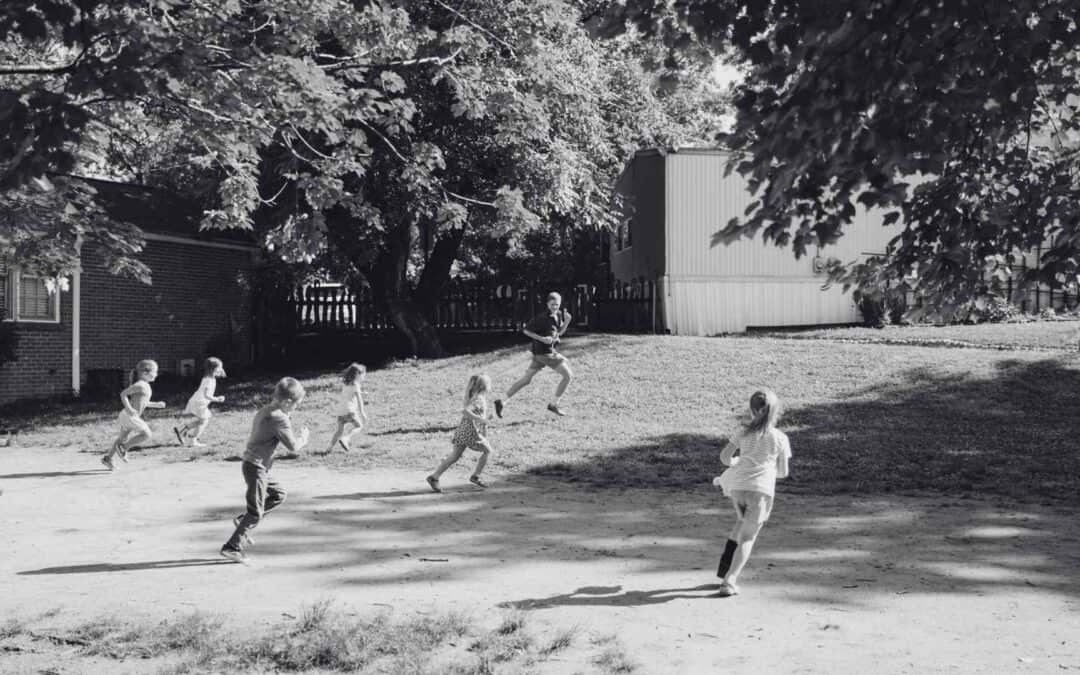
Practicing Nonviolent Communication on the Playground

It is merely the strategy we’re using to meet those needs. So for our students, when they experience a conflict out on the playground, perhaps they’re playing a game, and someone feels that they are unjustly called out of that game, or “They’re not playing fairly” is often a term we hear across those elementary ages. And maybe they walk away from the game upset, or perhaps they’re told they’re not allowed to play with their friends.

Expressing Feelings and Making Requests

Well, this is all a great experience for our young people to practice nonviolent communication. It asks them to express what they’re feeling. Perhaps they’re feeling disconnection or confusion, or worry because they’re afraid of the impact this conflict has had on their friendships in the classroom. And maybe their need is for a little bit of understanding, or patience, or to be heard, or to have an understanding of the exact rules we’re playing by.

Compassion, Scholarship, and Learning Readiness

And ultimately, they learn to make these requests so that we can build a more inclusive culture for our students. And the capacity for them to move out into the world and build conversations of regulation, support, and clarity. These skills that we’re cultivating in our young people are not just about social-emotional development. They are inherently impacting our students’ ability to be scholars and thinkers.

An Invitation to Visit and Connect

You know, let’s consider for a minute how critical it is for your emotional status to be regulated, for our brains to be grounded in order to truly learn and understand the knowledge that’s being imparted to us in school, in our workplaces, right? And so these skills are enhancing the experience of every child within Rainbow Community School, not only to lead with compassion for themselves and for others, but also to be ready for the powerful learning experiences that come when we are regulated, grounded, and ready for a day of classroom discovery, wonder, and awe.

Thank you so much for listening to a little bit about how we cultivate compassion at Rainbow Community School. We welcome you to visit our school. If you haven’t had a chance to swing by, or if you’re already a member, you know my door is always open to have conversations that further our ability to work in partnership towards cultivating compassion, care, and a culture of belonging.

Download or print our free resource guide on Exploring the Values of Compassionate Communication to learn more.

Learn More

Continue exploring ideas from our Director’s Kaleidoscope series, including topics like executive functioning, student autonomy, and project-based learning.

Kaleidoscope – January 2021

Kaleidoscope – January 2021

Kaleidoscope – January 2021

We are excited to dig into the Pollyanna Racial Literacy Curriculum where every voice counts, particularly those that are least often heard. We are using this curriculum as a supplement to what we already teach and it so naturally fits into our ongoing efforts for a holistic education. We encourage you to review the Pollyanna Parent/Guardian Guide to get a better understanding of what your student will be learning. – Danae Aicher, Equity Director


Dear Rainbow Friends and Families,

I hope that 2021 brings many blessings to you and your family. It marks a new beginning. It is one of many new year cycles that lend itself to reflective and visionary thinking. At the school level this is a midway point. It is a natural fulcrum upon which we balance looking back at what we have accomplished and learned, and looking ahead to the possibilities and intentions for the future. 

Looking back, the gravity of 2020 is powerful in both its own right and in the ways it surfaced for some, and reinforced for others, the collective influence of our nation’s history on our modern experience.  Our obligation to analyze Rainbow’s equity efforts, and to reckon with our evolution of impact, became exceedingly clear during a thriving pandemic and racial tensions. This work is never done, but the more we centralize it, the more it will be internalized individually and systemically. 

Naming a commitment to social justice in our mission statement and establishing ourselves as an Affirmative Action school are foundational efforts. These ideas are continually revisited to ensure their integrity. Additionally, the work of building the structures, systems, and culture of an institution that lives these principles is an active role we all play regularly. This Kaleidoscope is dedicated to surfacing several of the elements that comprise our current progress in offering a humane and decolonized educational experience for our families and children. 

Below, Danaé Aicher, our Equity Director, speaks to the power of embedding our institutional work within the larger context of national events. 

There’s an old saying that if you want to make God laugh, tell him your plans. The idea is that the universe will always test our commitment to whatever it is we declare we want to do.

Like so many other organizations, we here at Rainbow, have declared our commitment to equity. Equity is trendy. So much is going on in the world around us that lots of people are getting on board, anxious for some way to affect change. The ideological shift to equity is challenging all by itself. Rainbow has done that. For us, the challenge is (and will continue to be)… How do we live our mission?

The last year has really tested us. COVID put a spotlight on the cracks through which too many of our students and families are getting caught. And even as we work overtime to adapt to the changes we have to make in order to provide the best version of a Rainbow education that we can, we know that our models simply don’t work for those who are most vulnerable. Fortunately, we do not believe that pandemic education will last forever. Inherent in this pause is the obligation that we build back our educational programming with a lens on systemic and institutional norms that are in service to all students, families and staff. For further transparency, our Strategic Plan names benchmarks we are working to achieve in the next five years. 

This summer, another series of murders of Black people, The Black Lives Matter protests that swept across the country, and the political rhetoric we witnessed opposing them, shone another spotlight; a spotlight on a deep racial divide of experience in this country. Many of our white parents woke to a calling for new awareness and answered that call by engaging in honest and sometimes painful discussions with each other as well as with some of our parents of color and parents of students of color. Attendance at events like Talking to Kids About Race and White Supremacy and Me Discussion Groups, and participation in Equity Circle  are examples of this work. Out of this, we are watching families develop deeper relationships and bringing us more into community with one another. Furthermore, some of you are asking profound questions of us and pushing us to have greater imagination about what it means to “develop accomplished, confident, and creative learners who are prepared to be compassionate leaders in building a socially just, spiritually connected, and environmentally sustainable world.”  

That mission feels especially important right now. We witnessed a horrifying scene last week. While we are not a political organization, we are one that collectively seeks to honor the whole body. That is what it means to be holistic. We cannot honor the whole without telling the truth. Terrorism is defined as “the unlawful use of violence and intimidation, especially against civilians, in the pursuit of political aims.” Insurrection is defined as “a violent uprising against an authority or government”.  On January 6, we witnessed a terrorist insurrection. While there’s shock and sadness for many of us, let’s keep in mind that for some in our community there was less shock and more expectation- an understanding that this has been part of the duality of our country. And the fear and worry is not esoteric or theoretical or even political; it is an everyday lived experience of having to always be aware of one’s surroundings, who is around, and who can be trusted if they face physical harm. We live in two Americas and none of us wants to continue that. 

That is why it is so important that we develop a broader curriculum for our students, one that encourages curiosity, sensitivity, cultural awareness, and critical thinking. Our Omega curriculum, and the required Equity Elective offer students the chance to examine our history and our present, find the inconsistencies in our ideals, and find the moments of great leadership beyond the common “heroes”. What lessons can they take from that and model in their own lives?  

We are excited to dig into the Pollyanna Racial Literacy Curriculum where every voice counts, particularly those that are least often heard. We are using this curriculum as a supplement to what we already teach and it so naturally fits into our ongoing efforts for a holistic education. We encourage you to review the Pollyanna Parent/Guardian Guide to get a better understanding of what your student will be learning. 

As we approach re-enrollment season, it is an opportune time to consider what it means to commit to Affirmative Action as a school community. One aspect is weighted admission, meaning preference is given to children and families of color that would like to join our school community.  Of course, this is just the beginning. We need to ensure that once a family or child of color joins our community, we apply every effort to create a climate of inclusion and belonging. Affirmative Action means we exercise the right to interpret and apply policies differently for children and families of color. As Michelle Alexander, author of The New Jim Crow, explains, “Treating different things the same can generate as much inequality as treating the same things differently.” A commitment to Affirmative Action implies that when we build a culture of equity, instead of equality, we all benefit because our needs are met in compliance with our individualized experiences. 

While not a specific example of Affirmative Action, the 6th grade classroom currently provides a prime example of applying a policy differently to a subset of our population. Grade six has been an anomaly this year because a large number of students enrolled in fully remote education. It has reached a point that we are able to defer the cohort model, and offer fully in person learning for the eleven eligible families, until February 26th when the next round of re-enrollment decisions are made. In addition, we are able to offer fully in person learning to the two siblings of 6th graders that attend Omega ⅞ programming. Unfortunately, we are not able to make this same offer for the siblings at the elementary level, because our resources are different. The 6th grade parents consented to this decision, highlighting a community that understands that we should not prevent optimal learning circumstances for some, simply because we cannot provide them for all. That being said, we all experience indirect benefits of this opportunity that will pave the way for further reintegration to weekly in person learning as it is safe and viable for other parts of our institution. 

Kate Brantley and I are participating in Whiteness At Work. It is a four part training series designed to dismantle norms influenced by white dominant culture that impede the success of building a safe diverse working environment. While the Pollyanna curriculum focuses on a ground up approach to equity through educating our children, this type of analysis ensures the equity lens is utilized with a comprehensive, systemic, and long term vision intact. This includes hiring practices, evaluation systems, daily work conditions, and more. Fortunately, this is not the task of administration alone. Our Dynamic Governance structure provides ample opportunity for systemic change to be fostered through collective community action. We are stronger together.

As we look ahead to the 21-22 school year, there is so much hope. Not simply for a comprehensive response to the pandemic and social unrest of 2020, but for the potential of an inspired reimaging of what is possible within and beyond our community and classrooms. Our conversation about equity is ongoing, and we will always be working to create and maintain a more equitable school community. 

On January 26th, we will be hosting a school wide meeting to offer a look at Rainbow’s future. I look forward to engaging in a hope-filled conversation with you all at that time. More details about this event will be shared in upcoming Rainbow Reminders and classroom Newsletters. 

It is my sincerest pleasure to be entering a new year with each of you. May we continue to build trust, dialogue, and community in the journey ahead.

In Love,

Susie Fahrer

Executive Director

Rainbow Community School and Omega Middle School
Kate Chassner – Team Highlight

Kate Chassner – Team Highlight

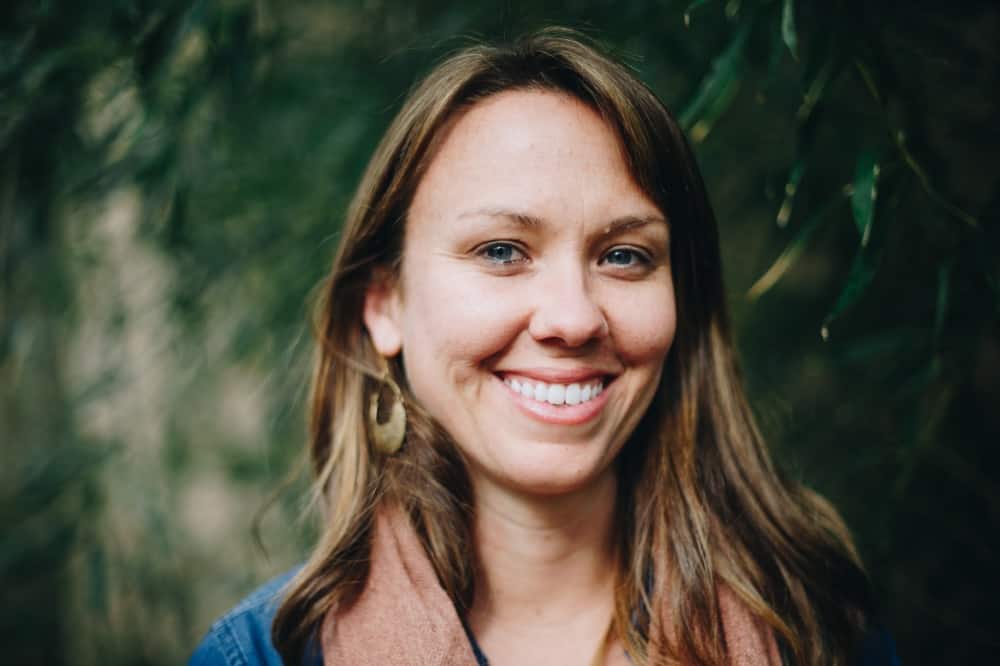
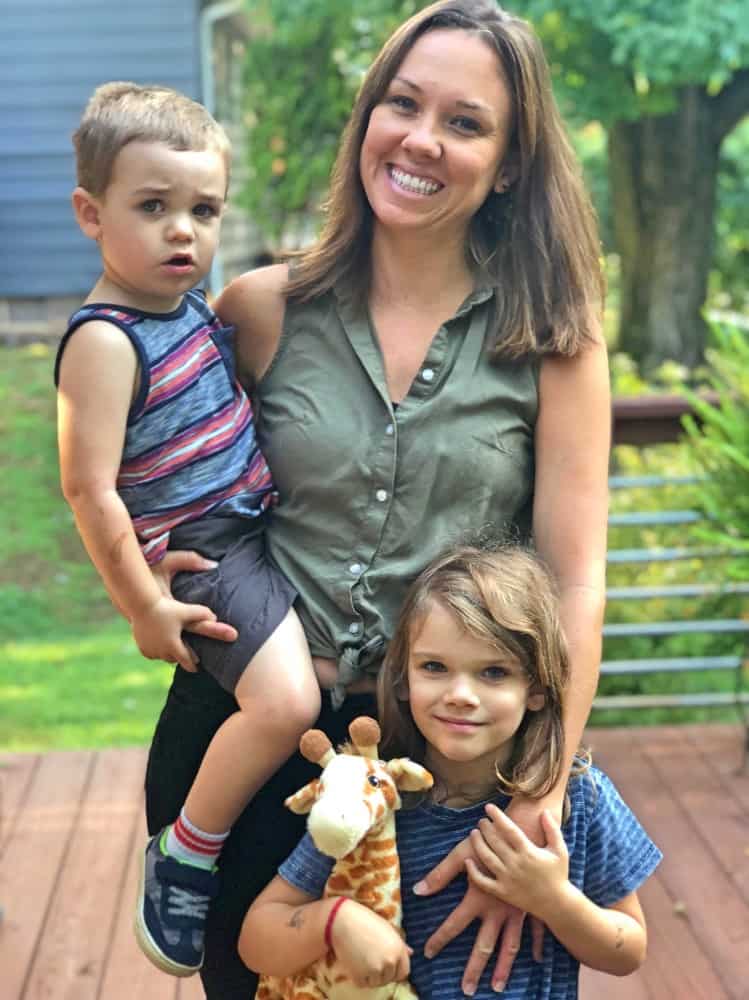
As we gear up for the school year, we thought it would be fun to highlight one of the first faces you’ll see on campus: Kate Chassner! She is Rainbow’s Office Manager.

She seemingly knows the answers to everything. Need keys? She’s got ’em. Need to know the schedule? She can tell you. Need to find someone on campus? Kate will know. Need to locate a form? Kate’s got you covered.

We gave her a set of questions to answer, interview style. It’s so fun to read the answers of these team highlights.
Kate_team highlight

You’re originally from Florida, right? How did you end up at Rainbow?

After I graduated from Florida State University, I moved to New Orleans with my sister. On a trip back home to Florida one Thanksgiving I ran into a friend from college and we started dating soon after. He lived in Asheville. I then decided that I should move here, too. We have been together for 10 years and have two kids. I’m glad I moved.

How long have you been in Asheville? At Rainbow?

I have been in Asheville since January 2010, and I have been at Rainbow since August 2011.

Why did you decide to do the work you’re doing now?

I was teaching preschool when I first started at Rainbow (and I taught preschool for years before coming to RCS). After I had my first child, coming back as a full-time preschool teacher was very challenging. I knew I did not want to leave Rainbow but I needed a change. At that time, the current Office Manager was transitioning out and I was able to begin helping part-time in the office. I was thrilled to train for the position.

What is the favorite part of your job?

I love getting to know everyone in the school and make connections with teachers, staff, parents and students.

Kate_chassner_team_highlight

What do you like to do when you’re not at Rainbow?

I love my family time! Going on hikes, bike rides, swimming, making forts, dance parties, cooking, painting and really anything with my family is what I look forward to most.

I am making more time for art lately, too. In addition, I have been taking marimba with Sue Ford.

I also try to run a few times a week and get into a good book.

You’re taking an art class on campus. What sorts of art do you like to create?

I am currently taking a drawing class, and I every time I take an art class I find out a new style or medium I love. Currently I create a lot of mixed media pieces (collage with my drawings layered in). Most of my art has a message about something I am passionate about. (You can see my art on my Instagram page @k8couture.)

What’s the best way to start the day?

My 2 year old wakes me up most mornings, earlier than I would like. But ideally I would like to wake up (after the sun has come up) and sit on the porch with a cup of coffee or go for an early run. Still, I know I will miss my sweet early mornings with my kiddos as they get older.

What irrational fear do you have?

As a parent I have all sorts of irrational fears for my kids. To that end, I have to find a balance between letting them be adventurous and keeping them safe.

What book(s) are you reading?

Right now I am reading, The Muralist by B.A. Shapiro and Conversations Worth Having by Jackie Stavros and Cheri Torres.

I read Americanah by Chimamanda Ngozi Adiche earlier in the year. I loved it and really enjoy anything by her.

What’s the farthest you’ve traveled from home?

I lived in Tokyo, Japan for 2 years when I was young (6 years old).

My family lived in Geneva, Switzerland when I was in college, so I visited there often. I also studied Art History in Paris, France. All were super interesting and wonderful. Traveling is such an amazing experience and I can’t wait to travel more as my kids get older.

What is something that everyone should do at least once in their lives?

Travel to another country.

What is an item on your bucket list?

A long overdue honeymoon with my husband

If you could talk to any person, living or deceased, for half an hour, who would it be?

Martin Luther King, Jr.
Pablo Picasso

What advice would you give to your younger self?

Take risks. Stay true to yourself. Tell the people you love how wonderful they are… as often as possible.

You have been granted one wish that WILL come true. What do you wish for?

I would wish for a greater understanding throughout the human race to treat people with respect and to celebrate our differences.