Writing in a World of AI

Writing in a World of AI

The Director’s Kaleidoscope: Exploring the many colorful aspects of learning
at Rainbow Community School

Writing in a World of AI

Hi, my name is Susie Fahrer, and I am the Executive Director of Rainbow Community School and Omega Middle School.

Considering AI and the Writing Process in Education

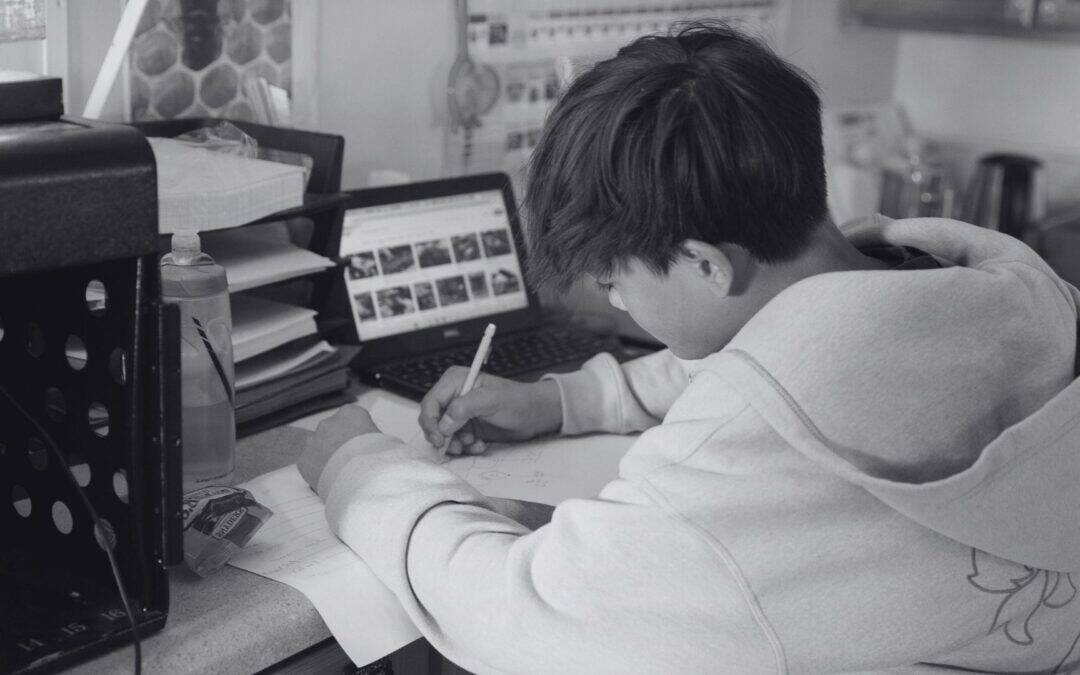
You know, I just finished reading an article from The New York Times entitled “What Do Students Lose When They Stop Writing?” And as you can imagine, this was a discussion of the entry of AI into writing practices. You know, for many of us who are in the education field, and for those of you who are considering the impact of AI on your child’s learning journey, there are lots of questions.

There are lots of opportunities. I thought this article did a really good job of just proposing some things for us to consider. At Rainbow, AI is something that we are engaging and being curious about, trying to find the best practices that support really deep learning with engagement in an ever-evolving world.

How Writing Supports Critical Thinking and Deep Learning

So first and foremost, as you can imagine, the research – and maybe even some of our personal experience – really suggests that the process of writing engages the process of thinking.

When we talk about what we want for our learners, it is to have a depth of thinking dispositions, a capacity for inferencing, critical thinking, and application of knowledge and inquiry, right? These experiences, which in many instances show up through dialogue and conversation, really create a different level of depth when we put them in the form of writing.

Supporting Diverse Learners With AI

So we also think about the idea that writing is something we can engage and support for our students with diverse needs. For some folks, the process of writing can feel like a barrier to expressing their true knowledge. In those instances, we’re seeing that AI can be a tool to provide intermittent supports.

Again, it seems like the place where all of us are trying to find balance is ensuring that AI is not doing all of the work for us and that we are maintaining the values and the critical thinking skills that evolve at every stage of the writing process – from considering our ideas, brainstorming, mapping out our thinking, drafting, receiving feedback, really finding voice and engagement.

These are all aspects of the writing process that can have speed bumps along the way. Recognizing the ways we can use support systems – both that of the educators and the human feedback, as well as, at times, supports from the ever-evolving technology.

Helping Students Use AI With Integrity and Balance

I also thought it was really interesting to be thinking about building our policies, both here at Rainbow and maybe for schools all around, to help students understand the why, the when, and the how of AI.

The more we empower our students to really understand it is a tool, and at the same time, there are times when we really want them to engage authentically in their own voice, the more likely they’re going to understand how to use it with integrity and with balance.

Preserving Student Voice, Identity, and Perspective

Lastly, I thought it was really interesting in this article, and again, it resonated for the values we set here at Rainbow, that some students, when they were being questioned about the use of AI in their writing practices, these were high schoolers, shared that they started to realize that, you know, the ideas that were coming forward were being proposed to anyone who was asking.

And again, it felt like maybe there was a loss of their own capacity to really engage:

“What is my idea? What is my identity? What is my perspective on this topic, on this literary essay, on this piece of writing that can express my true lived experience?

Finding a Balance Between AI and Authentic Learning

I share all of this because we’re on this journey together, here at Rainbow and with all of you, right?

When new technology comes along, we are in it together to figure out all the best ways to use it as an enhancement and engagement, and to balance it with our authentic learning process.

I’m sure this year I’ll be sharing more about how to engage the practice of writing authentically and through the use of tools of AI. See the attached document for a few suggestions of how to get started in finding the balance.

Look forward to seeing you here on campus if you are interested in exploring a Rainbow education.

For those of you who are already part of our community, thank you for being here. Anytime you want to talk writing, you know where to find me.

Be well.

Learn More

Continue exploring ideas from our Director’s Kaleidoscope series, including topics like executive functioning, student autonomy, and project-based learning.
Deep Listening: A Practice of Presence

Deep Listening: A Practice of Presence

The Director’s Kaleidoscope: Exploring the many colorful aspects of learning
at Rainbow Community School

Deep Listening: A Practice of Presence

Hi, everybody. My name is Susie Fahrer, and I am the Executive Director of Rainbow Community School and Omega Middle School. We are at the start of another school year, and it’s bringing us close to one of my most favorite traditions here, which is how we open a year in partnership with our families. And it’s called a listening conference.

But before we can really talk about the full breadth of the purpose behind a listening conference, we need to understand a fundamental value and skill that we cultivate here at Rainbow in the process of deep listening.

What Is Deep Listening?

So what is deep listening? Really, it’s asking us to think differently about how we receive information from our surroundings. It could be another person; it could be the natural world.

First and foremost, it requires a level of presence that asks us to really deactivate our natural tendencies, to be thinking about our responses, to be cultivating our reactions, possibly even judgments, to what we’re hearing, and just to purely create a space of receiving.

This practice really asks us to think wholeheartedly about the other persons or beings that we are receiving information from.

Deep Listening and the Family-School Partnership

So in this case, when we think about a listening conference, it’s: what are we receiving from a child’s family in partnership for growing a really valuable relationship of learning for the year?

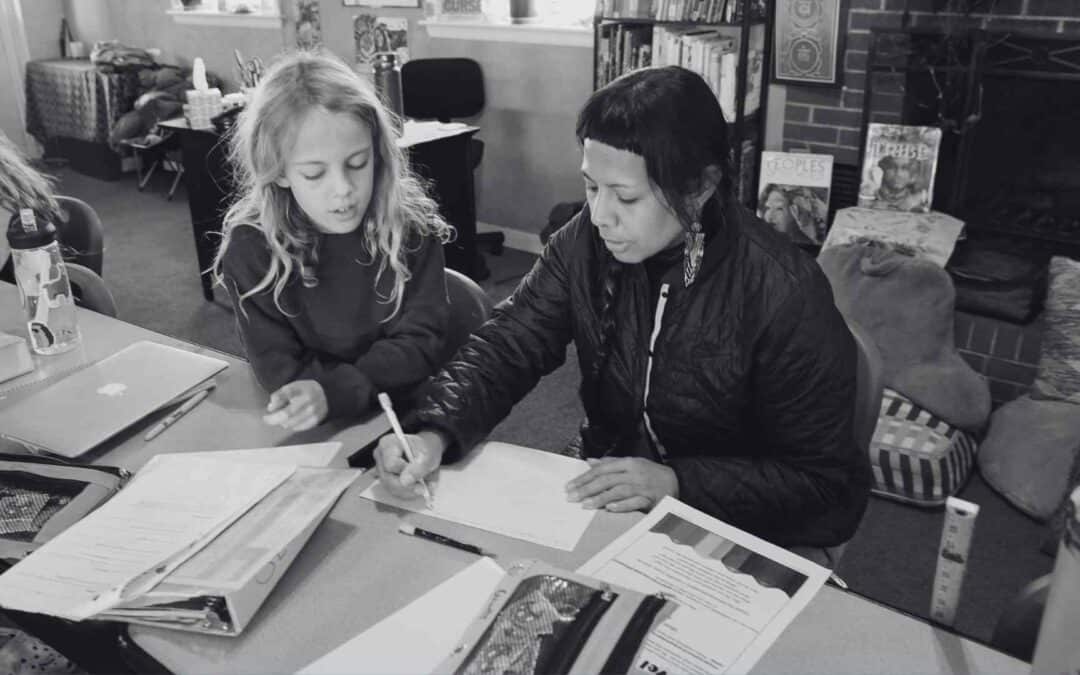
And as our families sit down with us at a listening conference, our teachers inherently create a space of “presence and pause.” We open with some type of provocation, usually centering the child, maybe a little breathwork, and really naming that this is the time for the family to share all of the ways that their child’s light is being brought into this universe, the way that they hope their child will grow, the way they hope their child will be honored.

Listening to Understand the Whole Child

And questions of, you know, how can we be in partnership with you? What do you see as your child’s greatest motivations and strengths? What lights them up? What brings them joy? How can we ensure that their time here grows their curiosity, grows their love of learning? And how can we do that in ways that support your family’s values, your cultural traditions? Right?

What can we invite into this space that really helps your child’s soul come into the room and be with us in that moment, and it sets our teachers up, and our families up for a year of returning to these questions of purpose and returning to the depth of what they believe they heard, ensuring there’s a level of follow-through and connection.

It invites a process of really seeing each child for who they are, in ways that are both incredibly concrete: how they show up in their math classroom, what ways they foster friendship in a community, and ways that are perhaps hard to define, you know, where can we support their emotional growth? What big wonderings and questions are lighting them up in the spiritual domain?

Returning to the Practice of Deep Listening

So we offer this space not just as an initial seed to a wonderful year together learning, but also as a reminder that we always have the ability to come back to a practice of deep listening.

When we are sitting across from an individual trying to foster a conversation that matters, trying to create space for honesty and vulnerability, and recognition of the work it takes to grow children together and to ensure that they are stepping into a lifelong love of learning, which is ultimately what we hope to create here at Rainbow.

Listening With Presence and Heart

Attached, you’ll find some suggestions about how to really think deeper on listening with presence and heart, and ways to continue to consider what the power is behind relationships, where deep listening is part of that context.

As always, if you are a part of our community, I would love to have a conversation with you about your child… create space for deep listening and partnership with you.

For those of you who are interested in learning more about Rainbow, feel free to book a tour or reach out to me personally. I’m always happy to have a conversation about how we foster a culture that supports not just our children and families here at Rainbow, but grows a loving and kind community for all. Be well.

Learn More

Continue exploring ideas from our Director’s Kaleidoscope series, including topics like executive functioning, student autonomy, and project-based learning.

Brain Breaks: A Technique for Meeting Student Potential

Brain Breaks: A Technique for Meeting Student Potential

The Director’s Kaleidoscope: Exploring the many colorful aspects of learning
at Rainbow Community School

What Are Brain Breaks?

Hi, my name is Susie Fahrer, and I am the executive director of Rainbow Community School and Omega Middle School. One of the things you’ve probably heard people talking about when they’re discussing a powerful learning environment is this concept that has been termed “brain breaks,” and what’s interesting about that is brain breaks are often described as moments in time when a learner maybe moves into a physical activation, steps away from a task, moves their body, maybe changes their breathing pattern, perhaps, does something that elevates their heart rate, or maybe just something that creates laughter or a different train of thought.

Brain Breaks as Brain Energizers and Optimizers

While these are essentially called brain breaks, maybe they should really be called brain energizers or optimizers, because the reality is, while the brain is shifting its focus from the task at hand, it is designed to really support learners in synthesizing information and creating deeper neuro pathways.

Supporting Sustained Mental Focus

You know, there are different reasons and different places, as you can imagine, for needing a shift in how our brains are working. So perhaps it’s about the sustaining of a mental task. For students as they matriculate, one of the things we work on is growing their capacity for longer periods of stimulation. So for some, that might be longer rigor around focusing on a writing task, or for some, that might be sustaining the mental energy to really work all the way through a multi-step mathematics problem.

How Brain Breaks Help Students Reintegrate and Learn

What a brain break can do is allow a student a strategy for stepping back from the energy of sustained mental acuity, give their brain a different focus, and then reintegrate, ready and more optimized for learning. Equally, we might think about these strategies using support for creativity. I’m sure many of you have had that experience where you’re working on a creative task, possibly in the brainstorming phase, and maybe just feeling really stuck.

Brain Breaks and Creativity

Well, the reality is, when we uproot ourselves and don’t force that creativity to come through and find a slightly different way of moving our bodies, breathing through a few exercises, talking to a friend, having a social stimulation, and then returning to that creative task, maybe even taking a walk. Those things will help our bodies and brains process and move out of that stuck period.

Optimizing Learning and Full Potential

So now we’re talking about optimization not only of sustained mental energy, but also of our creative energy and our ability to really bloom our full potential. We use brain breaks here at Rainbow – brain energizers, brain optimizers – in all of our classrooms in developmentally appropriate ways. Eventually, our students learn to engage these strategies for themselves as needed within their learning spaces.

Using Brain Breaks at Home

If you’re interested in learning more about strategies you can use at home, please check the attached document. Again, we always welcome you. Come on in. Take a look at our classrooms. If you’re already here, come and have a conversation about how you can use brain breaks at home to support your child, particularly when they’re in a mental task that might be a little bit of a stretch for them. Our door is always open. Look forward to chatting with you. Take care.

Learn More

Continue exploring ideas from our Director’s Kaleidoscope series, including topics like executive functioning, student autonomy, and project-based learning.

The Student-Teacher Relationship

The Student-Teacher Relationship

The Director’s Kaleidoscope: Exploring the many colorful aspects of learning
at Rainbow Community School

Exploring the Role of Student–Teacher Relationships

Hi, my name is Susie Fahrer, and I am the Executive Director of Rainbow Community School and Omega Middle School. One of the things that I get asked often when I’m sitting with a family, exploring the options for the educational choice and journey of their child, is about the ways that teacher and student relationships are developed. 

The Student–Teacher Relationship

Many of us can recall back from our own educational experience a teacher who took the time to get to know us personally. We probably felt validated. We probably felt highly motivated to perform in that classroom because we understood that the teacher was there not only to encourage us to be learners, but also to help us advocate for ourselves and our full potential. At Rainbow, we have the privilege of a variety of ways that we foster really meaningful relationships between a child, a teacher, and their full classroom community.

Listening Conferences: Building Strong Partnerships with Families

It all begins every year with something called a Listening Conference. This is a time when we invite families in to sit with the educators in the classroom and share about the journey and values of the family. This partnership is so critical for our teachers to be able to then take what they’ve learned about this child’s journey thus far, and push forward their full-potential, support-areas of challenge and sensitivity, and grow them not just as learners, but as humans.

The Rainbow Seven Domains™

As you’ve probably noticed, one of the primary components of a Rainbow education is our Seven Domains model. This model is built to enhance the capacity of every teacher to really learn, witness, and connect to the children that they have in front of them in any given year. 

Understanding the Whole Child

When we think about each learner above and beyond who they are and how they show up just in the mental domain, but also as social and emotional beings, the way they engage the natural world, their ability to express creatively and connect creatively, using their physical outlets and growth points, engaging their spirituality and the world of wonder and awe and community and connectivity.

Developing Powerful Student–Teacher Relationships

These are all things that dovetail and enhance their educational experience. Research suggests that the more a teacher can develop a really powerful relationship with the child, the more likely the child is to step into highly motivated experiences. They’re going to face challenges in a slightly different way when they know the adults around them are building the environment for positive risk-taking, that we’re celebrating mistakes as learning opportunities, and that they see that they can inherently grow and learn, fail and rise in ways that are supported by the adults around them. 

Motivation, Risk-Taking, and Growth in Early Childhood

At Rainbow in preschool, the teachers are masters at looking around the classroom, watching the students engage in hands-on learning and play, and then designing skill-building with the students, leading in areas of interest. Already, an engaged brain is going to be able to push further in skill development when they have not only areas of excitement and interest, and wonder, but also teachers who are adaptable and able to engage those moments for learning. 

The Learning Environment

As we move into our elementary classrooms, you’ll see the students start to become more partners in their learning environment. Now again, the areas of risk-taking grow – the more a child is faced with opportunities of rigor and challenge. 

Multi-Sensory Learning and Individual Support

The teachers at Rainbow take the time to understand how they can best support each child through multi-sensory learning and different and various opportunities for engagement. So the child who’s maybe more willing to face a challenging task through a physical engagement is supported in that domain, while a child who’s going to show their best thinking in a quiet space for writing, and that type of expression is also going to be supported. Equally, we’re going to provide the spaces for children to grow in their areas of challenge and opportunity. They see their teachers as partners in their learning journey, as people there to support their best efforts.

Creating an Optimal Learning Environment

That’s critical in really creating not only an optimal learning environment for a full classroom, but for every child to start to see themselves as a really powerful learner. We want that to be embedded in their identity development. 

Supporting Agency and Passion in Adolescence

As students matriculate into adolescence, our educators in our middle school program are truly trained to understand the adolescent brain and to optimize those learning experiences for our young people, who at this point are really seeking some opportunities for agency, guided choice, and investment in their own learning. Their passions are starting to develop, and our teachers have the ability to engage those passions with meaningful course content. We’re also there to open up their world to new possibilities as they’re moving into adolescence. There’s a whole world that’s opening up in front of them as they think about moving into high school and beyond.

Preparing Students for the Future

We want our students to feel really prepared and able to engage in their best learning as they move beyond our doors. As you start to explore the best possible fit of educational environments for your child, the relationship and development of really powerful connections with their educators is going to be at the heart of their success. We’re so grateful to have so many wonderful teachers here at Rainbow.

An Invitation to Experience Rainbow Community School

We would love for you to come and join us here and meet the educators. See this in action, and if you’re already a part of the community, we hope that you’ll continue to look ahead and see the next step in your child’s journey. Thanks so much for listening. Enjoy the day.

Download and print our free resource guide to learn more about Questions that Foster Meaningful Relationships.

Learn More

Continue exploring ideas from our Director’s Kaleidoscope series, including topics like executive functioning, student autonomy, and project-based learning.

What if We All Led with Compassion?

What if We All Led with Compassion?

The Director’s Kaleidoscope: Exploring the many colorful aspects of learning
at Rainbow Community School

Leading With Compassion

Hi, my name is Susie Fahrer, and I am the Executive Director of Rainbow Community School and Omega Middle School. Several years ago, I ran a workshop in partnership with a friend called “What If We All Just Led with Compassion? That title has stuck with me over the years as an educator, considering all the ways that school has the ability to cultivate compassion within our young people.

Cultivating Compassion at Rainbow

At Rainbow, we have lots of intentional strategies for building the capacity of our children to think, communicate, and learn with compassion. So it all begins in our earliest childhood classrooms and our preschool with a program called the “Zones of Regulation.” This is a program that was adopted at Rainbow because it so beautifully provides a foundation for understanding the emotional experience of a human.

Understanding Emotional Experience in Early Childhood

As you know, we all experience a really wide range of emotions. And for our littlest learners, we really want them to build a relationship to all the ways they express themselves, as well as understanding the nature of each emotion that they experience. So to that end, we make sure that our young students understand that there are no bad emotions.

The Zones of Regulation

There are just emotions that really are not meant to sustain them for long periods of time. So the Zones of Regulation provides a map that’s color-coded and allows our students to see different types of emotions that they experience, and code them to a color. So, for example, sadness might be a blue emotion. While frustration might be a red emotion.

Learning Strategies for Regulation

And really, our goal is to always give them strategies to come back to the more easeful experience of the emotions within a green setting. And so they learn things like breathing. They learn things like pausing and expressing their needs. They learn things like tuning into their body and seeing what their body is telling them that they need.

Building Toward Nonviolent Communication

And all of these pieces begin a really strong foundation that then builds as students matriculate with us and move into a more formal understanding of nonviolent communication. Now, for many of you, you might be familiar with the strategies of nonviolent communication, but this is not just a tool for young people. It’s a tool that all of us adults included at Rainbow Community School practice and utilize regularly.

Emotions, Needs, and Conflict

It allows us to build on the idea of understanding the different types of emotions and matching them to the needs that we have. The reality is that so many times when we experience conflict, it is because our needs are not being met. And one of the nuances of nonviolent communication is this understanding that our needs can never be in conflict with one another.

Practicing Nonviolent Communication on the Playground

It is merely the strategy we’re using to meet those needs. So for our students, when they experience a conflict out on the playground, perhaps they’re playing a game, and someone feels that they are unjustly called out of that game, or “They’re not playing fairly” is often a term we hear across those elementary ages. And maybe they walk away from the game upset, or perhaps they’re told they’re not allowed to play with their friends.

Expressing Feelings and Making Requests

Well, this is all a great experience for our young people to practice nonviolent communication. It asks them to express what they’re feeling. Perhaps they’re feeling disconnection or confusion, or worry because they’re afraid of the impact this conflict has had on their friendships in the classroom. And maybe their need is for a little bit of understanding, or patience, or to be heard, or to have an understanding of the exact rules we’re playing by.

Compassion, Scholarship, and Learning Readiness

And ultimately, they learn to make these requests so that we can build a more inclusive culture for our students. And the capacity for them to move out into the world and build conversations of regulation, support, and clarity. These skills that we’re cultivating in our young people are not just about social-emotional development. They are inherently impacting our students’ ability to be scholars and thinkers.

An Invitation to Visit and Connect

You know, let’s consider for a minute how critical it is for your emotional status to be regulated, for our brains to be grounded in order to truly learn and understand the knowledge that’s being imparted to us in school, in our workplaces, right? And so these skills are enhancing the experience of every child within Rainbow Community School, not only to lead with compassion for themselves and for others, but also to be ready for the powerful learning experiences that come when we are regulated, grounded, and ready for a day of classroom discovery, wonder, and awe.

Thank you so much for listening to a little bit about how we cultivate compassion at Rainbow Community School. We welcome you to visit our school. If you haven’t had a chance to swing by, or if you’re already a member, you know my door is always open to have conversations that further our ability to work in partnership towards cultivating compassion, care, and a culture of belonging.

Download or print our free resource guide on Exploring the Values of Compassionate Communication to learn more.

Learn More

Continue exploring ideas from our Director’s Kaleidoscope series, including topics like executive functioning, student autonomy, and project-based learning.