The Importance of Relationships in Schools – Warm Demanders

The Importance of Relationships in Schools – Warm Demanders

The Director’s Kaleidoscope: Exploring the many colorful aspects of learning
at Rainbow Community School

Introduction: The Importance of Relationships – Warm Demanders – in Schools

Hi, my name is Susie Fahrer, and I am the Executive Director of Rainbow Community School and Omega Middle School. This morning, I am thinking about the concept of building relationships with students in schools with families.

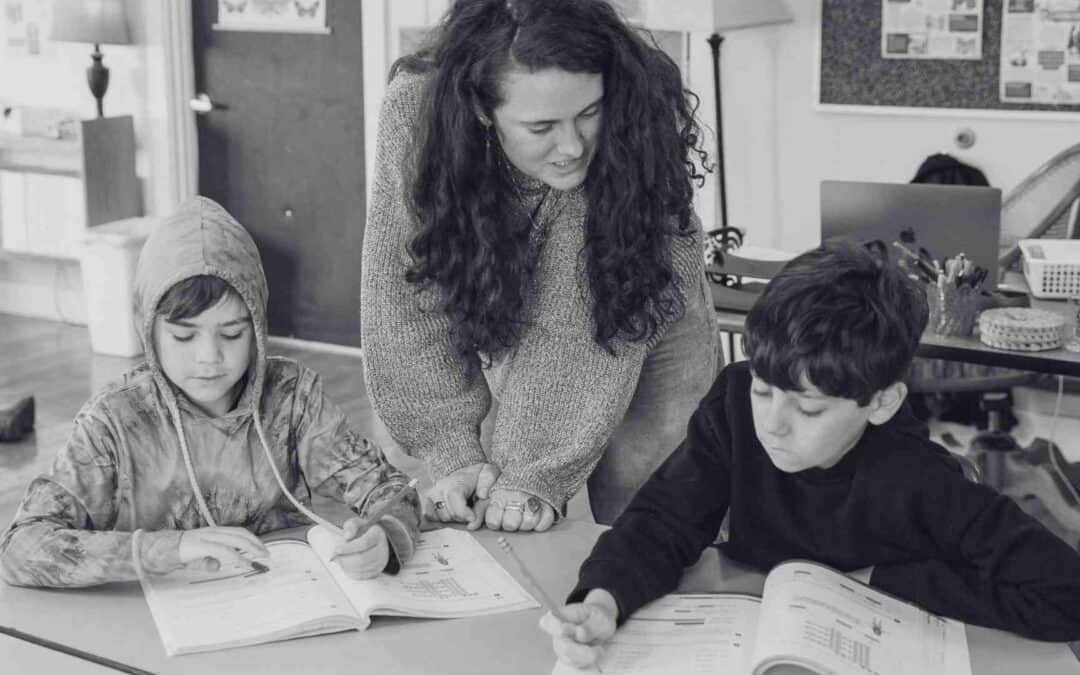
As you can imagine, a relationship is one of the most critical elements in determining a young person’s success throughout their educational experience. Those are relationships that they develop with their teachers, with their administrators, and the ways in which the school staff is able to partner with families. Seeing those partnerships and understanding, for students, that they have many adults within a community to build trust and connection with, is an inherent part of creating a really powerful, long-term matriculation for a child.

One of the reasons it’s so critical is because we’re finding more and more that the science of building relationships is connected to the capacity of all of us to be our best selves, to achieve at our highest levels. This is in direct correlation to being able to learn, grow, develop, and meet your potential.

Understanding the “Warm Demander”

One of the ways that we talk about this here at Rainbow is a term that is relatively new to me, but one that, when I describe it, I imagine many of us will think of a person that fits this description. And it’s – the term is called a “warm demander.”

What it really describes is a person in your life who is able to build a relationship that creates clarity, structure, resources, and support to meet extremely high expectations. To understand what your potential is, to believe in yourself, to be reflected back that you can do incredibly challenging things, that you are resilient, and you are capable. Then, to be the coach on the sidelines, providing the resources to help you get there, and eventually to help you internalize those strategies.

My Experience with a Warm Demander

When I think back on my school experience, I was privileged to have many wonderful teachers. But the one that stands out for me, as a warm demander, was my sixth-grade teacher.

For me at that time, schooling was kindergarten through sixth grade in an elementary setting. At the same time, sixth grade became a time in our lives when we were really sort of being ushered into preparations for middle school.

My teacher at first surprised me in the ways in which I moved into that classroom and felt a sense of business, felt a sense of purpose, felt a sense of challenge. It was intimidating a little bit at first. But because this teacher was so skilled in building relationships with me and my peers and cultivating experiences where we could try something that felt really difficult, eventually, over time, we built out our endurance to achieve it. It’s something that I attribute highly to my capacity to have moved into middle school with success.

Encouraging Your Child with Warm Demanders

I encourage you to think through experiences that you’ve had where someone has been that really clear, consistent, supportive message to you and helped you succeed.

Then think about what it would be like to put your child in an environment where they are surrounded by warm demanders – folks who see their potential. Folks who reflect that back to them. People who recognize that our young people need to be challenged to do things for themselves.

We are here as a resource and a facilitator, but there’s so much that our children can do. When we give them the space to attempt, have positive risks, sometimes fail, but have the people around them that will be there to provide all of the necessary encouragement and affirmation to try again.

Learn More About Warm Demanders

If you’re interested in learning more about warm demanders, there are resources attached. And of course, always come visit us. Come chat with me if you’re already a member of the community and want to learn more about being a warm demander, but we welcome you to join us here at Rainbow.

Understand the power of relationships as it relates to your child’s education. We are grateful for the opportunity to serve our community. Be well.

Learn More

Continue exploring ideas from our Director’s Kaleidoscope series, including topics like executive functioning, student autonomy, and project-based learning.
The Power of Learning Outdoors

The Power of Learning Outdoors

The Director’s Kaleidoscope: Exploring the many colorful aspects of learning
at Rainbow Community School

Rethinking What Makes a Learning Environment Powerful

When you think about designing a space for truly powerful education and human development, what comes to mind? Often, we consider factors such as how we engage with technology, the curriculum we offer, or the level of professional development our teachers have.

And yes, these factors are critical in supporting a successful learning environment. But there’s something incredibly simple and accessible to all of us that research shows provides deep nourishment for academic success: spending time outside.

Learning Beyond Four Walls

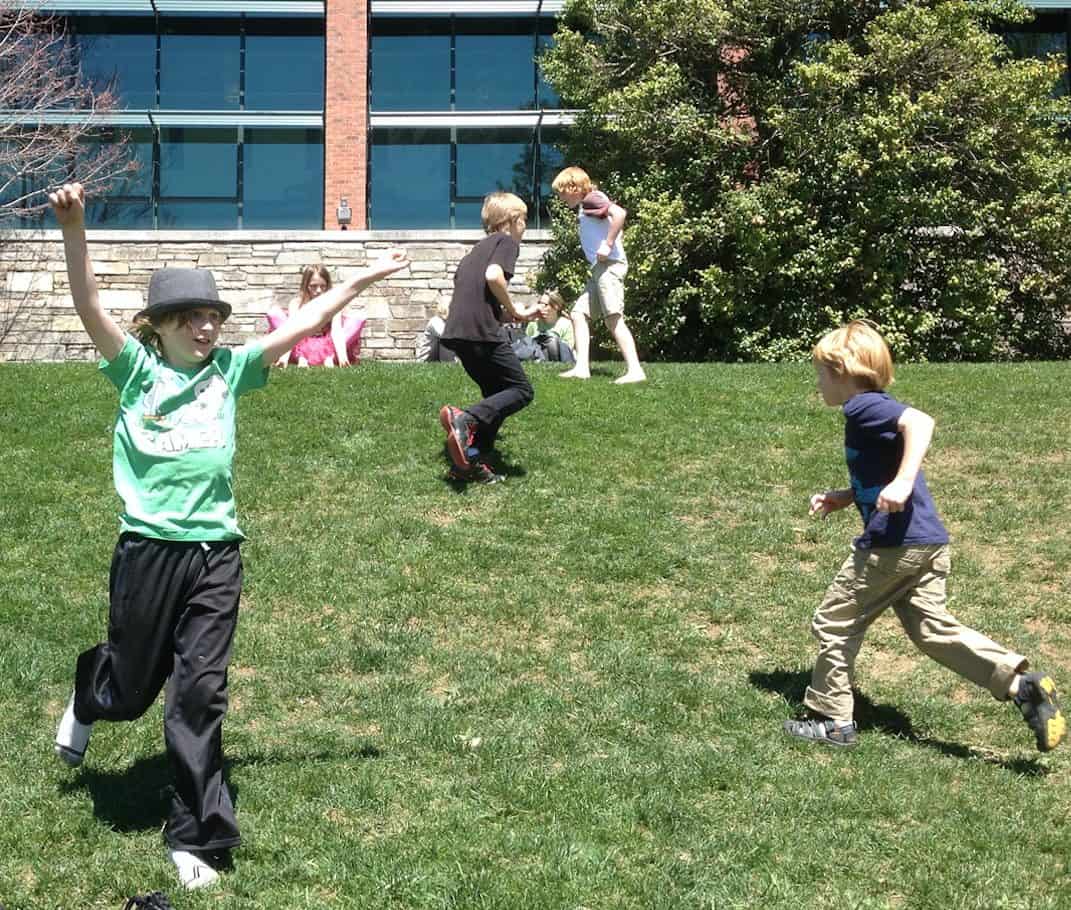
For students at Rainbow Community School, outdoor learning is woven into the fabric of our curriculum. From the earliest childhood settings, students spend time outdoors studying seasonal changes, going on nature walks, engaging with the canopy around them, and exploring the rhythms of weather and landscape.

These experiences help children attune not only to the natural world, but to their own growth and development.

Nature as Curriculum

Being outside inherently creates a hands-on learning experience. As students matriculate through the grades, the level of complexity in their outdoor learning increases.

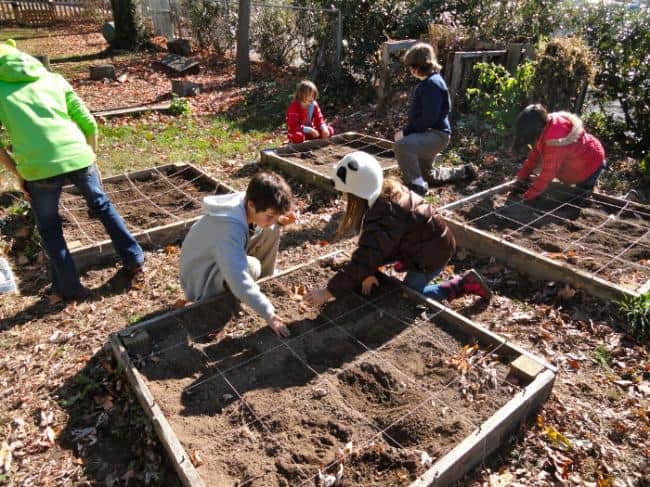
They move from observation to integration, cultivating a farm-to-table experience, growing their own food, engaging in composting systems, studying local ecosystems, and exploring the rivers, mountains, and geology of our region.

Outdoor learning extends beyond our campus, connecting students to real-world field studies that deepen their sense of place and purpose.

The Research Behind Outdoor Learning

Educational research continues to affirm what we see daily at Rainbow: that time outdoors amplifies a child’s capacity for curiosity, awe, and wonder. It nurtures critical thinking and builds the dispositions of a healthy learner.

Beyond the cognitive benefits, there’s also a spiritual connection that emerges when students spend time outside: a quiet sense of belonging to something greater, a reconnection with rhythm and balance.

A Sensory Awakening

You’ve probably experienced this yourself—the subtle shift that happens when you step outdoors. Maybe it’s the first breath of fresh air as you leave your home, the breeze across your skin, or the vivid colors of the changing seasons.

Each moment outdoors invites us to slow down and become present. The songs of birds, the rustle of leaves, the textures of the landscape – all awaken our senses and remind us of the living world we are part of.

Bringing Outdoor Learning Home

In this month’s Kaleidoscope, we’ve included resources to help families bring the benefits of outdoor learning into their own homes. These are simple, accessible ways to integrate time outdoors into daily life, no matter your setting or schedule.

Even five minutes outside can transform your mood, reset your attention, and bring a brighter sense of possibility to your day.

An Invitation to Step Outside

I hope that this gives you just a moment to remember that even five minutes outside can change your whole disposition, and can bring a brighter sensation and opportunity to the learning that’s here before you.

May you have a wonderful time exploring the natural world.

Learn more and download or print our free guide on Integrating Nature Connections into Family Routines.

Learn More

Continue exploring ideas from our Director’s Kaleidoscope series, including topics like executive functioning, student autonomy, and project-based learning.

The Nine Year Change

The Nine Year Change

Gardening

Whether your child is several years away from the Nine Year Change, it’s happening now, or it seems like a long time ago, this article is meant to provide insight into the inner life of your child and an articulation of the common struggles of parenting we all share.

The Nine Year Change

You may have heard faculty members at Rainbow refer to “The Nine Year Change.”  Around children’s ninth year, their psyche shifts, and our educational program shifts to match this sharp developmental curve.

There are many complex changes that occur around the time of the Nine Year Change that may not be apparent externally, because they primarily affect the child’s inner life. For instance, children begin to understand mortality and think existentially. Myth and magic can fade to be replaced with more realistic notions of the world.

For example, by the 4th grade, the truth about Santa Claus (for those who were told the myth) comes to light for many children. Most importantly, children are individuating from their parents. They are noticing that their parents, teachers, and other adults in their lives are not perfect, and as a result of this loss of innocence, they may begin to slightly rebel.

At Age Nine, Children Start Individuating

Some of the ways Rainbow’s program reflects this change are in the level of responsibility we require of children.  Before age nine, we don’t want them to be self-conscious about learning in any way – learning should be the most natural process in the world. But after the Nine Year Change, children begin to be held accountable for themselves as “students.” One of the ways this manifests is in homework expectations.

Before 4th grade, parents are as responsible as the children for their homework. However, beginning in 4th grade, homework is the children’s responsibility. As a result of the increased rigor, children may begin to experience academic stress for the first time, and should be capable of handling small amounts. As mild as this stress should be, having never experienced any academic anxiety previously, the children can feel very frustrated and uncomfortable, and parents might be alarmed.

From 4th grade onward, we are moving directly toward preparing our children to become independent adults, which they will be in a mere 8 to 10 years. (They are halfway there!) As the adults in their lives, we have to strike a balance between supporting and nurturing them, while also giving them the space to learn by trial and error.  They need to be challenged. Some children are ready, while others need coaxing.

Not surprisingly, some parents are ready, while others need coaxing. This transition of slowly “letting go” can be particularly challenging for parents who really, really care. (It’s also harder with a first or only child.) Why? Because it is excruciating to watch your child suffer. It feels like not picking up a crying baby, and it goes against our natural instincts.

Too Much Parent Help Can Be Detrimental

As hard as this is, if the parents continue to help their children too much, it could hamper the children’s ability to take on these responsibilities for themselves. The problems your child is facing at this age are “low stakes” compared with the problems he will face as a teenager–when he will have the ability to make “high stakes” mistakes.

In other words, any mistake your child makes now may result in things such as hurt feelings, a skinned knee, a poor science fair presentation, or added stress. Whereas, if he has not had early practice making mistakes and learning from them, the mistakes he may make a few years from now have the potential to result in dire and life-threatening consequences.

The Fourth Grade Year

Therefore, at Rainbow, we try to set up an environment in 4th grade and beyond in which children have the freedom to make mistakes, while still safe from trauma. In a loving community, children can be authentic about who they are becoming and the challenges they are facing, knowing that unconditional love is backing them up.  Within this environment, the problems they negotiate on their own now, with limited adult intervention, will give them the experience and empowerment they need later.

At this age, students start becoming self-conscious of social status, and their emotions are changing and are more tender than ever. Social and emotional issues can really flare up.

If your child is older than nine, do any of these sound familiar?

“I don’t belong.”

“My best friend ditched me.”

“My teacher doesn’t like me.”

All of these are problems we, as wise adults, could solve much more easily and with less suffering than our 4th graders can on their own.

Sometimes “solving a problem” means sitting with it until it plays itself out or goes away, without any active “solving.” Eventually, children gain the gestalt of being able to look back and see that problems that were once acute don’t even exist anymore.

Sometimes It Helps to “Sit a Problem ‘Out'”

When it comes to student conflict, it is tempting to want to get to the bottom of what “really happened.” We may, inadvertently, do our kids a disservice by stepping in too quickly or too far (at any age). Plus, even the most well-meaning children will sometimes give different accounts of an event, accounts which, considering their age and developmental stage, cannot help but be somewhat biased toward themselves.

The parents simply cannot know exactly what transpired in a conflict, so if they try to manage the situation, it can go awry or become ignited.  Therefore, we ask parents to allow the children, with the staff’s guidance, to work it out themselves.  (However, an FYI from you to the teacher(s) helps to ensure the teacher is aware of the dynamics of the class.)

Let’s say your child comes home and tells you that she was hurt emotionally or physically by another child. Then she sees or hears (or perceives or guesses) that you got on the phone, for example, to try to get more information and work out the issues with other parents. She can now rely on you to solve the problem. The parents may try to get enough information to judge whether their daughter, another child, or a staff member was to blame, which is a complicated web.

At the end of all this, your child is probably no closer to solving her own problems than she was before. In fact, she has learned that you will do everything you can to solve her problems. Love and Logic psychologist Dr. Cline says that this subtly erodes a child’s self-esteem and empowerment, because it sends a message that she is not capable of solving problems.

Whether your child seems to be the victim or the perpetrator in an incident, consider these steps that Love and Logic would suggest:

  1. Empathize with your child. Most of all, she wants to be heard and to know you can relate to how she feels.  Especially as she moves into being a pre-teen and teenager, you want your child to learn that she can be open and share with you, without you jumping into action or making a judgment on her or her friends.  Otherwise, teenagers begin to hide their personal lives from their parents. Therefore, to encourage their communication, just listen.
  2. Help her identify how she feels. “Oh, honey. When that happened, did you feel lonely?”
  3. Ask her, “So, what do you think you are going to do about this?” This sends her the message that she is not powerless! If she doesn’t have any ideas, you can ask her if she would like some suggestions from you.  At this point, give her several ideas (such as “Some kids would talk to a teacher,” etc.) Love and Logic would also include a really absurd idea, such as, “You could punch her: Do you think that is a good idea?” So she develops the power to distinguish a good idea from a bad idea.
  4. Finally, if the problem seems really serious, you may ask, “Is there anything you think I can do to help you?” So at least, if you help, it is with the child’s blessing, and your child remains empowered as a direct part of the solution.

Use Love and Logic

I’d like to share a personal testimony to the success of the Love and Logic approach. My daughter used to come to my office (since I worked at her school) every time she had a tummy ache or headache, which was at least once a week. I would give her an ice pack, rub her tummy, have her stay with me for a while, and, in short, do everything I could to help her feel better.

Finally, one day, I first empathized with her, “Oh, honey, do you feel nervous?” (yes), and then I asked her, “What do you want to do about it?” She shrugged her shoulders and said, “I guess I’ll go back to class.” It was that simple! That was the last time she came to me with this problem! She might be a hypochondriac today, had I not shifted the responsibility for the cure from me to her.

Again, the hardest part about this strategy is that the parents have to “sit on their hands,” while their children make some mistakes and/or experience stress from unsolved problems and issues. Our children are growing up, and they need to learn to be patient with the uncomfortable in-between-times (in between when a problem arises and when it gets solved or fades away).

You are wonderful parents, and you have provided the foundation, love, nurture, and wisdom your children need.  Now you can trust that they hold within them the power to learn and grow from mistakes and the many struggles of childhood. Because of your love, your children are resilient.