by Renee Owen | Feb 12, 2014 | Director's Blog
 It isn’t uncommon for people to assume that Rainbow Community School is a Montessori School. After all, our preschool and kindergarten classrooms look quite similar to a Montessori classroom. The Rainbow Learning model does have some important similar approaches and techniques, but there are some sharp contrasts as well.
Both approaches are grounded in close and insightful observations of children. Maria Montessori was a pioneer in crafting a learning approach and environment that naturally suited children, or that was “child-centered.” If one were to examine the Eight Principles of Montessori Education, one would see nothing that isn’t included in Rainbow’s philosophy:
- Movement enhances thinking and learning.
- Learning is improved when students have choice and a sense of control.
- Learning is improved when students are interested in what they are learning.
- Extrinsic rewards are avoided, in favor of intrinsic motivation.
- Learning with and from peers through collaboration.
- Learning is more authentic when immersed in meaningful, concrete contexts.
- A loving, authoritative teacher gives children freedom within clear boundaries and high expectations.
- Order in the environment is beneficial to children.
These principles were radical when Maria Montessori developed them 100 years ago. She was joined by Piaget, John Dewey, and a few others who believed in a “constructivist” approach, whereby children learn by doing, or by “constructing” their own learning. When the Rainbow Learning Model was developed in 1977, it had the advantage of being able to learn from the decades-old Montessori model, while adding some principles to create a more advanced holistic approach to education – the most notable additions being an immersion in the natural world, creativity, and an acknowledgement of the spiritual development of children. Another addition, is the strong inclusion of parents and family in the educational framework as key part of the learning community.
The most striking difference is how each day is structured around the different types of activities, especially in the younger grades. In a classic Montessori school, young children spend the vast majority of their day doing independent work for very long stretches of time. In Rainbow, children have blocks of time for independent work, but they are balanced with more time for group collaboration, group projects, and direction instruction. Even in preschool the whole class gathers each day for a community circle that is teacher-led. There is a strong sense of the class being a community, and children have more than ample opportunity to learn how to work together and to practice sophisticated social and emotional skills that are so important in today’s world.
In the middle school grades, Rainbow has a philosophy that the techniques and curriculum need to adapt to the times. Montessori schools find themselves trying to be true to a century-old model, but in the older grades that model wasn’t completely formulated. Maria Montessori never had the opportunity to develop an operating middle school in her lifetime, which is a shame, because her ideas were groundbreaking, and actually very different than her elementary school model. Were Maria Montessori to walk into the Rainbow Community’s Omega Middle School today, I think she would be very pleased with its evolution.
In summary, if you feel that a Montessori School may be a good fit for your child, it would make sense to tour Rainbow Community School, as the Rainbow model has many similar features, and several evolved features as well. If you are already at a Montessori School and wondering how the transition to Rainbow would be for your child, it is worth a conversation.
by Susie Fahrer | Nov 1, 2021 | Blogs, CEO's Kaleidoscope
October 2021 Kaleidoscope
The turn of the seasons is in full swing. The morning greets us with crisp autumn air and the afternoon sun provides a welcome warm up for outdoor activities. This time of year is filled with breathtaking beauty. A final burst of bounty before the stillness of winter. The natural flow of the seasons, each having its own turn in time, can be symbolic of our own rhythms for health and wellness.
This month’s Kaleidoscope* brings Rainbow’s focus on Health and Wellness to the forefront. In doing so, we provide an opportunity for reflection, contemplation, and progression.
Holistic Approach
Rainbow’s holistic approach to learning is at the heart of student wellness, especially as we learn to negotiate the evolving impacts of pandemic education. Our student’s social and emotional needs are nurtured through strategies like providing adequate time for transitions, breaks, and play. Leading with a lens on holistic wellness helps to counterbalance the cultural narrative that schools must “make up for lost time.” Instead, Rainbow is taking the time to attune with our students, and build a responsive and responsible approach focused on growth. This helps us calibrate our learning environment with the children’s current needs preserving their sacred relationship with life long learning.
- Gathering benchmarks and data is another way that we are building an approach that is responsive and relevant. Teachers will be releasing progress reports to families in November with Parent Teacher Conferences (November 22-23rd) serving as a tool for individualized discussion and follow up.
- Our Wednesday training schedule is a critical resource enabling time to focus on best practices in the classroom. On Wednesday afternoons, teachers collaborate and innovate, cultivating a dynamic experience for our students.
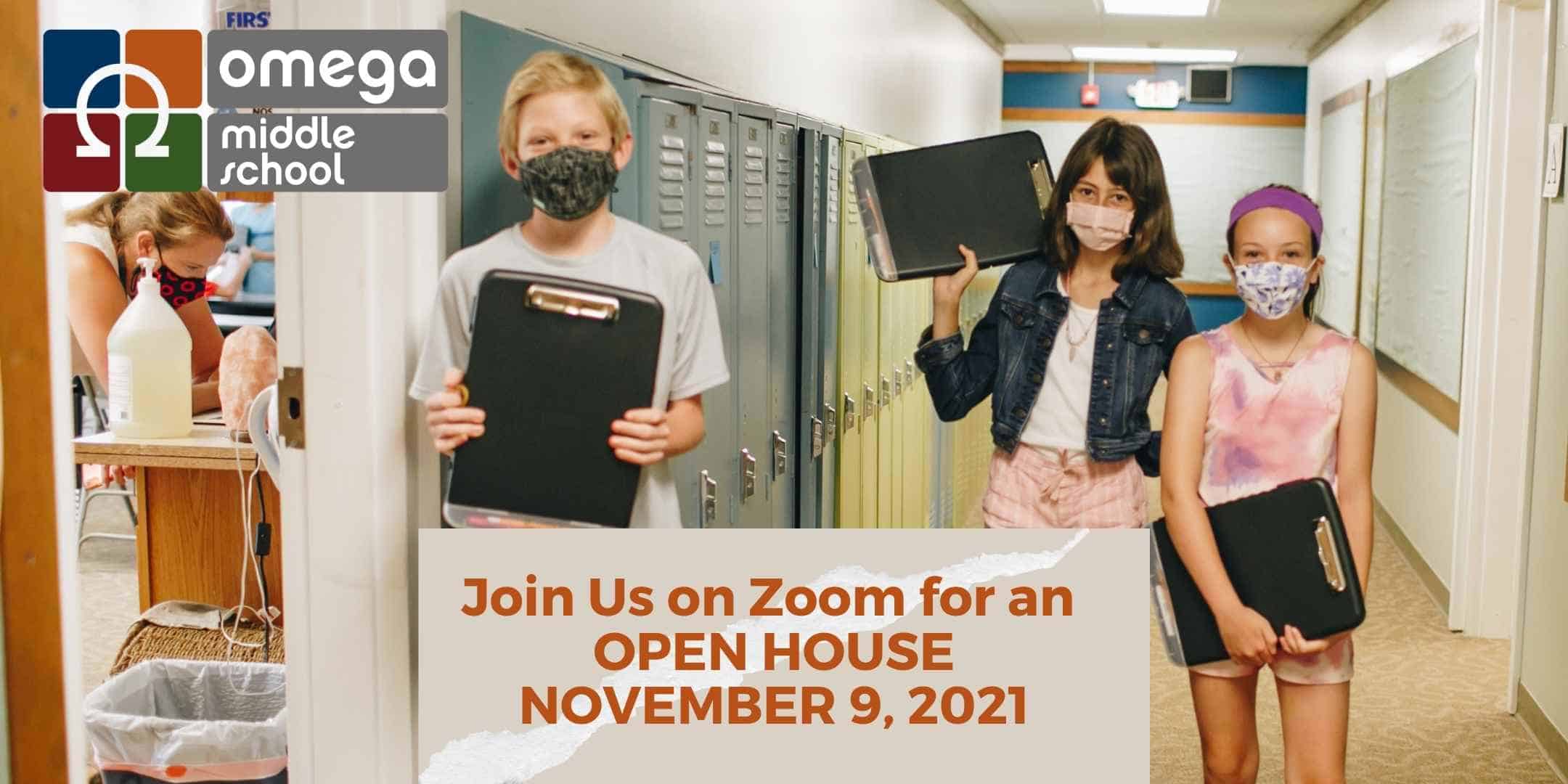
- A Rainbow education inspires students to achieve in the present, and prepares them for life long learning. Our engaging Middle School program features rich and meaningful course work, diverse elective experiences, outstanding educators, and a finely crafted curriculum fostering adolescent thriving. Come learn more and hear from our insightful alumni about the transition from Omega Middle School to their High School of choice. This is one of the most powerful ways to understand the value of completing the Rainbow journey through 8th grade. Join us on November 9th from 6:30-8:00pm. RSVP to the event here.
Social and Emotional Domains
The social and emotional domains are integrated in every classroom, and we have a fantastic team of counselors to support the teachers, students, and families when the need for more personal care is present.
- The counseling team includes Will Ray, Mark Ackerman, and Jamie Rischitelli. They have coordinated their schedules so that we always have a counselor on campus. The Counseling Program is available for general support in the classrooms, and can provide more personalized sessions for students and families as needed.
- Additionally, we are launching Affinity Groups for our BIPOC students in November. Several emails have been shared about the details of this initiative. Most importantly, it furthers our investment in cultivating a diverse community that also experiences a culture of belonging and connection.
- In the spirit of inclusion and wellness, Rainbow is in the process of establishing a Pronoun policy. This is currently being reviewed through various Dynamic Governance circles and will be shared with the community as soon as it is finalized. This policy brings visibility and transparency to establishing a culture of safety, sincerity, and allyship.
Culture of Engagement
A culture of engagement creates a community that is connected, collaborative, and compassionate. Since the launch of the school year, there have been several highlights within our community exemplifying this value.
- The Rainbow Community School Board put together a video explaining their role in the long term success of our school. The Board is an outstanding group of volunteers that guides the school’s future planning in partnership with the Executive Director. They are an integral part of our governance model and a resounding source of support to Administrative leadership.
- Additionally, our Parent council is a governing circle whose primary function is to help community relationships flourish. From teacher lunches to initiating class gatherings, their impact is powerful and appreciated. The meetings are open and anyone is welcome.
- Joining a circle is another way to invest in Rainbow. Our circle meetings are published in Rainbow Reminders, and are open for anyone to join.
- In the spirit of celebrating community engagement, we are planning to reinvigorate a tracking system for volunteer hours. This will help support efforts directed at outside funding and grant opportunities. More details will be shared in an upcoming Rainbow Reminders.
Health and Safety
Along with emotional wellbeing, our physical safety is a top priority at Rainbow. This includes continued reflection on our Covid Mitigations aligning ourselves with best practices and relevant data.
- Our pool testing program has been running for the past two weeks. The students and teachers have quickly adapted to this routine and we move efficiently through the process. So far, the pool reports have been negative. We will only send out notification and next steps if a positive pool is received.
- At the start of school, our mitigation strategies were built in alignment with CDC guidance. Additionally, the context of high infection rates, a fully in person model that included our largest cohorts since the beginning of the pandemic (Preschool, K-2, 3-5, and 6-8), and the return of the Rainbow’s End program informed a structured and cautious launch. Despite these significant changes, we have experienced great success to date. As a result, we are reviewing our mitigation guidelines to consider shifting our masking protocols outdoors and exploring more long term adaptations, as vaccination becomes an option for more of our student body.
- To help us explore the landscape as it relates to Rainbow Community School and Omega Middle School, we are asking that all families complete THIS SURVEY.
Please have your information completed by November 2, 2021.
Yours In Partnership and Gratitude,
Susie Fahrer
Executive Director
*Communication is central to the success of our community. In collaboration with weekly publications like Rainbow Reminders and regular classroom newsletters, Kaleidoscope captures the bigger picture of what is happening on campus and exciting news for Rainbow’s future.

by Jessy Tickle | Nov 6, 2015 | CEO's Kaleidoscope, Director's Blog, News
 November 2015
Kaleidoscope: The many colorful things happening at Rainbow, from the Executive Director
November is here; it feels like life is being squeezed into shorter days. Classrooms have established their mascot names. Relationships have formed. Academic units are rolling along. What is your child’s school experience so far this year? Has he or she attached to his/her teachers? Is she feeling some success in all the domains? November conferences are just around the corner, and that will be a good time to get a feel from your teacher’s perspective. Will Ray, director of counseling, is also available (extension #430, will.ray@rainbowlearning.org) if you sense that there may be a need for some extra intervention, or if you need guidance as a parent.
The Hoedown was a huge success in every way. The core team of Stephanie Cody, Jenny Hatcher, and Lisa Sullivan totally rocked the planning. The band rocked the stage. And parent council and all the volunteers made it all happen. The Hoedown netted $4,967! Did you go through the haunted house? Did you do the scary tour or the not-so-scary? Aren’t those Omega students clever? They put all that together in only one day.
El Dia de los Muertos was beautiful. Thank you to Oscar and Laura (parents of Tona in Kindergarten) for making this year’s celebration especially sweet and gorgeous, and for sharing your tradition. I have never seen such a beautiful Day of the Dead altar.
Speaking of beautiful, I just finished writing a new Heart of the Matter on BEAUTY, and the place that beauty has in a holistic education. It will be in your box, and you can read it here. It is a revised version of a shorter essay I wrote last year. How much beauty is in your life?
XQ Super School: The Next High School?
You have all heard of IQ. Most likely you have heard of EQ (emotional intelligence), and you may have heard of SQ (spiritual intelligence). Now there is XQ! The XQ Super School competition is a nation-wide grant contest, calling for “audacious” high school designs that completely scrap the current, obsolete model of education and start over. Steve Job’s widow, Lauren Jobs, is donating $50 million dollars, with the intention of awarding five winning High Schools $10 million each. Obviously, this is a bit of a long shot, but when I received an email with a link to the XQ website, I felt called to give it a try. West Willmore sent me that fated email, and she is coordinating the application with me. The XQ rules require that the school be a public school, and we are not sure how the XQ people plan to merge “audacious” school designs with “government controlled.” If that is actually realistic, it would be great, because it will ensure that the high school will serve a diverse population, especially those who most need it. Free is awesome! We are putting together a great team of people who have expertise in many areas. The concept we are working on has a mission and holistic approach similar to Rainbow: To develop change leaders who are prepared to build a world that is socially just, spiritually fulfilling, and environmentally sustainable. Maybe “spiritually fulfilling” is more “audacious” than the XQ Super School grant is looking for? We will see. I will update you more on this process in upcoming Kaleidoscopes.
Got justice?
The current Rainbow Mission Statement reads: To develop accomplished, confident, and creative learners who are prepared to be leaders in a compassionate and environmentally sustainable world. The board has been working very hard on finishing the revised strategic plan, and within that work, the idea of adding “socially just” to the last part of the mission statement has come up. What is your reaction to that? Do you want to be preparing your child to help create a world that is socially just? Some of the representative faculty members who discussed this issue wanted to make sure Rainbow can really walk that talk if we adopt socially just into our mission. What would we have to do to be more socially just as an organization? As a private school?
Racial Equity is currently the biggest issue of discussion amongst the faculty right now. We have about a dozen faculty members taking the Building Bridges course right now. Plus, we are doing some in house trainings on structural racism, and last night we discussed how each of us develop in terms of racial identity as we mature and become more dedicated to justice.
What can you do as a parent? I strongly advise taking the Building Bridges course. It is life changing. It’s a nine-week course, starting on January 25, on Mondays; from 7 – 9pm. It’s only $35! Besides providing a wealth of information, this course brings people of multiple races together to have open, honest conversations about race. Asheville has become known, sadly, as a very segregated city, but Building Bridges is working to change that. You will be so glad you made the commitment to be a part of the change, by signing up here for the next Building Bridges course.
How else can you help?
Speaking of social justice, the annual campaign is one of the most important tools we have toward becoming a more socially just organization. Besides simply paying the bills, it helps us keep tuition down and provides financial aid, so we can have a more diverse and equitable school. We are fortunate to have much more socio-economic diversity at Rainbow than most private schools, so we recognize the amount each family can donate is very different for everyone here.
My goal for this year and years to come: To spend more of my time on making Rainbow the best school it can be, and less time on fundraising. You can help by turning in your annual campaign pledge early! Similar to public radio station campaigns, the sooner we meet the $80,000 goal, the sooner we can end the campaign– greatly saving on staff time, resources, and on how many times you have to hear about it. Don’t delay! Pledge today! (Also, like radio stations, you only need to pledge now, and pay later.) We definitely want to meet that goal before the Winter Program, so that we don’t have to interrupt that precious programming to talk about the annual campaign.
An Original
! The winter program is going to be made up of ALL original music written by Sue Ford and students. The faculty had their first practice for our faculty performance, and it made my heart sing. I can’t wait to share it with you.
What Happens “Over the Rainbow?”
The Middle School Open House included a panel of alumni students that was wonderful and heartwarming. We put a call out on Facebook asking for Rainbow alumni to participate, and had two very full panels of high school students who were eager to talk about their high school experience and how Rainbow prepared them. I have immense respect for these students, whom I consider to be some of the most wonderful people on Earth. Soon, there will be a videotape of the panel posted on our website. Look for a link on Rainbow Reminders.
It’s Easy Being Green!
Zhenya Fomin, dad of Misha in preschool, installs green roofs for a living. He has generously offered to install a green roof at Rainbow. It is time to start “rainbow-izing” the new campus, so we chose the walkway roof that goes between 6th grade and the east-side door to the auditorium. Zhenya plans on doing the install very soon!
More Green: We are honored to receive TWO grants from the Arboretum: Inspire and Explore. One grant is supporting the teachers and students in citizen science projects, where every class is conducting science research and collecting data for large data banks for scientific researchers around the world. Ask your teacher what your child’s class is doing for citizen science. The other grant is providing funds and help to install a nature trail and a pollinator garden on the new campus. That installation is now scheduled to be in late winter.
Change is in the Air
! With Hoedown and El Dia de los Muertos behind us, we have properly celebrated the height of autumn, which brings changes in the weather and the soul. In our American culture, which is so often centered on the individual, I look forward each year to Thanksgiving, when we celebrate our gratitude for others. In centering in Omega, the students reflect on a quote every day. I just found one from Dietrick Bonhoeffer: “In ordinary life, we hardly realize that we receive a great deal more than we give, and that it is only with gratitude that life becomes rich.” I joined Omega for centering yesterday, which was being led by a student. Everyone was asked to share one thing that they are unhappy about with a partner, so that our partner could then provide us with at least six things we could smile about. My partner shared that she is very sad about this being her last year at Rainbow. I gave this bright student many reasons to smile. For one, she gets to go out into the world and share the beauty and love she has received here at Rainbow with others, and she is truly prepared to do that. That is something to be grateful for. All of us here are very rich.
by Jessy Tickle | Jan 6, 2016 | Blogs, CEO's Kaleidoscope, Director's Blog, Home Page News, News, Publications
January 2016
Kaleidoscope: The many colorful things happening at Rainbow, from the Executive Director, Renee Owen
As I reflect back on 2015 I am struck by how much was accomplished at our little school. I am so happy we said “goodbye” to 2015 with love. Wasn’t the winter program about love…lovely? ALL the songs were written by the students along with Sue Ford (music teacher), and classroom teachers. Plus, Billy Goodrum, parent and internationally acclaimed composer, made a special appearance with two songs Omega students wrote with him. A text came to Sandra McCassim (Director of Operations) during the performance that read, “These songs are all so catchy! They MUST be recorded!” We will see if we can do an audio recording for you.
The theme of every song was love, and I have enjoyed carrying those songs in my head and in my heart throughout break, and into 2016. In fact, love is my intention for 2016 – inspired by your children.
There is much to look forward to. After completing almost everything on our strategic plan that was written in 2013, the board has been laboring since the parent summit last fall to write an updated strategic plan. What is next for Rainbow? What are we called to do?
Lately, it seems we have been called to do a lot. Below are some examples:
On January 13, two PhD’s who are writing a book on compassionate schools are visiting for the day. They will be observing classes and interviewing students and staff.
The Ashoka Foundation has asked me to help write a book on changemaking education. I will be spending the whole third week of January with seven other writers from other Ashoka Changemaking schools, and at the end of the week we will have the first draft of a book!
In late February, I and our new Director of Equity, Kyja Wilburn, will also be spending a week with Ashoka at a national summit to strategize how we can influence the national educational system to be more compassionate and to better prepare students for the future. Soon after that, in March, West Willmore will be presenting at the South by Southwest conference in Austin, on behalf of Ashoka.
Another researcher, Alan Bush, is proposing to do a dissertation on resiliency based on research at Rainbow. One of his co-workers, Amelia Terrapin, is providing free services to Rainbow as she pilots a program she has created on reflective thinking and group learning through movement. (Amelia has a great TedX talk, which you can see here.) Yet, another researcher, Judy Yero, author of “Teaching in Mind” visited in October, and after visiting 50 schools that she handpicked nationwide, Rainbow was one that she hi-lighted to an investor that she is working for.
Plus, West and I have put together an all-star team to design a high school. (See November’s Kaleidoscope for an explanation of the XQ high school $10 million grant competition.) Our concept for “rEVOLution High” was submitted and accepted by XQ, so now we move onto the next phase, which is due February 1. I encourage you to read the concept, by clicking here. You can watch the rEVOLution High concept video here, by using the password “rainbow.”
In March, a researcher from Columbia Teachers College and another from LSU are going to be interviewing parents, students, staff, and working with the board on “Blue Ocean Strategizing.” They have worked with very large corporations and non-profit organizations, and are interested in applying Blue Ocean strategizing to a school for research purposes. We are honored they have chosen to work with us as their pilot! This is also a great opportunity to get help in strategizing how best to capture the opportunities we have right now, and how to make the largest impact with the fewest resources (and/or how to expand our resources.) This is very important as our little school is being noticed all over the country. How can we make the biggest difference for our own students and community, while helping to make holistic, Seven Domains education widely accessible?
First we need to solve the largest puzzle that we have. The board calls it “the nut we have to crack.” Essentially, the “nut” is that we charge tuition and that makes it hard to serve a wide array of families – only a narrow sliver can afford to attend. Of course, that is obvious, and it is more complex than that. We have to charge tuition because the education we provide does not fit into the BOX of public school education. Until we can change that, the “nut” is trying to figure out how to keep tuition as low as possible, so that Rainbow education isn’t just for those in the highest social-economic demographic. Not only would it not match our values to be exclusionary, but additionally, we can’t prove that Seven Domains education should be available to public school students, if we haven’t proven that it is effective with a wide demographic. At the same time, we need to have enough revenue coming in to pay our staff, maintain/improve facilities, and to keep a low teacher/student ratio and all the quality programming and we have.
How do we make ends meet? Currently, we do it by paying our staff very low salaries. I am sorry to report that Rainbow lead teachers make, on average, about $7,000 less a year than Buncombe County teachers and North Carolina ranks 46th in teacher pay in the US. This is surprising, and quite disturbing to most parents when they discover this fact — especially since we have such amazing teachers and they work so hard! As you know, it is quite a struggle to pay tuition, so it just doesn’t seem possible that tuition isn’t enough to pay salaries that don’t even compare with some of the lowest paid teachers in the country. However, some straight forward math reveals that when we have fewer students in a classroom than public schools and we staff two teachers in a room instead of one, and tuition is set only a little higher than what public schools receive per pupil, that by the time all our revenue is spread out over all the staff (and staff is 80% of our expenses, annually), that salaries end up being low.
Therefore, the board has decided that we have two major equity issues to tackle on our new strategic plan – racial equity (see November Kaleidoscope for more discussion) and teacher pay equity. There are only two ways to solve the teacher pay equity issue – either save money by staffing more kids per teacher or increase revenues. Doing the former would compromise our quality, so that means focusing on the latter.
So, how can we increase revenues? Tuition is our only consistent source of funding, and it makes up 95% of our revenues. Currently, tuition goes up quite a bit every year, just to keep up with the 3%-6% salary raise teachers receive annually. If we started providing larger staff raises, tuition would have to increase immensely. The current average tuition at NAIS (National Association of Independent Schools) is $17,800/year. Clearly, our tuition is way below that, while our quality of instruction matches NAIS schools, and we seem to have enough demand for enrollment to support a high tuition increase. However, our integrity and values do not match that kind of tuition increase!
So, how else can we raise more revenue — A LOT of revenue, like $200,000/year more– without making Rainbow totally unaffordable?? We could have a much larger annual campaign, but the $80,000 we currently have is not easy. We could raise tuition steeply, but on a sliding fee scale. This has its obvious drawbacks. People have also suggested we have an additional fee each year and families below a certain income wouldn’t have to pay it. Again, this has some major drawbacks. As you can see, this is quite a nut to crack!
The strategy for “cracking the nut”
While we may have to consider some of the options above if we want to pay our teachers fair salaries, the ultimate goal is to get really creative and find funding – consistent annual funding — from outside the parent body. This is almost unheard of for a private school, but Rainbow is unique!
The strategy we hope to create is to wrap the following two goals together :
1) to impact national education and
2) to make our own campus more equitable.
After all, with all the attention our Seven Domain educational model is receiving, we should be able to receive some revenues through sharing it. Some possibilities: publish books, train teachers, hold conferences, start “franchising” Rainbow schools – and to use some of the funds from this work to fund equitable tuition at Rainbow. However, all of these ventures require an investment of labor and money. So we are beginning to look for large grant funding to support spreading our influence on a national level. The XQ high school grant is one example, but there are more possibilities. Ultimately, I would like to see tuition decrease, while teacher pay increases, and financial aid (accessibility) increases. Dream big! That’s what I tell your kids. I believe this is possible and I will be continuing to write about it in upcoming Kaleidoscopes.
Tuition for 2016-17
In the meantime, we are fortunate to be financially stable, and to have the resources we need to maintain our current level of quality. This month the board will vote on the tuition rates for the 2016-17 school year with an eye to maintaining that quality while increasing teacher pay and equitability. Be sure to check your parent mailboxes at the beginning of next month, where the new rates and your tuition contracts will be placed.
Also, in the meantime, one thing that really makes a difference with the “nut” is the annual campaign. We want to thank everyone who donated to the annual campaign. We actually raised slightly more than the $80,000 goal! About 70% of all families, including a lot of awesome grandparents, donated. If you intended to pledge, and didn’t get around to it, it is NOT too late! In fact, any donations that come in before June 30 will be applied to this year’s annual campaign. There are many campus projects that we can accomplish with extra annual campaign funds, such as fencing off the athletic field from the street, making a CD of our winter program, increasing the counselor’s hours, and much more. Did you know that 100% of the teachers and staff donated to the annual campaign? That is just another example of what a generous community we have. Thank you to everyone for donating to make Rainbow the incredible non-profit organization it is today!
I especially want to shout out to our fundraising volunteers!! These brave parents donate their time to go out and ask people for money. That is a job a lot of people aren’t willing to get paid to do! They do it for free because they love Rainbow, they love you, and they want to see this school and your children succeed. So please, go out of your way to thank whoever on the fundraising committee solicited you for your annual campaign donation this year. It was probably one of the following people: Zack Adam, Sarah Corley, Andrea Rosal, Jenn Tracy, Ira Starr, Neill Yelverton, Macy Pugh, and Claudia Konijn. They are heroes! Also, we want to thank Sara Stender for managing the campaign so beautifully this year.
If you found this Kaleidoscope informative, be sure to recommend it to a fellow parent or grandparent. I also hope you clicked on the high school concept link and took the time to read it or to watch the video. There is a lot happening, and with a shared vision we can make a huge difference in the future of education and in the lives of your children. We are a strong community. Blessings for 2016!
by Renee Owen | Feb 1, 2010 | News
The results are outstanding! This past fall, Rainbow Mountain Children’s School students, third through eighth grade, took the Stanford Achievement Test, or SAT10. Compared nationally, Rainbow students score, on the average, in the 94th percentile in Reading, the 84th percentile in Language Arts, and the 90th percentile in Math by the eighth grade.
There are several remarkable things about the scores. First, that the average is so high. Such a large number of students score in the 95% and above (many are at a post-high school level) that the overall score is extremely high. More importantly, no students score low enough to pull the average down. This can be attributed to the small classroom size that affords every student the attention they need to be successful and to the research-based and innovative methods Rainbow teachers use. Second, the students’ test scores steadily increase from the third grade through eighth grade. Although the chart isn’t a straight line, the general trend in all three subjects is to be well above average in the third grade, while steadily rising through the middle school years. This data trend speaks to the academic foundation Rainbow provides students in the primary years (focusing on imagination, concrete/hands-on learning, broad content, creativity, and multiple intelligences) and to the increased academic rigor in the older grades.
Rainbow Mountain is a holistic school that assesses students using a wide variety of methods. Standardized testing is only one strategy among many others, such as project work, research, oral response, and more. Rainbow teachers do not, in any way, teach to the test or prepare students for the particular SAT10. Rainbow administers standardized testing in the fall, so that teachers, parents, and students can better understand their academic skills and goals for the year. Also, since Rainbow students don’t receive traditional classroom grades prior to seventh grade, the experience with conventional testing is valuable in preparing students for high school.
Finally, Rainbow Mountain always looks at the whole child. Yes, we are thrilled that our students excel academically, but that is only one piece. Ultimately, true success in life comes from living peacefully, working hard, being creative and resourceful, acting on compassion, and having integrity.