Writing in a World of AI

Writing in a World of AI

The Director’s Kaleidoscope: Exploring the many colorful aspects of learning
at Rainbow Community School

Writing in a World of AI

Hi, my name is Susie Fahrer, and I am the Executive Director of Rainbow Community School and Omega Middle School.

Considering AI and the Writing Process in Education

You know, I just finished reading an article from The New York Times entitled “What Do Students Lose When They Stop Writing?” And as you can imagine, this was a discussion of the entry of AI into writing practices. You know, for many of us who are in the education field, and for those of you who are considering the impact of AI on your child’s learning journey, there are lots of questions.

There are lots of opportunities. I thought this article did a really good job of just proposing some things for us to consider. At Rainbow, AI is something that we are engaging and being curious about, trying to find the best practices that support really deep learning with engagement in an ever-evolving world.

How Writing Supports Critical Thinking and Deep Learning

So first and foremost, as you can imagine, the research – and maybe even some of our personal experience – really suggests that the process of writing engages the process of thinking.

When we talk about what we want for our learners, it is to have a depth of thinking dispositions, a capacity for inferencing, critical thinking, and application of knowledge and inquiry, right? These experiences, which in many instances show up through dialogue and conversation, really create a different level of depth when we put them in the form of writing.

Supporting Diverse Learners With AI

So we also think about the idea that writing is something we can engage and support for our students with diverse needs. For some folks, the process of writing can feel like a barrier to expressing their true knowledge. In those instances, we’re seeing that AI can be a tool to provide intermittent supports.

Again, it seems like the place where all of us are trying to find balance is ensuring that AI is not doing all of the work for us and that we are maintaining the values and the critical thinking skills that evolve at every stage of the writing process – from considering our ideas, brainstorming, mapping out our thinking, drafting, receiving feedback, really finding voice and engagement.

These are all aspects of the writing process that can have speed bumps along the way. Recognizing the ways we can use support systems – both that of the educators and the human feedback, as well as, at times, supports from the ever-evolving technology.

Helping Students Use AI With Integrity and Balance

I also thought it was really interesting to be thinking about building our policies, both here at Rainbow and maybe for schools all around, to help students understand the why, the when, and the how of AI.

The more we empower our students to really understand it is a tool, and at the same time, there are times when we really want them to engage authentically in their own voice, the more likely they’re going to understand how to use it with integrity and with balance.

Preserving Student Voice, Identity, and Perspective

Lastly, I thought it was really interesting in this article, and again, it resonated for the values we set here at Rainbow, that some students, when they were being questioned about the use of AI in their writing practices, these were high schoolers, shared that they started to realize that, you know, the ideas that were coming forward were being proposed to anyone who was asking.

And again, it felt like maybe there was a loss of their own capacity to really engage:

“What is my idea? What is my identity? What is my perspective on this topic, on this literary essay, on this piece of writing that can express my true lived experience?

Finding a Balance Between AI and Authentic Learning

I share all of this because we’re on this journey together, here at Rainbow and with all of you, right?

When new technology comes along, we are in it together to figure out all the best ways to use it as an enhancement and engagement, and to balance it with our authentic learning process.

I’m sure this year I’ll be sharing more about how to engage the practice of writing authentically and through the use of tools of AI. See the attached document for a few suggestions of how to get started in finding the balance.

Look forward to seeing you here on campus if you are interested in exploring a Rainbow education.

For those of you who are already part of our community, thank you for being here. Anytime you want to talk writing, you know where to find me.

Be well.

Learn More

Continue exploring ideas from our Director’s Kaleidoscope series, including topics like executive functioning, student autonomy, and project-based learning.
Words Have Power Summer Camp at Rainbow publishes book!

Words Have Power Summer Camp at Rainbow publishes book!

Words Have Power Summer Camp

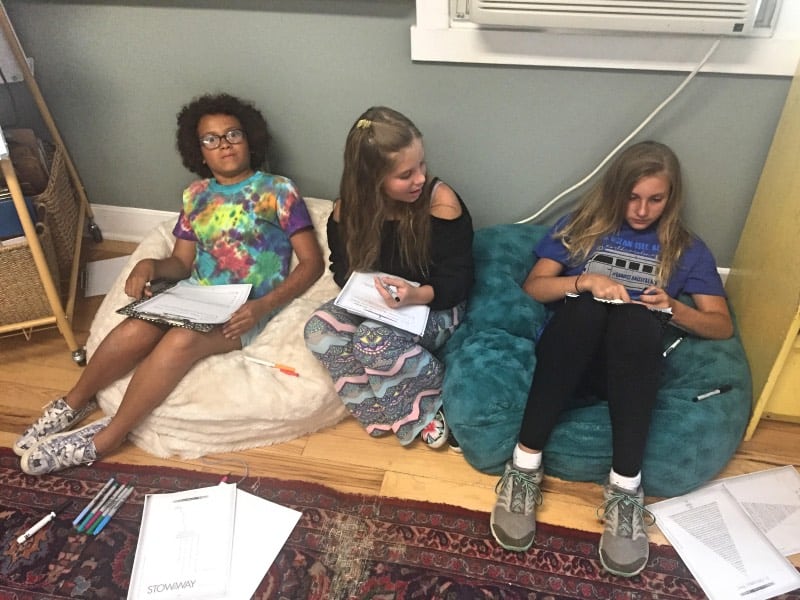
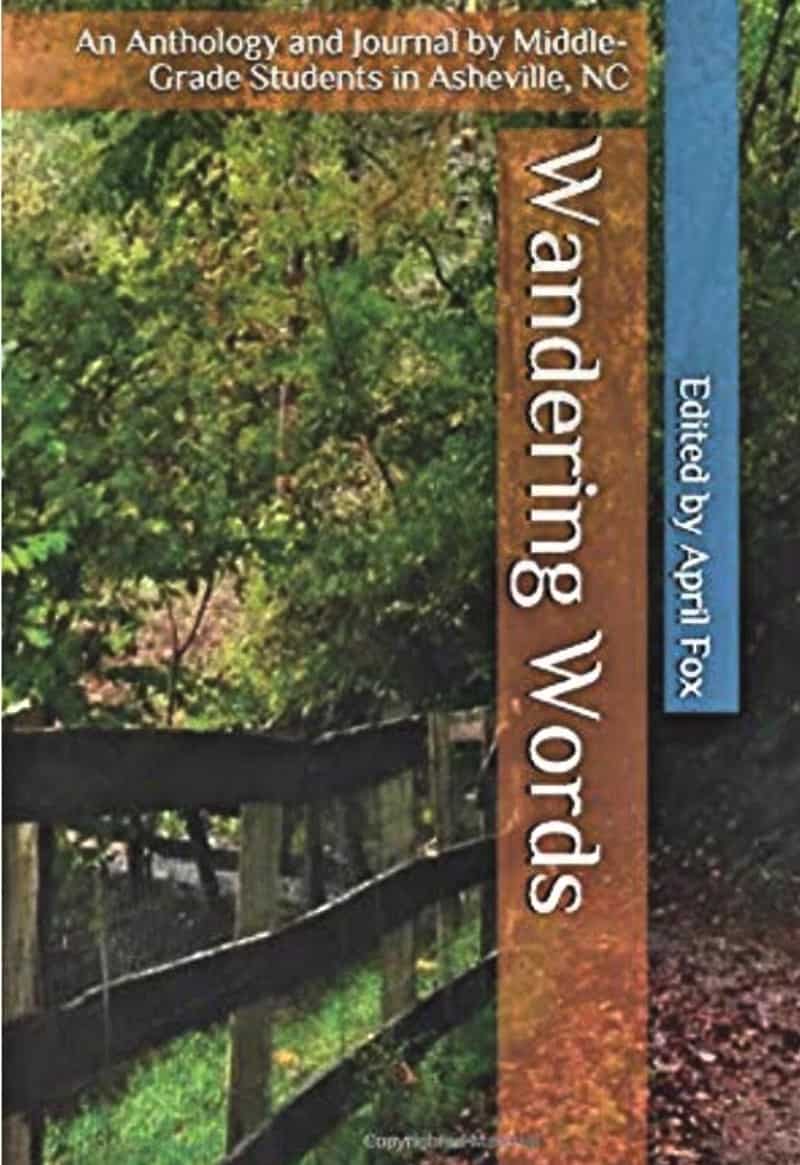
In summer 2019, Rainbow Community School had the Words Have Power summer camp. April Fox taught this camp with such incredible results! This camp was for ages 10-13, with a total of 10 students attending for the week. The students who participated published an anthology of their work. April, their teacher, compiled all their writings and it’s now available on Amazon.

summer camp

Anthology cover. We have a copy in the Main Office!

We interviewed April who told us the whole idea of the camp was to allow kids to explore writing “without all the rules.” She showed her students that there’s “school writing” and there’s also “fun writing.” April wanted her students to know that there is a world of writing outside of grammar, spelling and following conventional rules.

This was a camp that gave students a chance to explore writing in a creative way – possibly in ways they had never done before. They used words for nothing but the “pure expression of what was in their heads,” which allowed them to truly connect with the idea of writing on a different level.

summer camp

Each morning, April would put up quotes from different writers or inspirational figures that had something to do with writing or succeeding. Students would pick their favorite quote and write in their journals, reflecting about how they felt, or scribbled other musings related to the quote they chose. These quotes came from different artists and writers, such as Maya Angelou, Tupac, Elvis Costello and many others.

How the anthology came about

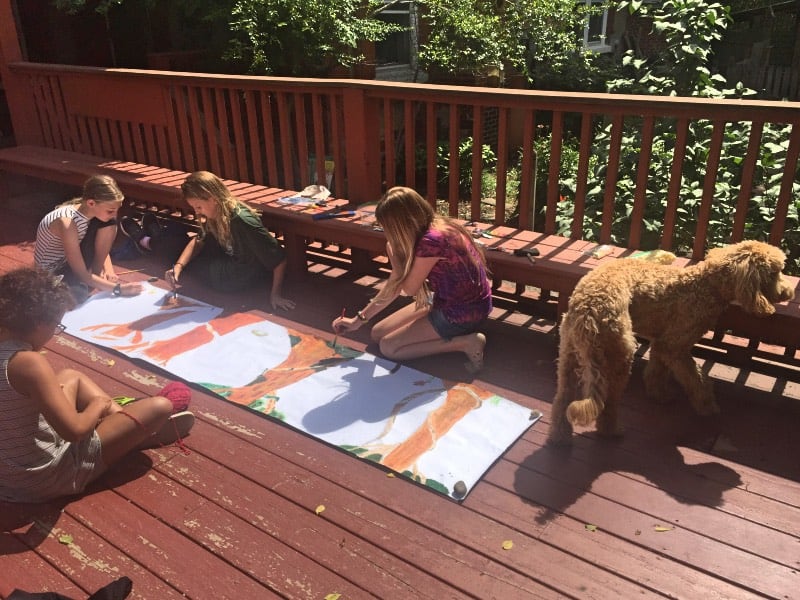
Students studied different types of writing throughout the week. One activity they did was to use pictures to inspire their writing. If they saw a photo of a butterfly that inspired them, for example, they could write a poem in response, and perhaps “shape it” in the form of butterfly wings.

They did a lot of free writing, haikus and had the freedom to explore whatever type of writing style that interested them, from short stories to graphic novel layouts. They even explored writing a screenplay and all that went with it: writing, directing, rehearsing and performing their written words. Students were allowed to edit their work or not, depending on how they felt about it.

summer camp

At the end of each day students could elect to turn their work in to be part of an anthology that April would put together later in the summer. After the camp ended, she spent time compiling and typing out each of the writings her students submitted. She remarked that some poems were funny, some were more serious, some explored serious issues and other poems touched on lighter subjects, such as smelly socks. In effect, these poems were a snapshot of this particular age group, and allowed their individual selves to come out. They had no filters. Their work reflects what was in their heads at that moment.

Student success

April considers the most successful part of the week to be when she witnessed an increase in student confidence with regard to their writing. They produced some insightful, heartfelt, and well-written work. They learned that even though they might struggle with specific aspects of writing academically, they can still be incredible storytellers, and write pretty remarkable content.

summer camp

All photos courtesy of April Fox. We have a copy of the anthology in the Main Office!

Kathy Clarke – RCS Alumna – Meets Madeleine Albright

Kathy Clarke – RCS Alumna – Meets Madeleine Albright

RCS Alumna Clarke

Kathy Clarke, ’08 RCS Alumna

“Rainbow caters to success.”

She also knows what she wants to do with her life: be a writer. And she’s pursuing her dream with gusto.
She’s already doing two internships related to her passion – one in publishing, and the other helping with the publicity for a Macalester professor publishing a book of poetry.
Before she arrived at Macalester, Kathy attended the prestigious Mercersburg Academy in Pennsylvania, where her writing talent earned her the coveted “class orator” title.
This honor led to one of her proudest accomplishments so far: sharing the podium with Secretary of State Madeleine Albright, who delivered the commencement speech.
“I actually walked away from graduation with six awards, and so I was pretty proud of myself,” Kathy recalls. “But then Madeleine Albright came up to me after graduation and said, ‘You must be a rock star!’ I might get that as a tattoo—‘You must be a rock star!—Madeleine Albright.’ That’s something I never want to forget.”
Kathy’s talent at writing emerged at an early age: even before she could read she had shown a passion for the written word.
“My parents joked and said that I was going to write the Great American Novel before I could read,” she says: “I would scribble on pieces of paper and put them together and then read them to people as if they were words.”
As it happens, one of Kathy’s favorite memories of her time at Rainbow also involves writing.
While she was in the Omega program, her teacher Susan Waddell would sit with Kathy at lunch and let her student write on her computer.
She wasn’t the only teacher who did this, Kathy says: William Harwood would also just let Kathy go and write on his computer. She regards this time as vital to her development. “I experimented with a lot of just writing fiction.”
But Rainbow gave Kathy more than free time: the individualized attention she received helped a motivated student become a self-motivated student.
“I remember one assignment where Susan had us describe a beautiful place and she gave us a list of adjectives we couldn’t use—but then she gave me an extra list of adjectives, and that was really fun.”
Kathy received this sort of personalized challenge again and again. Her teachers, she says, “paid individual attention to me, which made me pay individual attention to me and not just go through the motions of school.”
Rainbow also gave Kathy the freedom to develop—at her own pace—a work ethic and a sense of purpose. “We got a lot of free time. And that really helped me learn to motivate myself.”
More than anything else, though, Kathy now appreciates the difference Rainbow’s emphasis on self-discovery has made in her academic career.
To start with, learning to trust herself allowed her to choose Mercersburg over the other options (some closer to home) that presented themselves. “You need to know yourself first before you make big decisions like that, and then when you do you will make the right one.”
And even at a prestigious private school, knowing herself gave her an edge. “Coming out of Rainbow, I was so much more advanced than even my high school classmates at knowing who I was and knowing what I wanted and what I needed. It was a kind of learning and a kind of growth that caters to success in a way that traditional curriculum doesn’t.”
The Leperchaun Traps

The Leperchaun Traps

Recently the second graders had an interesting project;

Dear 2nd grade Frogs,

It is very difficult to catch a tricky leprechaun, but you and your family can have a great deal of fun trying! Who knows, maybe you’ll get lucky. The first thing you need to do is build a trap. There is no right or wrong way to build a leprechaun trap.

You can make your contraption with a net, boxes, sticks, or anything else you can think of such as paper towel rolls, empty containers, tin foil, paper, string, yarn, etc. How about using an old shoe? Remember, you must be clever to catch a leprechaun so give this project some time, thought and effort- maybe even planning it out on paper first.

Once you build your trap, don’t forget to add bait to help lure the leprechaun. Since Leprechauns are very greedy, one of the best things you can use for bait are coins! They especially like anything shiny. They also love rainbows, four leaf clovers and round stones.

Make sure your trap is well disguised. It needs to blend into its surroundings or the leprechauns will not come anywhere near your trap. You will bring your trap to school on Tuesday, March 15th and leave it in the classroom. No two traps should be alike or the leprechauns will get suspicious and leave. So, make sure to use your own ideas.

When your trap is done, write a story about the leprechaun that will come to visit your trap. Make it an exciting and entertaining adventure. Your story needs to have an exciting beginning to interest the reader, a middle with some type of problem and an ending with a solution. You will be reading your story to the class on Tuesday, March 15th.

Have fun and may the luck of the Irish be with you!

Sincerely,

Sheila Mraz


Words, Words, Everywhere

Preschool---words

Spontaneous excitement about learning occurs frequently at Rainbow Mountain. Recently, a preschool teacher sharpened some snazzy pencils, slipped sparkly gel grips on them, and set them out in a basket. Two children discovered them immediately and asked what they were for. “These are for practicing writing letters and words,” the teacher said. “Where can we get words?” asked an excited child. “Look around the room. We have words hiding all around us,” came the reply. The children immediately began to look and discovered words everywhere. The teacher supplied clipboards and showed the students how to hold and use them. Soon, with great excitement, they were moving around the classroom, diligently copying as many words as they could find and returning to ask what they said. Other children noticed and asked for their own clipboards. A ready supply of clipboards and snazzy pencils are now on the teacher’s desk.