
November Kaleidoscope 2019
November Kaleidoscope
Symbolic Events
It’s only the beginning of November, yet we have already completed several cycles and symbolic events at Rainbow this school year. We have welcomed new families and new students, who by now are hopefully feeling a sense of community. We completed our student testing cycle for students in third through eighth grade. At this point, most classes have held their first of three parent class meetings. We have welcomed autumn, the harvest, and the coming days of darkness with the Halloween Harvest Hoedown, the Halloween Day celebration, Día de los Muertos, and a fire circle. Some of these events and transitions are marked with ritual and highlighted in this November Kaleidoscope.
Ritual – Being Present
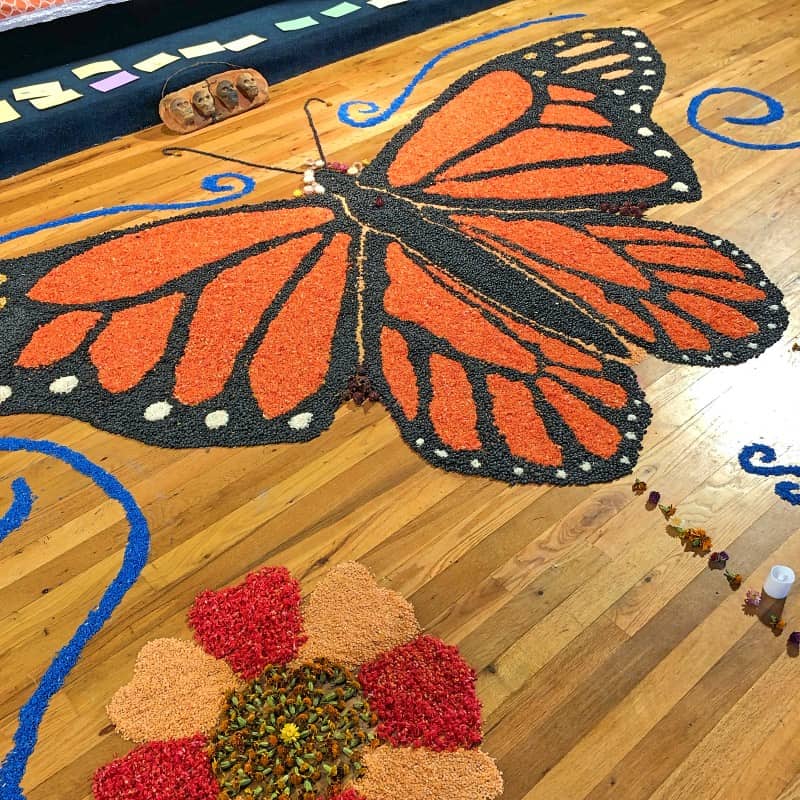
Why ritual? When I am leading a ritual, I sometimes like to explain the reason for having a ritual by asking, “Your body is here, but where is your mind? Your heart?” Even the simplest of rituals, such as taking three breaths together, helps us to become fully present in mind, body, and spirit.
Interconnectivity
A second purpose of ritual is to help us connect as humans and to recognize our interconnectivity with all of humanity and nature. For example, in addition to centering, almost every meeting at Rainbow begins with a brief opening round where each person in a circle is invited to share a word, a phrase, or a short anecdote about how they are doing or something significant in their life. This simple ritual helps every person to name what is going on in their life so that they can be more present with the group. Often in opening round we learn that someone is in mourning or they are in physical pain, helping others to be more empathetic. Most of all, ritual helps to connect us, reminding us of our common humanity and creating a spirit of togetherness, which is especially important when we are about to engage in making decisions together.
Transitions
A third reason for ritual is to honor and aid in transitions. Ritual helps humans to move through change with dignity – giving up and letting go of the past, and moving bravely into the future. For growing children, rites of passage can help children move into adolescence and then into adulthood. In ancient and indigenous societies, rites of passage were/are central to the culture. In America’s current mass culture, the lack of rites of passage often leaves adolescents feeling empty and confused about growing up. Saying goodbye to childhood isn’t easy for adolescents, yet they also desire the trappings of adulthood. When we don’t provide a rite of passage, teens find other rites, that can be risky or unhealthy, such as drinking or sexual activity. Meaningful ritual can help our children and teens to develop a deep sense of connection and purpose in their lives.
Rites of Passage in Omega Middle School
This is partly why the Omega Middle School program is structured to be a multi-year rite of passage. From the ritual around the beginning-of-the-year Omega honor code to the final rituals of eighth grade, Omega students see themselves as important members of their community. They are honored for what they contribute to their community and for who they are and will become. Embracing one’s purpose is the heart of Omega.

Open House
I invite you to attend our Omega Middle School Open house coming up on Thursday, November 21. Even if your children are much younger, the Open House will help you understand the whole arc of development at Rainbow and why Omega Middle School students have such a healthy self-image and the confidence and character to succeed in high school and beyond.
The White Pine Tree
The Mourning Ritual
You may have noticed that our large white pine tree in the middle of the playground died over the summer as a result of a native pine beetle infestation. This is a sad loss. When the faculty discussed it, we knew ritual would help our children to say goodbye to the white pine and find meaning in its death. Sue Ford and Susie Fahrer composed a song for the tree, and for one of our Tuesday song circles, we all gathered around it and sang:
Bless this tree for giving us life
Bless this tree morning noon and night
Bless this tree flower fruit and cone
Bless this tree oh see how we’ve grown.
You are a sacred sight
You are nature’s light
Rest you, return to the Earth
Rest you, and bring rebirth.
This beautiful ritual helped us to reverently grieve with one another and to remember the beautiful cycle of death and rebirth. In the coming weeks, Tim Slatton (partner of West Wilmore) will be taking down the white pine with the help of our facilities keepers, Max Mraz and Shawn Fain. We trust they will respectfully put it to rest. Niki Gilbert, Omega Middle School science teacher, is creating a team of staff and students to make a thoughtful plan for the planting several new trees on campus. Rest ye and bring rebirth.
Video credit: Tracy Hildebrand
Authenticity and Wholeness Training
Teachers who love…themselves
Over the past few weeks, the teachers and I have continued our series of training on developing authenticity and wholeness in students through teacher development. For one of our Wednesday afternoon trainings I led a training on Mindfulness. Our theme for the day-long training on November 1, was Openness. In this training we acknowledge that teaching is a challenging profession. Teachers have to make hundreds, if not thousands of decisions a day, knowing that every decision they make could have profound effects on the lives of the children they love and for whom they are responsible. Teachers have to perform with empathy, creativity, and dynamism while under tremendous stress and without being thrown off by their own emotional triggers. Teaching is a messy, complex job that is impossible to do perfectly. Teachers are often very hard on themselves. Yet, if teachers are going to be compassionate toward students they also need to be compassionate with themselves.
Invoking the Sages
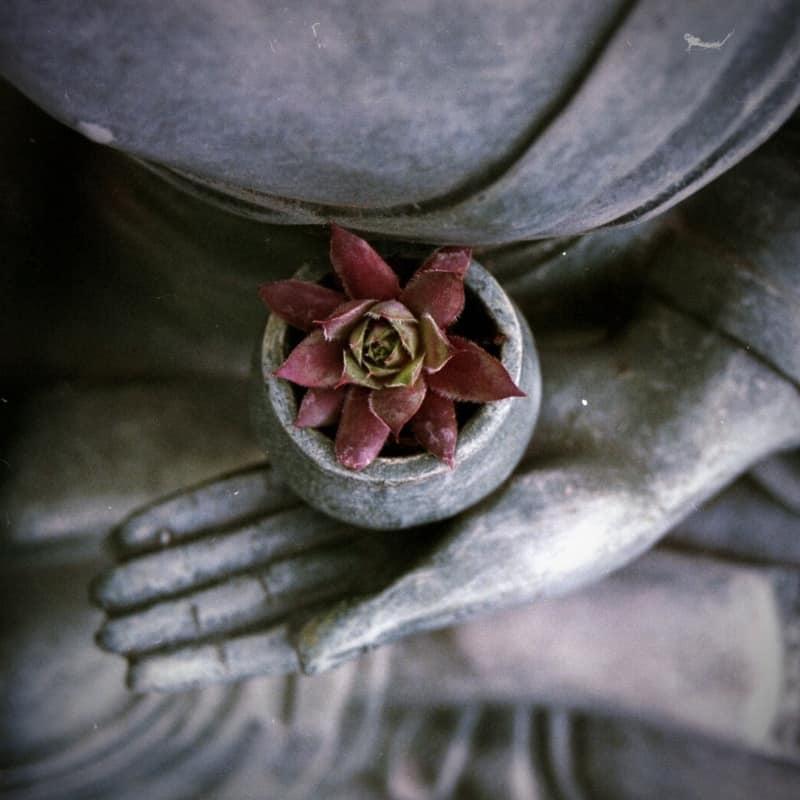
The Buddha, said “I have two things to teach. Suffering and the relief of suffering.” Deep within the Puritan roots of American society, there is a tacit belief that self-compassion is the same as selfishness. This couldn’t be further from the truth. Through the new field of positive psychology and with advances in neuroscience research, we now understand that self-compassion, or empathy for ourselves, is the key to empathizing with others. It doesn’t mean we give up or let ourselves off the hook for changes we need to make. It simply means we acknowledge that we are only human. Part of being human is sharing the suffering all of humanity has experienced since the beginning of time.
Self-Compassion
In addition to learning the science behind self-compassion, I engaged teachers in a simple 3-step exercise that I highly recommend for parents and children, too.
Step 1: When experiencing a challenging moment or being critical of yourself, acknowledge your situation and pain. You may simply say to yourself something like, “Ouch. That hurts.” Or, “this is stress.”
Step 2: Have compassion for yourself by recognizing that suffering is part of life. All of humanity shares a similar experience. You may say to yourself, “I am not alone.”
Step 3: Place your hands over your heart. Say to yourself, “May I be kind to myself,” and offer yourself a gift. It may be patience. It may be strength, or forgiveness.
This simple one-minute exercise was developed by Kristen Neff. Click here for advice for parents around fostering healthy self-compassion.
A legacy of love
A few days ago you received an email from Sandra McCassim, P-3 Division Head, that after 20 years at Rainbow, she is leaving at the end of this school year. I cannot possibly convey what this means to me personally. Sandra lifts up others in love as teacher, administrator, and friend. Her gentle wisdom has helped shape the loving culture here at Rainbow. Sandra was here many years before I came to Rainbow, and we have been through so much together. I am going to soak up every minute I have with her for the rest of this year.
Sandra will be instrumental in helping with the hiring of her replacement. Sandra and I have worked together to hire most of the excellent faculty we have on campus, and she reminds me that every time someone leaves the faculty, a new magical person brings new gifts. We are beginning our search for a new Division Head – a process which we are still defining, a process in which faculty will also be involved. Please feel free to contact me if you have any thoughts about the search. If you know a talented educational leader who is interested in joining the Rainbow team in the coming years, you can refer them to the employment page on our website where there will soon be information on how to apply.

Bringing Light to the Spirit of Education
I write this Kaleidoscope while sitting in the library at Teachers College at Columbia University in New York. West Willmore, Eddy Webb, and I presented at the Spirituality in Education Conference there.
As some of you know, The Collaborative for Spirituality in Education (CSE) at Teachers College has been working with Rainbow for a couple of years. Through generous funding from The Fetzer Foundation and The Rockefeller Brothers Fund, they have paid Rainbow Institute quite well to share our best practices.
No Child Left Behind
Since the No Child Left Behind (NCLB) Act in 2002, our nation has moved in the direction of “teaching to the test,” or only teaching what can be quantifiably measured. Of course what can be measured is only the smallest aspect of education – the most material aspect. Our politicians, most of whom were not educators, did not understand that such an emphasis on the material would gut our schools of the spiritual – that which is immeasurable and unseen in the literal sense of the word. Nor did they realize that when you gut the spiritual aspects of education, nothing can thrive, certainly not academics, because without spirit there is no life and no motivation to learn. Not surprisingly, 19 years after NCLB, academic achievement is lower than ever and the opportunity gap wider. Furthermore, as a nation, both children and adults are in the midst of a mental health crisis.
Spirituality in Education
The good news is that the pendulum is beginning to swing in the other direction. When one of the highest ranked educational schools in the country hosts a Spirituality in Education conference, it legitimizes a movement. Even the President of Teachers College spoke at the conference, stating that the conference represented the direction education needs to go. As Timothy Shriver (nephew of John Kennedy and an influential educational leader) said at the conference, “It isn’t a fad, it’s a field.”
In this now blossoming field of spirituality in education, Rainbow is a beacon for the world. Let our line shine. As Martin Luther King Jr. said, “Darkness cannot drive out darkness; only light can do that. Hate cannot drive out hate; only love can do that.” There is no greater light that the pure light of children. Thank you for sharing the bright light of your child with the world.