2nd grade classification of…shoes?

2nd grade classification of…shoes?

Classification of shoes to teach valuable lessons

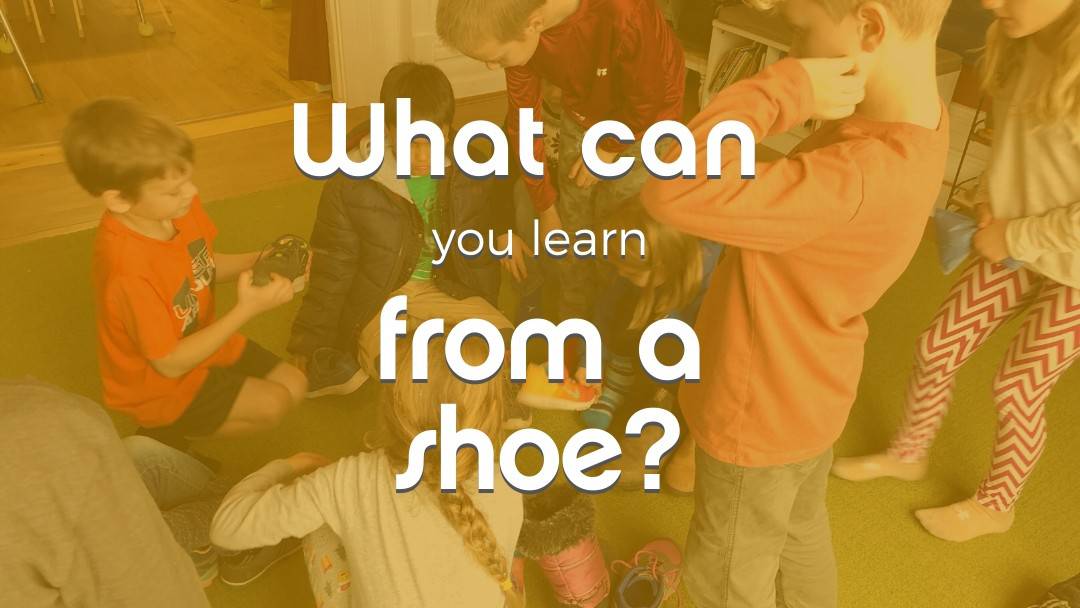
We headed to second grade recently to find students doing classification of…shoes! There is a very interesting reason why.

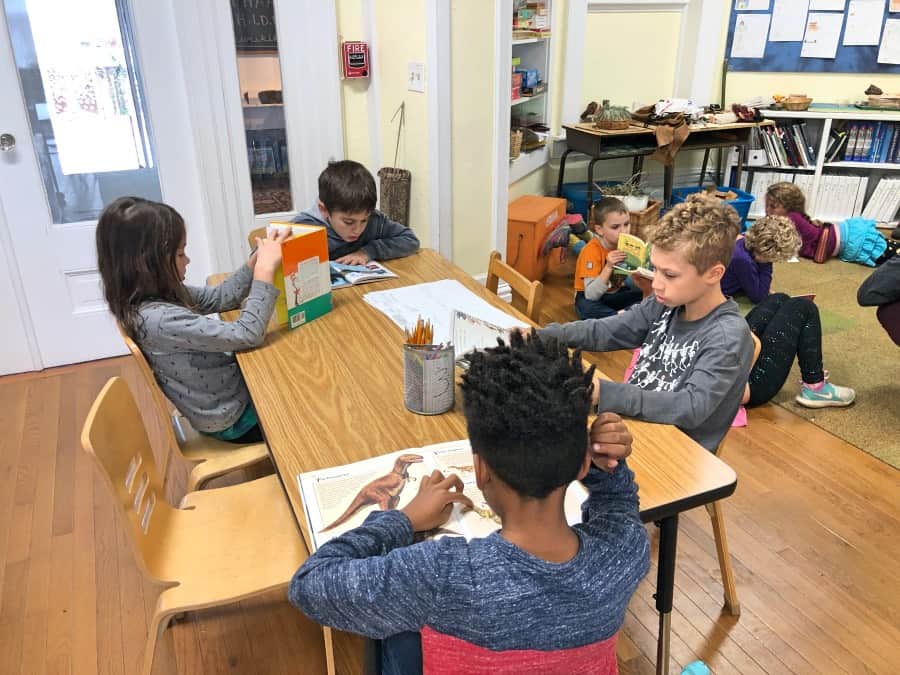
As students started out this lesson, they began with some silent reading time. These quiet moments helped get them ready for what was next.
classification shoes

It was so quiet you could hear their minds “thinking.” Little did they know, they would need their sharp minds and their shoes for the subsequent portion of their lesson.
classification shoes

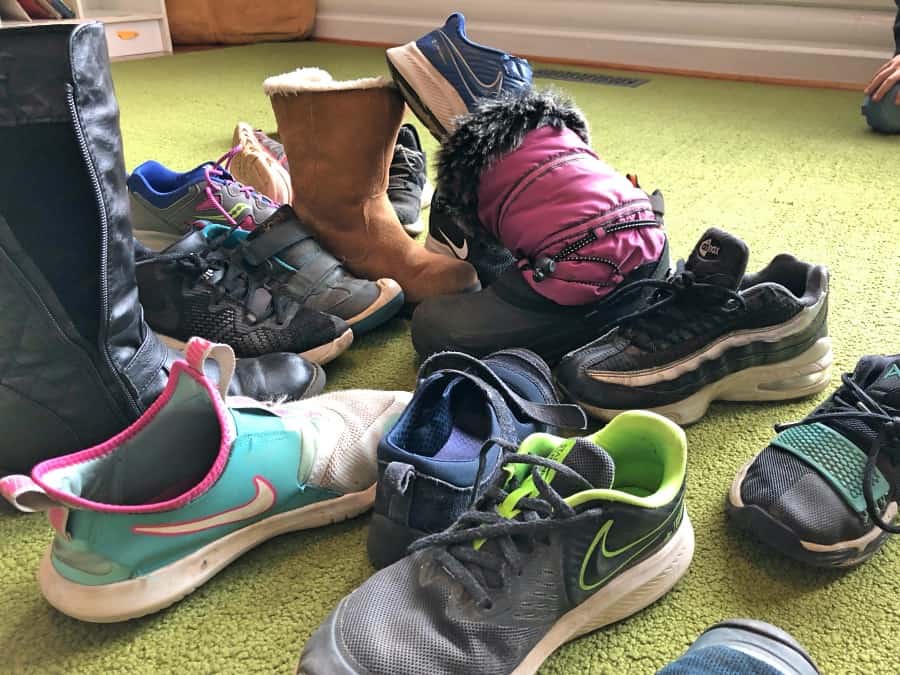
Their teacher, Eddy, had them take their paired shoes and separate them. They put one on the checkered green rug in their main classroom, and the other on the green rug in the library/centering room.

Classification of shoes in different ways

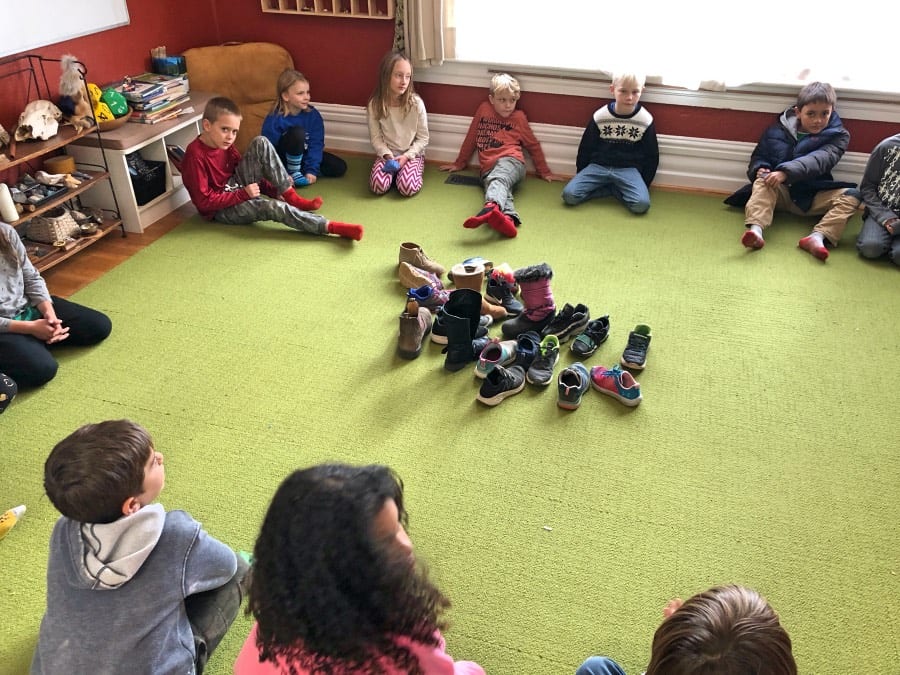
The kiddos separated into two groups with the following instruction: to group or separate the shoes according to a system they would create. In other words, students could separate shoes by color, brand, size, or some other determining factor. They brainstormed different ideas of how they might classify their shoes within their groups.
classification shoes

Each group chatted and came up with a plan that all could agree with and implement.
classification shoes 2nd grade

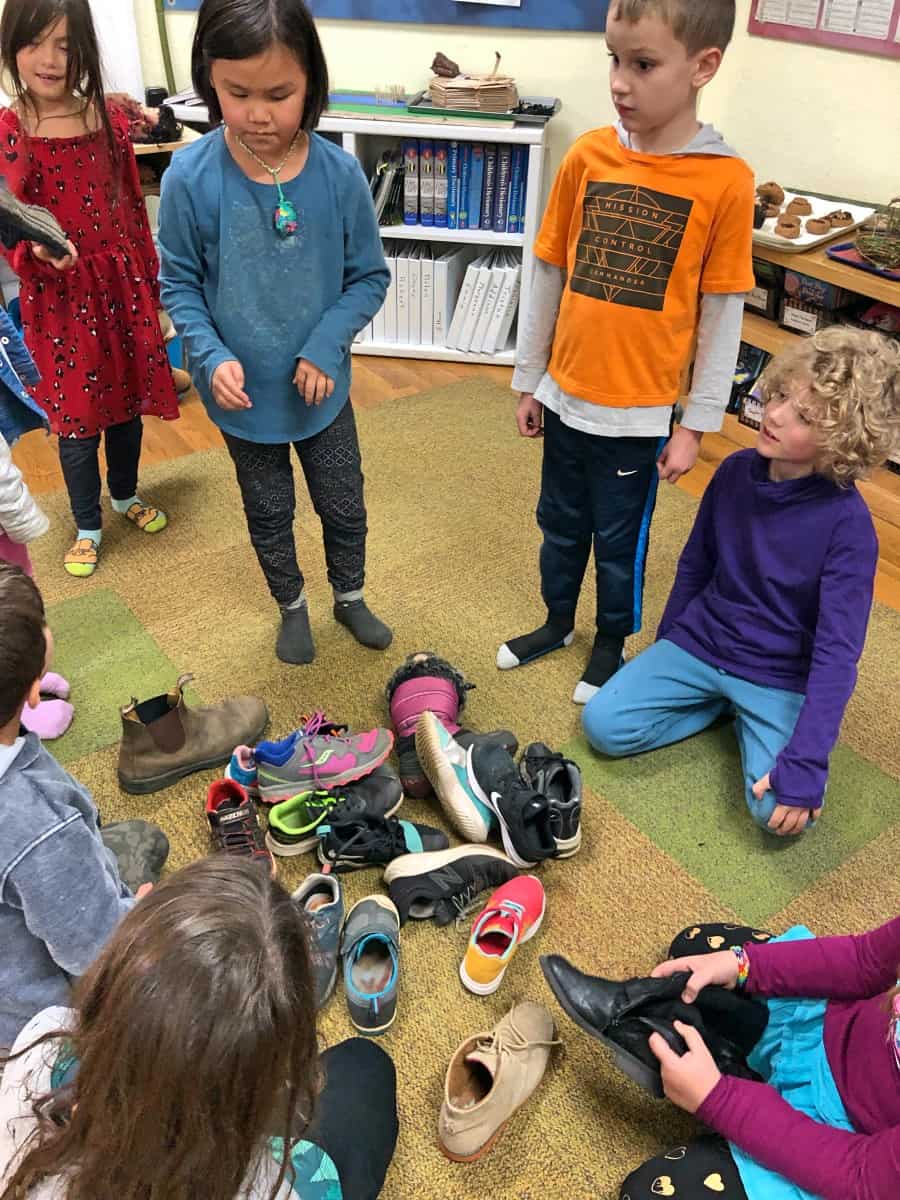
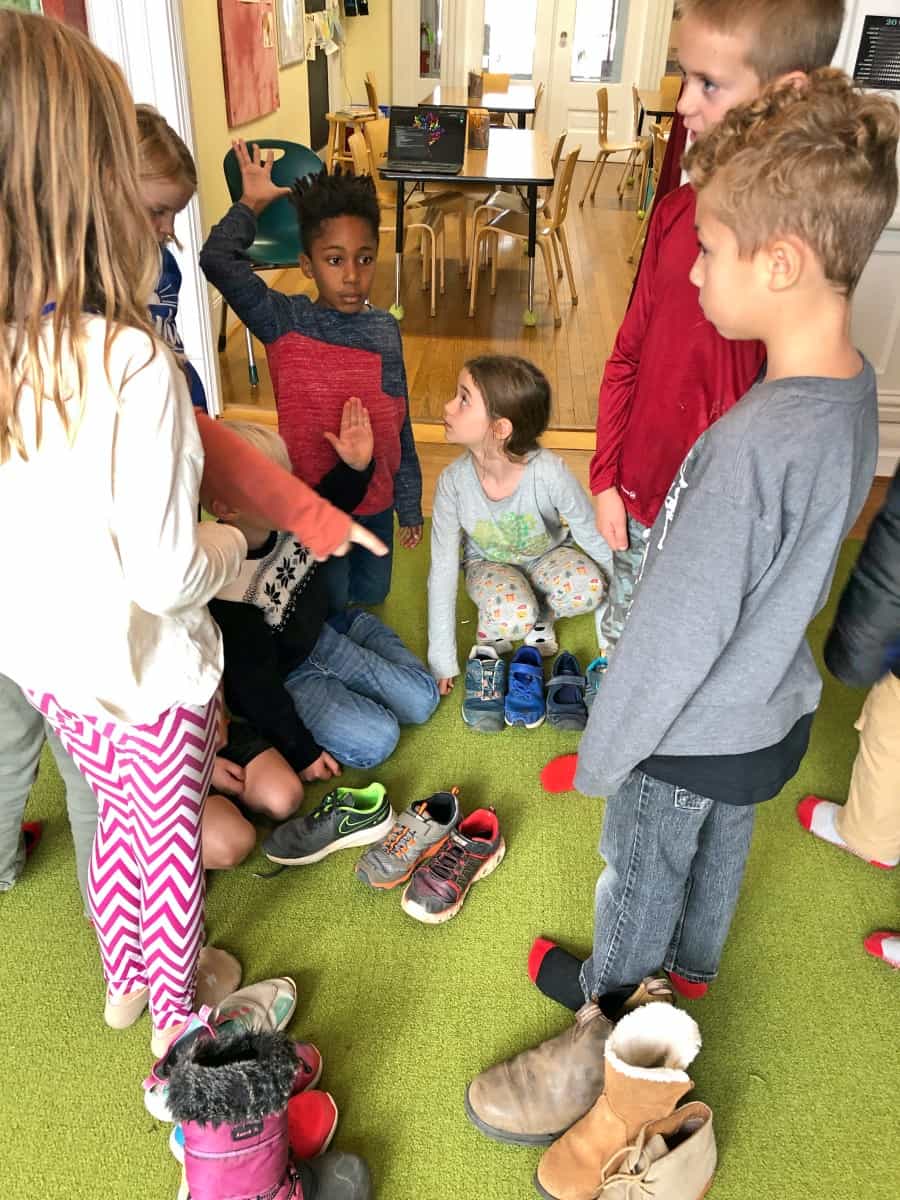
Neither group had any idea how the other was classifying their shoes. However, they each came up with very different ways of grouping and organizing their shoes.
classification shoes2nd grade

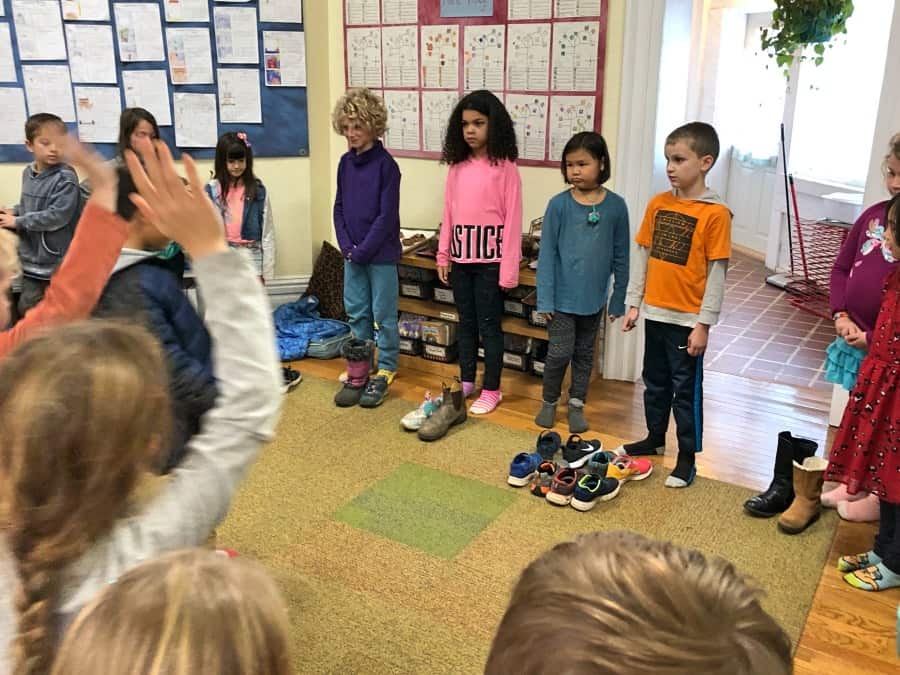
In the library room, students grouped shoes by their overall color. In the main room, students grouped them by how they “closed” or secured to the foot, such as with velcro, slip-on, shoestrings, etc.
classification shoes 2nd grade

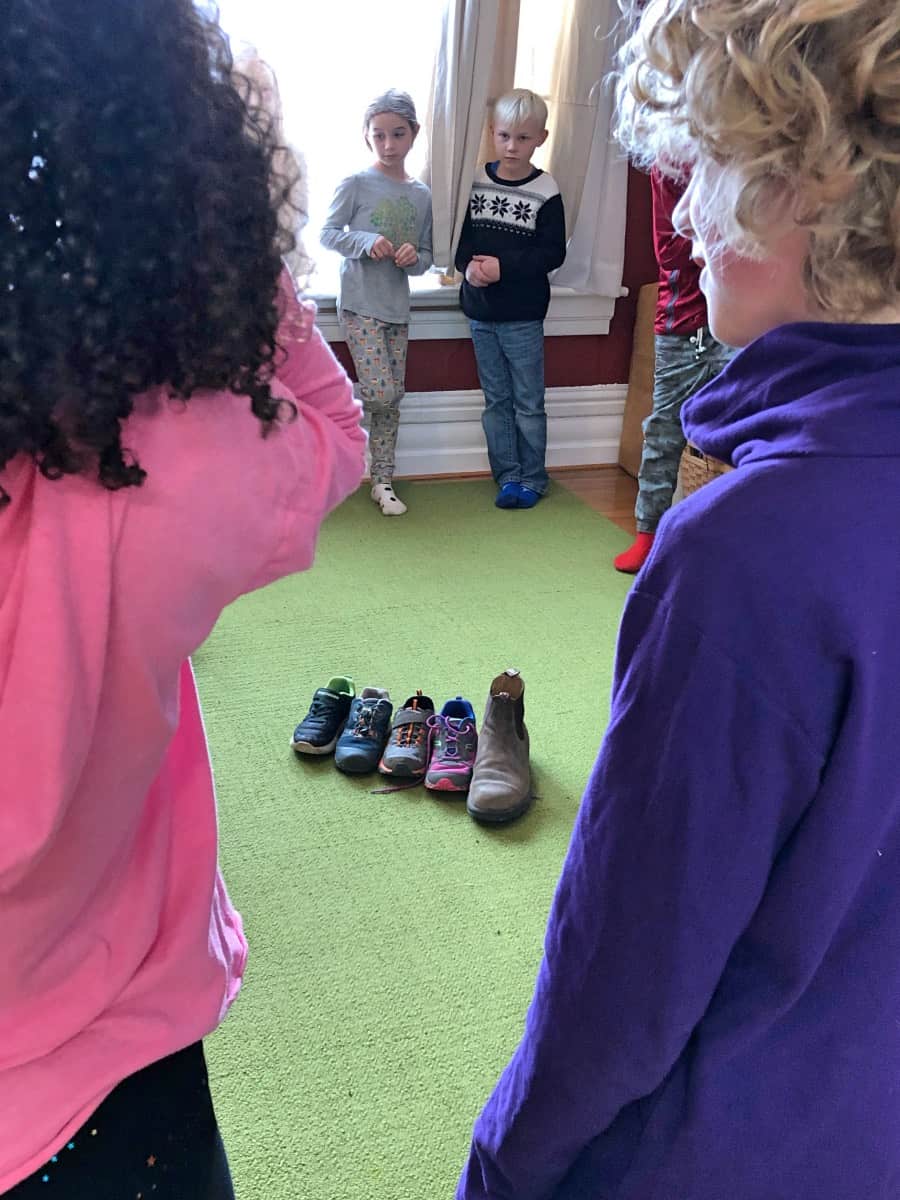
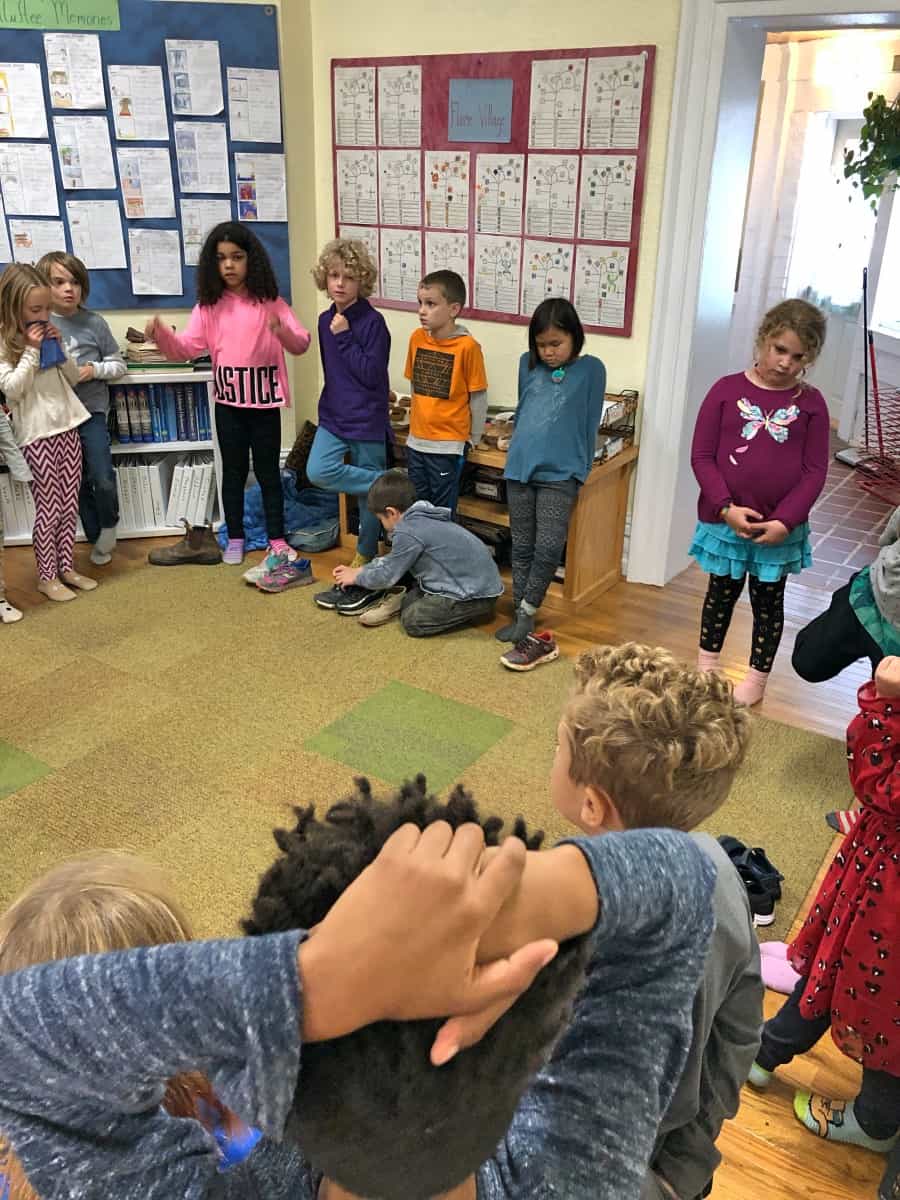
Once they did that, their teacher asked them to reclassify their shoes and come up with a second way to group them all. Students in the library decided to group by the “purpose of the shoe,” such as hiking or running. The other group classified all the different shoes by size.
classification shoes 2nd grade

classification shoes second grade

Why classify shoes?

Why would students do this?

They brainstormed about labeling and classifying things to make sense of the world and understand it better. Eddy asked them, “aren’t there lots of different kinds of trees?” All students agreed that there were. He asked them about animals, plants, and seeds. Everyone agreed that, yes, there are many different varieties of each of these. It is in classifying and grouping plants, animals, and seeds, humans can identify what they are and understand what they do and their role in the world ecosystem.

Learning about the animal kingdom

After everyone got their shoes back, they began talking about the scientific system of classification. They learned about the five main kingdoms of living things: plants, animals, fungi, bacteria (monera), and one-celled organisms (protists). Later, they went more in-depth with the animal kingdom. Eddy gave each student a piece of paper with the name of an animal on it. Each student had to determine if the animal they had was a mammal, reptile, amphibian,  fish, or a type of bird. Some of them were tricky! Did you know that a whale is a mammal? Or that a skink is a type of reptile?
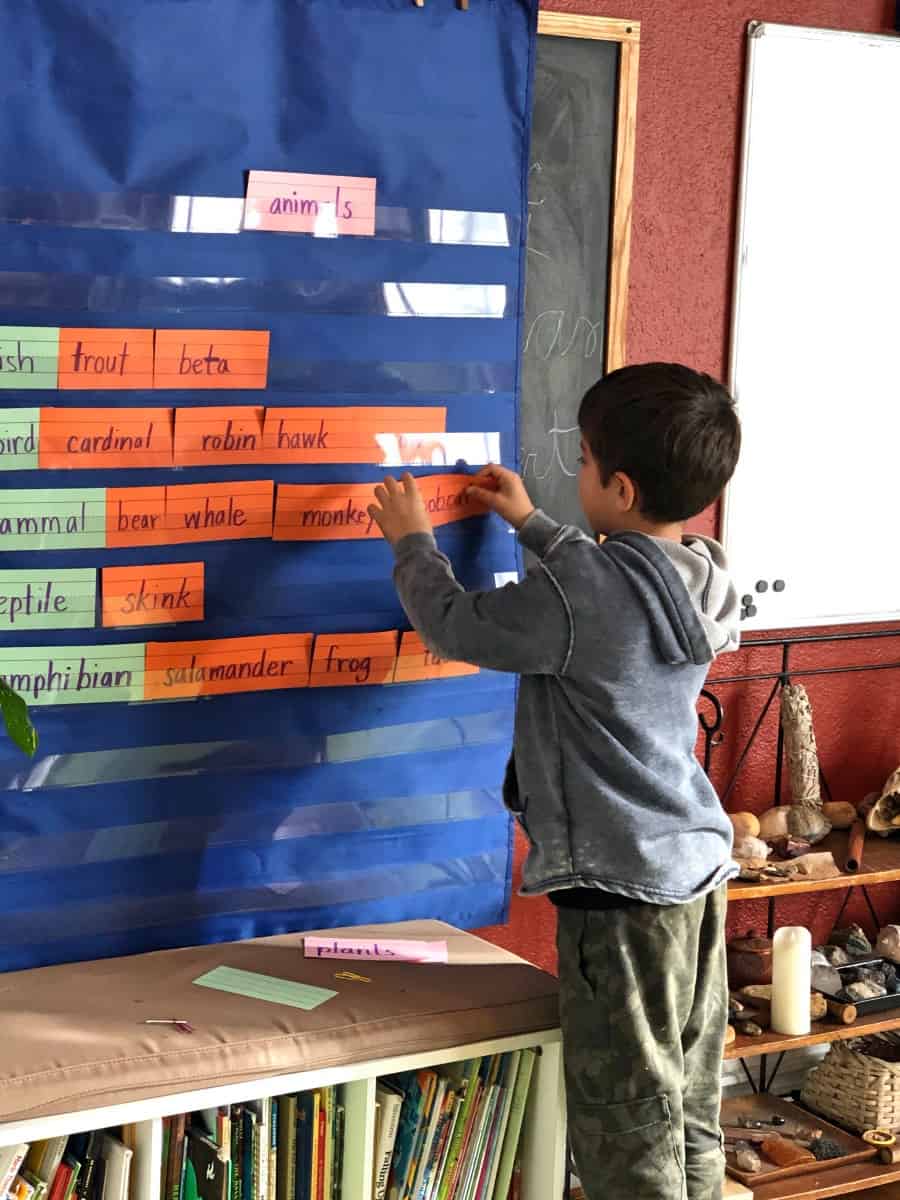
classification shoes 2nd grade

Students walked away with a broader understanding of why people classify the world around them. They explored a number of ways in which it’s possible to do so. What a fun way to use methods of scientific thinking to reason, deduce, classify, as well as integrate other skills such as collaboration, discussion and reaching a consensus.

We love how Eddy integrated elements of the 7 Domains. Students were able to move around the classroom. They worked together to complete their tasks which reinforced the social domain. This process of reasoning and classification touched on the mental domain. Talking about organisms in nature brought in the natural domain. One lesson with multiple approaches. That is a day in the life of a Rainbow student.

 

First Grade Rocks the Rock Cycle

First Grade Rocks the Rock Cycle

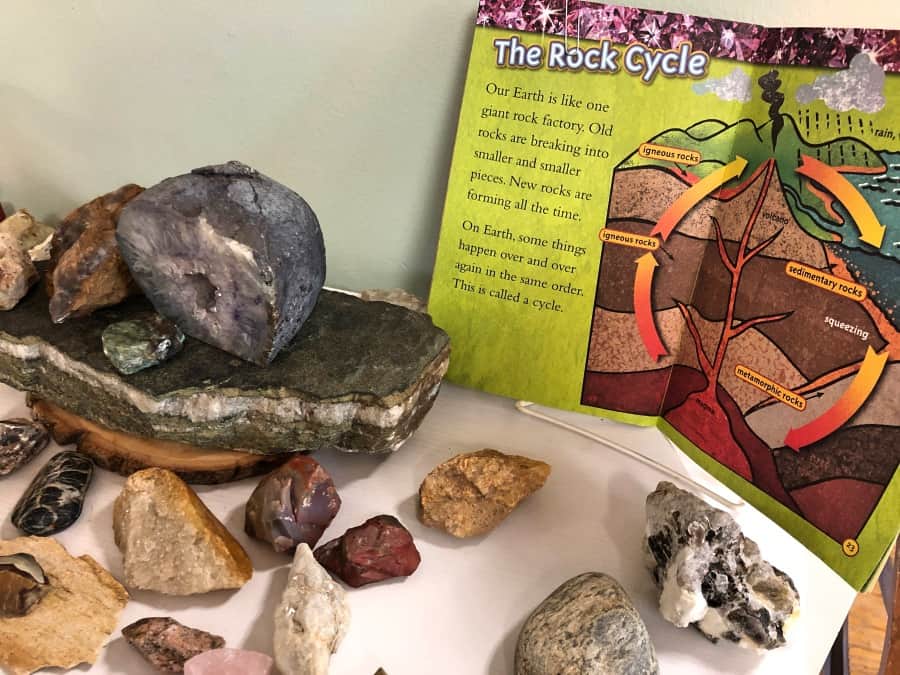
Learning about the Rock Cycle

First graders have been studying the rock cycle, and they’re learning it through the seven domains: the mental domain, creative, and natural, among others.

The story of Piedra

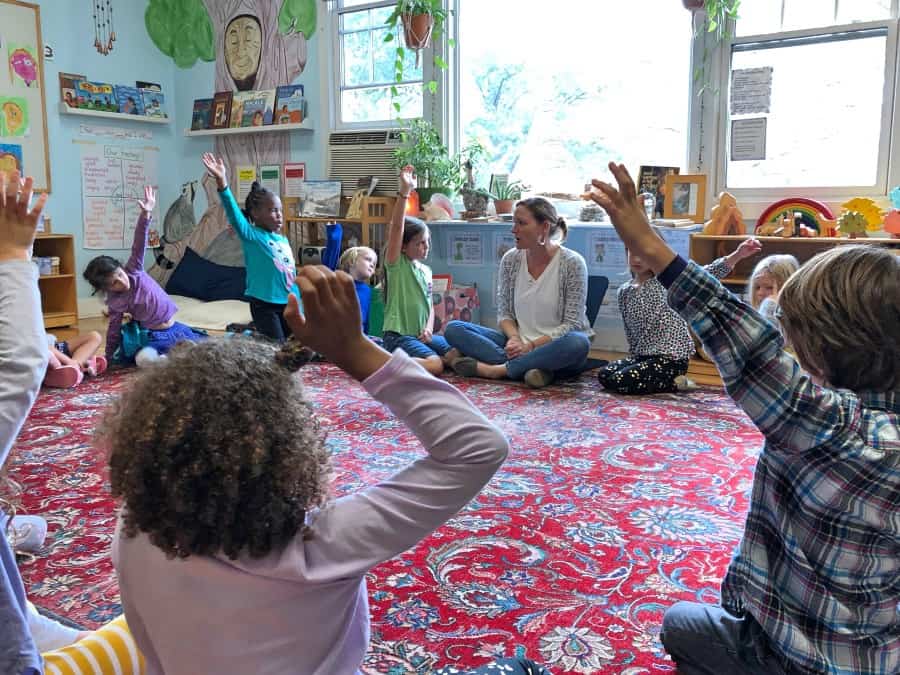
Have you heard of Piedra? She’s the main character in the story their teacher, Rachel, told. Students gathered around while they heard the tale of Piedra, whose journey spanned MILLIONS of years.

rock cycle

Rachel told of how Piedra lived in Appalachia, then made her way to a nearby river where she stayed for hundreds of thousands of years. Over the course of that time, she witnessed turtles, ducks and river otters going about their lives. Little by little, Piedra rolled and rolled downriver, eventually finding herself out at sea. Piedra saw sea animals that she’d never seen before swimming all around her.

Millions of years in the making…

Gradually sand and silt from the sea bottom began to cover her up until she was completely buried, taking about 20,000 years to happen. Piedra stayed there for another million years until she felt a warmth coming from the earth. She felt a whoosh and before she knew what happened, she erupted through a volcano as hot lava, and immediately cooled once she hit the air. She emerged once again as a rock upon a mountain. Only this time, she was a rock who had changed.

rock cycle

Through this compelling story, students learned about how a rock might go through the entire rock cycle. They talked about other cycles they might be familiar with: the lava cycle, the water cycle, and the butterfly cycle.

Illustrating the Rock Cycle

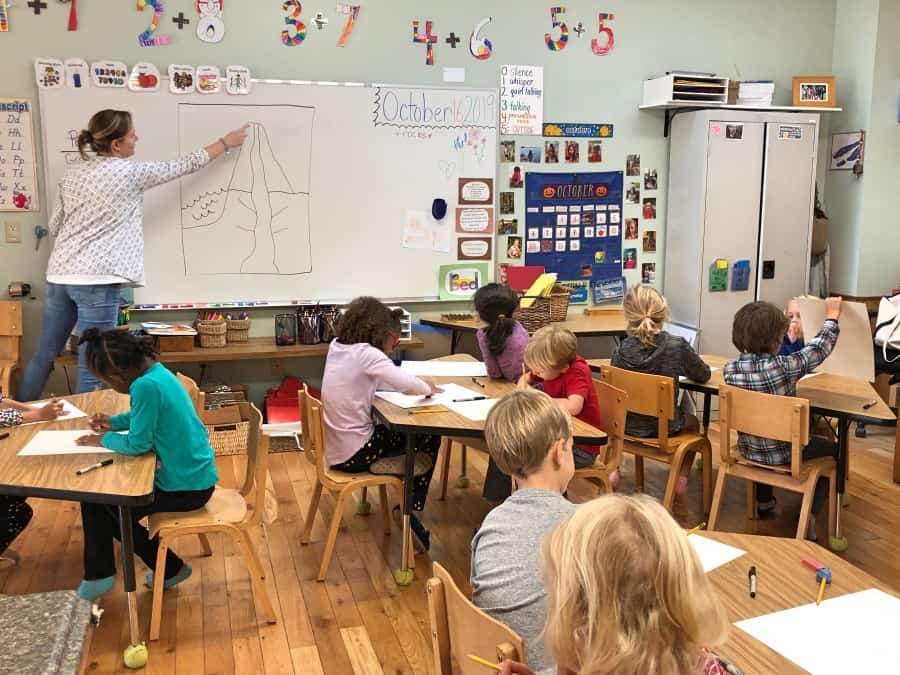
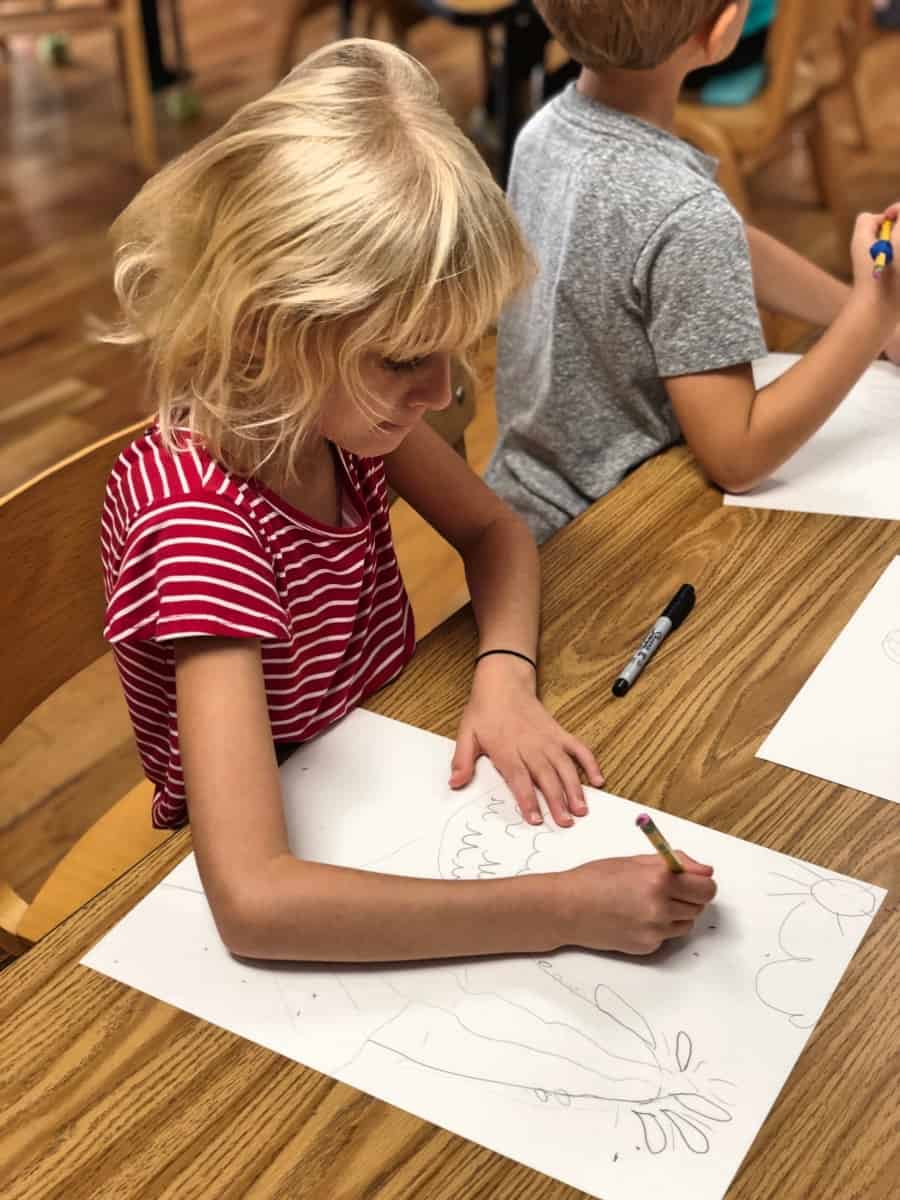
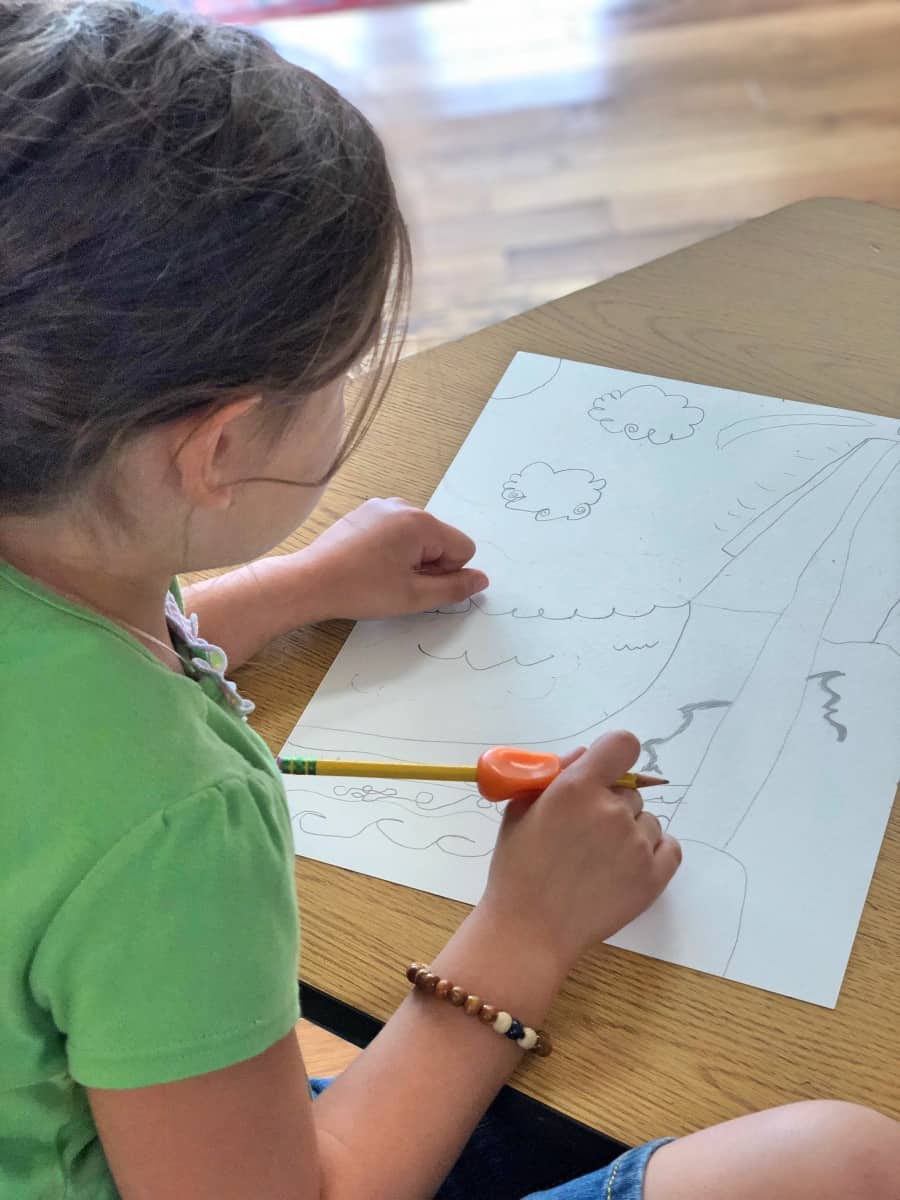
After students heard the story, they had an opportunity to create an illustration of the rock cycle. Miss Rachel led them through a guided drawing.

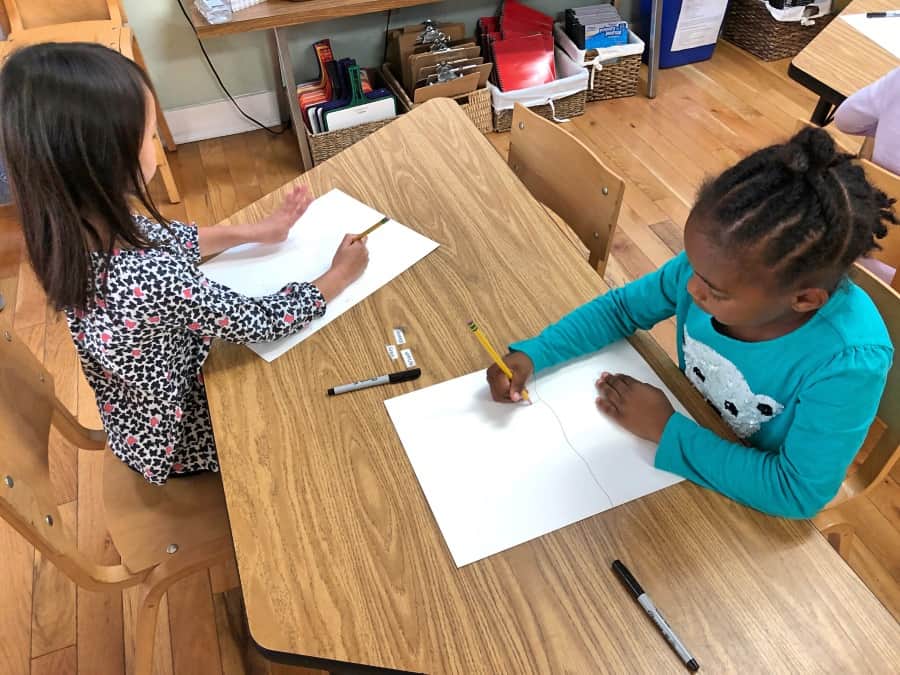
They began with a line.

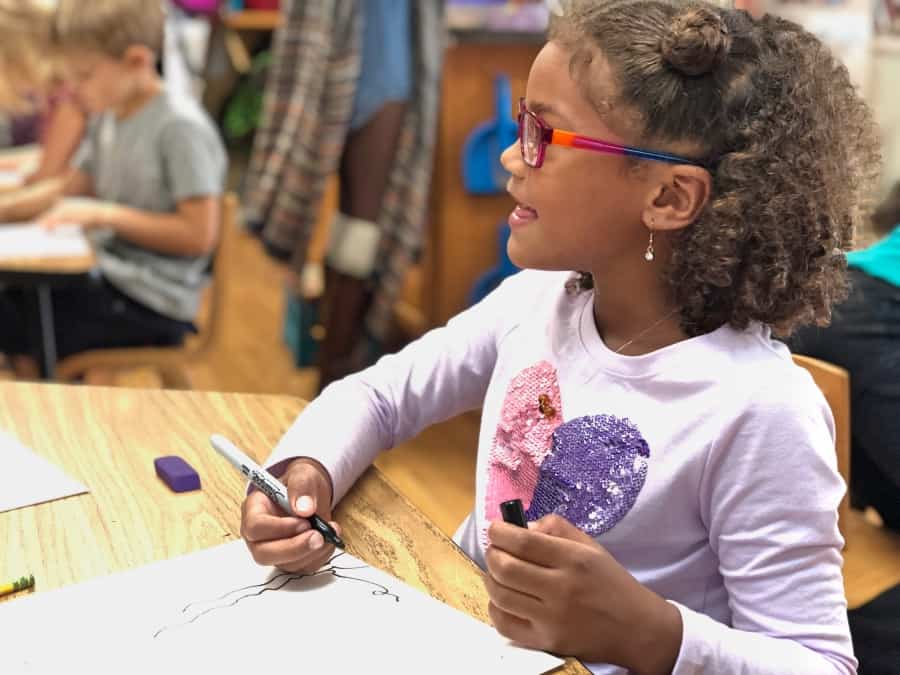
rock cycle

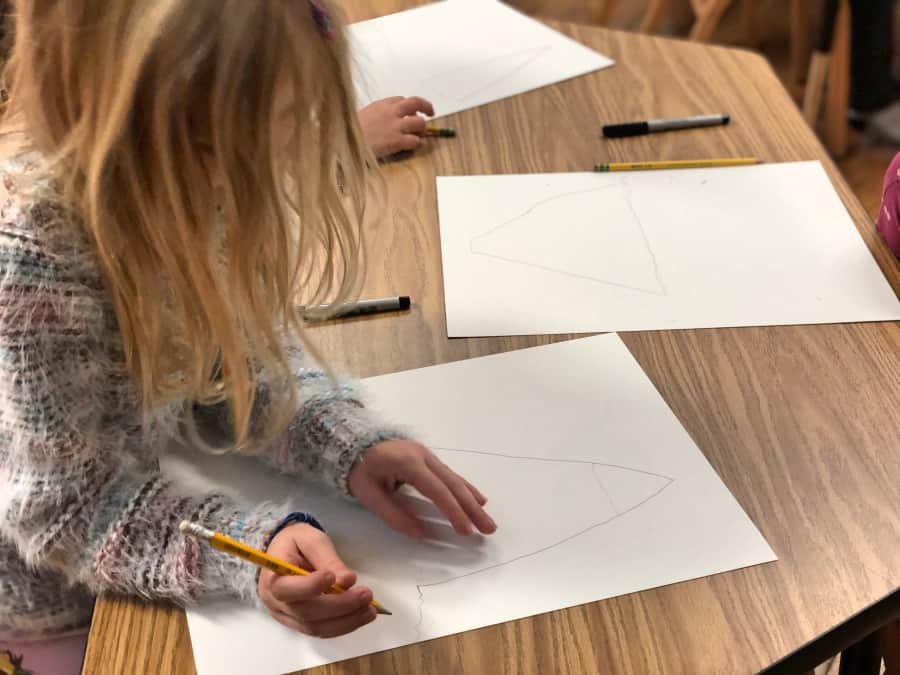
Followed by a volcano.

rock cycle

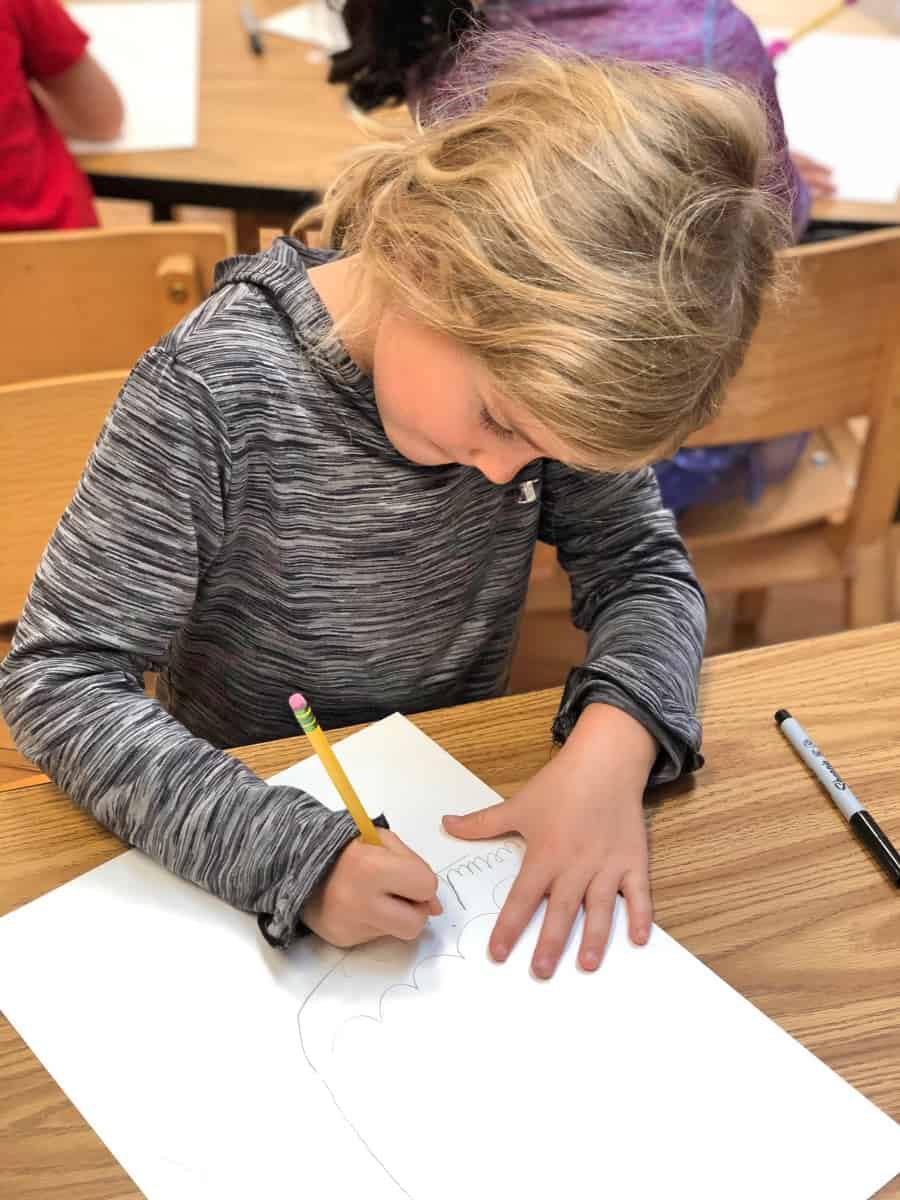
Next they erased the left part of the line and replaced it with a wavy ocean line.

rock cycle

They followed that with a “lava ball”…

rock cycle

…that grew into a lava chute.

rock cycle

They erased the top of the volcano to allow the lava to exit the earth, and had some fun drawing globs of lava “splashing out and spilling over the side”.

rock cycle

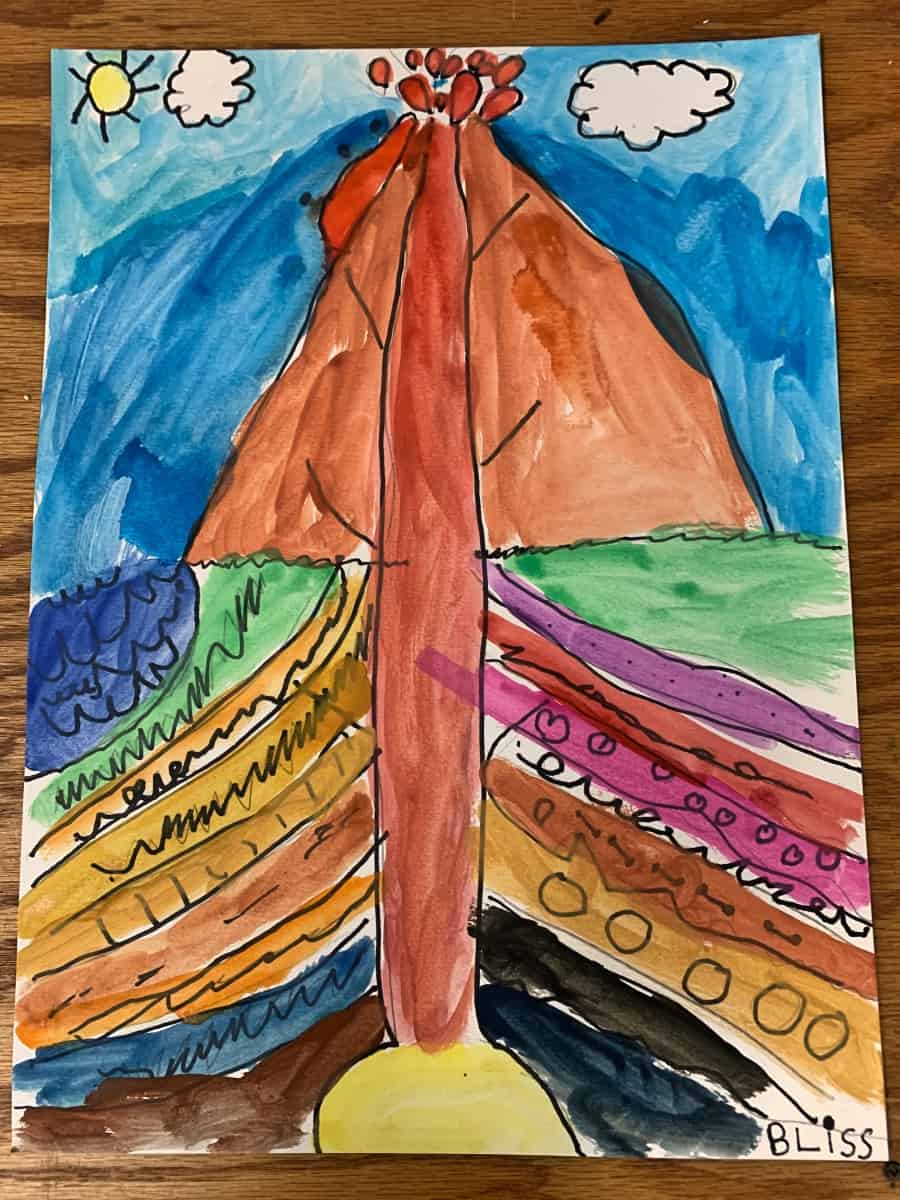
Next came creative layers that represented millions of years of creation.

rock cycle

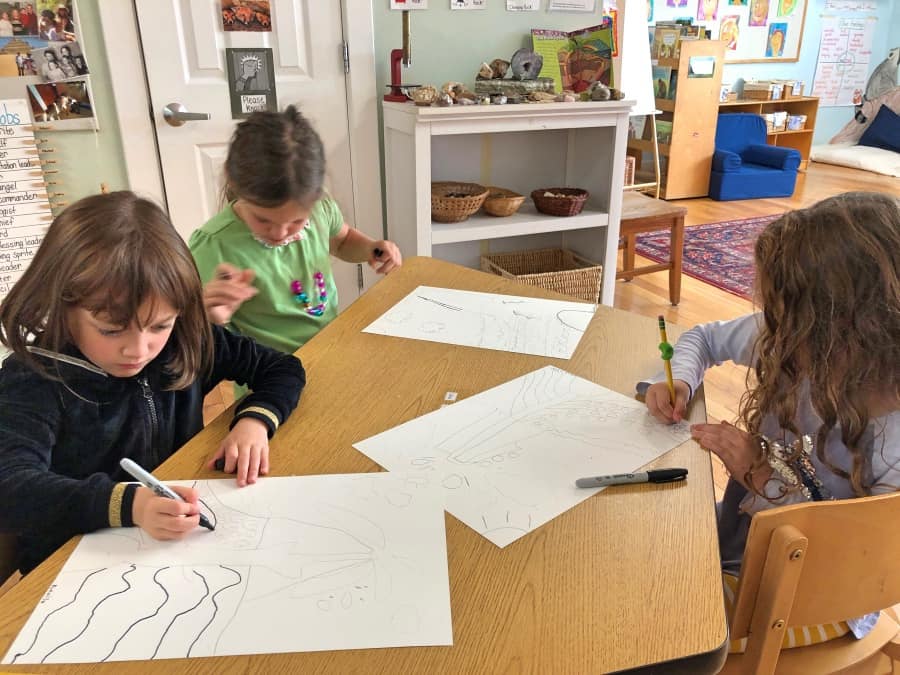
The final steps were to go over their pencil lines in marker…

rock cycle

rock cycle

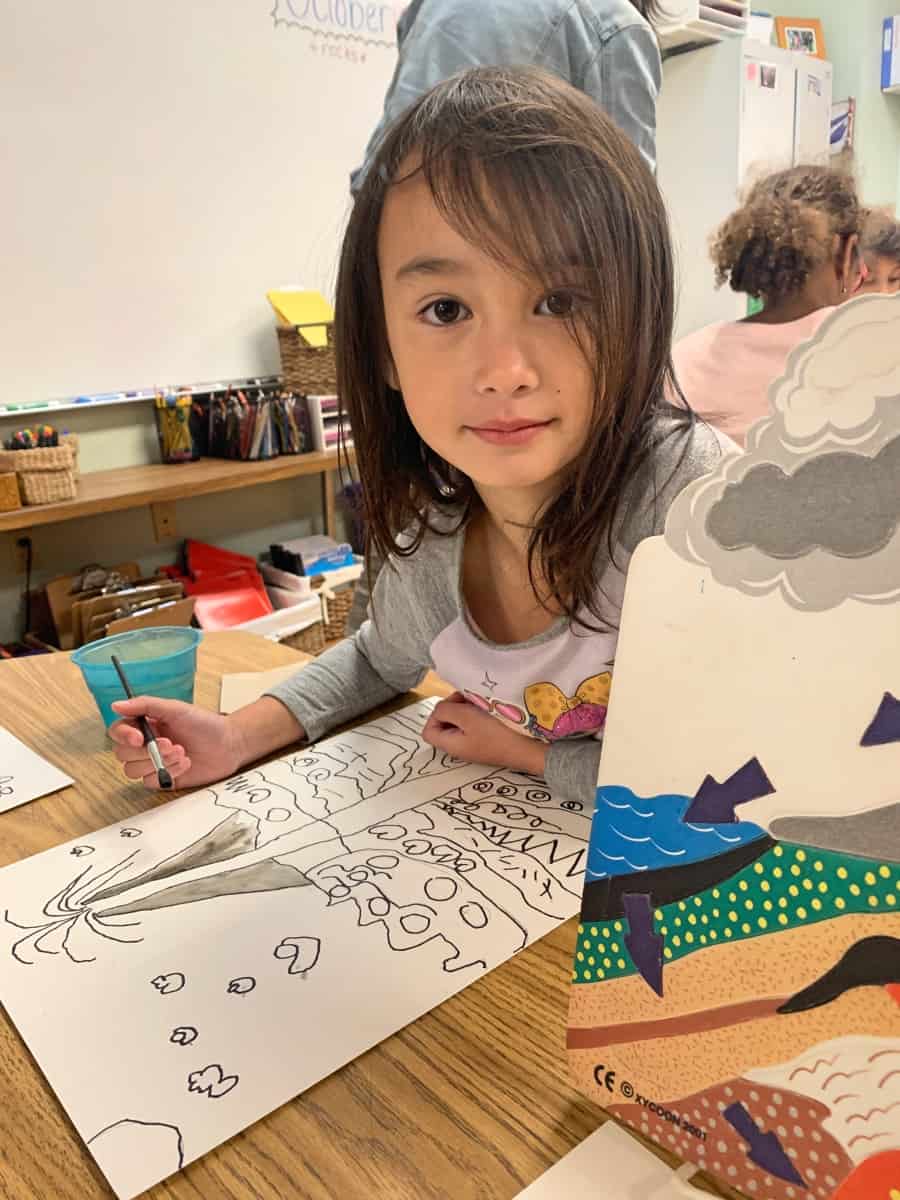
…and fill in their drawings with watercolors.

rock cycle

Our first graders now can tell you all about the rock cycle, starting with a tiny little rock on the side of a mountain.

rock cycle

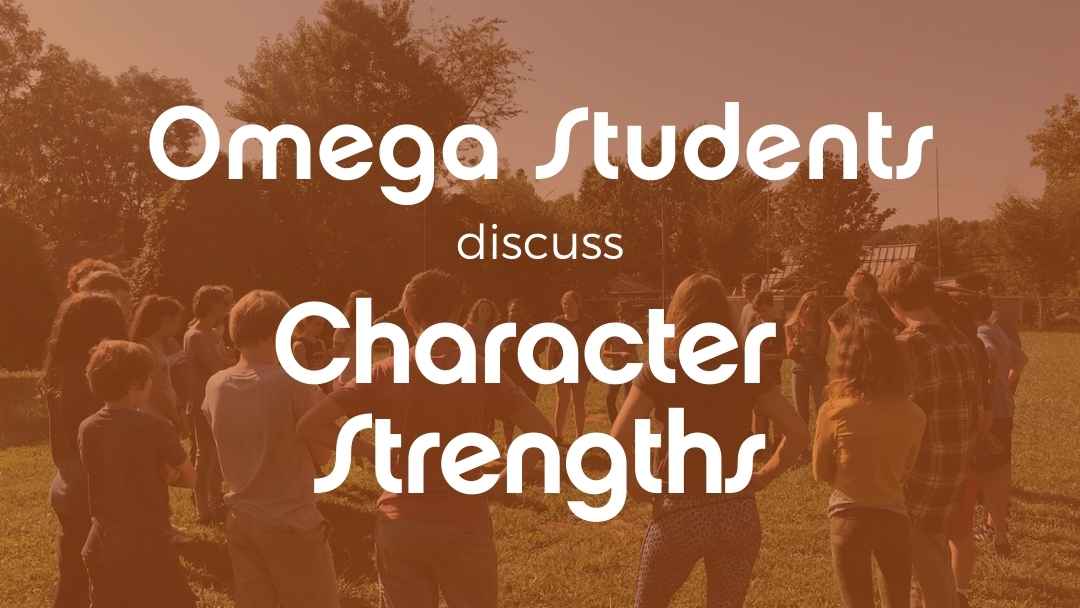
Omega Students Discuss Character Strengths & What Makes a Changemaker

Omega Students Discuss Character Strengths & What Makes a Changemaker

Character Strengths & Being a Changemaker

Recently, Omega 7/8 students gathered in a circle in the Social Studies room to talk about their character strengths, how all that ties in with learning, and being a changemaker. In a previous class, they watched a short video about the Science of Character. In this class, they looked at their own character strengths as a way to look at themselves as they are now, and who they want to become. They completed a “periodic table of character strengths.”

As students gathered in circle, their teacher, Jason, asked them for a willingness to be a little vulnerable as they embarked upon a conversation that would certainly involve sharing personal information about one’s character – not a task that’s so easy to do. Our Omega 7/8 students, however, were up for the challenge.

character strengths

Omega 7/8 students ponder questions about character strengths and about being changemakers.

Jason posed quite a few questions that made students really look at how or why they do the things they do. “Why explore character strengths?” was one question he asked, to which students answered, “Many current changemakers have these strengths and that can help others become changemakers themselves and live out their truth.”

Character Strengths at School and in US Culture

Another question: What character strengths do you think are valued at our school? They answered with a number of terms:

  • creativity
  • teamwork
  • kindness (especially in wanting everyone to feel welcome)
  • leadership
  • spirituality (through centering and other activities)
  • perseverance
  • honesty
  • love of learning

Jason followed up with, Are these the same character strengths that are valued in our culture? For a few quiet moments, students pondered their responses. Several offered their insights: “these are supposed to be values in our culture, but it doesn’t always happen that way. We’re supposed to be kind but you don’t always see that, and through some of the language and actions were seeing, kindness is not always there.”

character strengths

A few student examples of the “Periodic Table of Character Strengths”

J: Does that make it hard to value certain character strengths?
S: If you believe in these values, sometimes it’s not always easy to stand by them.

J: Which strengths are important to have or develop in a digital world?
S: Creativity, social responsibility, and gratitude. With social responsibility comes the idea that one must think critically in response to what’s online. It’s also important not to take for granted everything that comes to us as “easy.”

Fixed vs. Growth Mindset

Jason invited the Omegans to reflect on the idea of a fixed mindset versus a growth mindset the video covered as a topic. A fixed mindset is the belief that you cannot change who you are. A growth mindset is the belief that you can. This was a segue into the next probing question:

J: Is there an area where you have a fixed mindset about something?
S: Yes. When you don’t feel like you’re good at math or reading, that you can’t draw, or that you always procrastinate to get things done

J: Is there any character strength that might help you shift out of a fixed mindset?
S: Yes: perseverance in which you keep trying to do something. There’s acceptance, where you accept that perhaps a subject isn’t your favorite but you can keep working at it. It’s an opportunity to be gentle with yourself and accept that this is where you are. Still, there’s curiosity. If you have a certain belief about something, such as “I’m not good at math,” you can adopt an attitude of curiosity.

J: When you’ve failed at something, how did you feel?
S: Anger, directed at the self, or it’s possible to even feel like a failure. Feelings of discouragement, being scared, or being fearful can happen, too. Being mad at yourself, however, won’t get you anywhere.

Learning from Failure

At this, everyone paused. Jason offered words of wisdom, as well as encouragement: These emotions can and do arise. It’s even possible to let fear get in the way of you trying again. This can be a great opportunity for self-reflection in which you ask, “what could I have done differently? What can I learn from this?”

J: Is it okay to fail?
S: Yes. We can learn from it. But it can also be hard.

J: What is it that you want to achieve?
S: That is a hard question: it makes you think about the future. Perhaps write a book. Be the smartest person that ever lived. Maybe doing a job that you “like to do” instead of something that is forced. You can make goals for yourself.

character strengths

A small poster hangs in the Social Studies room – a relevant question when determining character strengths.

Again, Jason offered his wisdom as their teacher. It’s up to you to find your truth. You also need to determine what lights you up. The way to grow your strengths is to be around others who have strengths that you would like to develop. 

As students concluded this portion of their lesson, they pensively began other projects. They demonstrated such wisdom and a complex understanding of life and its lessons. This is something we’ve come to expect of our Omegans: they embrace the journey and take charge of their learning in all Seven Domains. It is in that spirit they use their internal wisdom to guide their decisions as they navigate academics, the adolescent years, friendships, and so much more.

5 Reasons to Attend the Omega Open House

5 Reasons to Attend the Omega Open House

 You can learn so much at the Omega Middle School Open House

Our Omega Middle School Open House is right around the corner. We hope you will take some time to be part of this event, no matter your child’s grade in elementary school or middle school. It gives you an opportunity to see a Rainbow / Omega education across the grades, culminating with the 7th and 8th grade years in which students engage in larger projects, presentations, and leadership opportunities.

What made me a supporter of Rainbow, was the kids’ strong sense of self. They knew who they were and were not. They knew their strengths and weaknesses. And even though high school and college brings its own set of social and educational challenges, the students I met were at peace with themselves, ready to take on the challenges of young adulthood with confidence and determination. —Bill Drew, parent of a current 5th grader

Here is this year’s schedule:

Morning Session
8:30 – 10 am

  • 8:30 – 8:45 coffee/tea/chocolate in the auditorium foyer
  • 8:45 – 9:00 short presentation about Omega Middle School
  • 9:00 – 9:30 tour classes in progress
  • 9:30 – 10 Q & A with current teachers & students back in the auditorium

Evening Session
6:30 – 8:00 pm

  • 6:30 – 6:45 – pizza and salad in the auditorium foyer
  • 6:45 – 7:00 – short presentation about Omega Middle School
  • 7:00 – 7:15 – tour classrooms
  • 7:15 – 8:00 – meet recent graduates and ask questions with our alumni panel

The five big reasons you should come to the Omega Open House:

1. Meet teachers

During the school year, it’s not always so easy to speak with a teacher who is not attending to other tasks – students, planning, teaching, training, in a meeting, etc. Having their undivided attention to answer all your questions about what they teach and how becomes such a gift! The open house provides you this opportunity. Meet all the teachers in our Omega Middle School: Susie (division head), Susan, Jason, Niki, Justin, Lisa, Jenny, and some of our specialists.

open house


2. Meet students

We love opening up our campus so that you can meet students and see how incredible they all are. The programs and curriculum in the Omega program allows them to explore their interests more in-depth through our regular academic program and through our electives classes. We have extensive electives courses and our students can tell you about them.

open house

3. Meet recent graduates

You also have an opportunity to hear from recent graduates who can give you candid answers about how prepared they felt for high school. They can share about their Rainbow experiences, the transition to high school, and tell you much more about their academic and extracurricular careers as a result of their Rainbow / Omega experience.

You can get a great feel for how this works with our past alumni panels who have spoken at other Open Houses:


4. Visit classes

On the morning of the Open House, you can see classes in progress. On any given day, students engage in different experiential activities involving collaboration, problem solving, math, language arts and social studies.

omega open house

5. Get all your questions answered

We cannot stress enough the value in being part of an event like this. You get to see the “whole Rainbow story” and how proud we are of our young students and who they grow to be.

Last year, one parent attended and felt so moved by the event, he wrote a long letter of how this event alone helped him decide on a middle school for his child. Take a look! at Bill Drew’s Testimonial Letter.

We hope you will join us for an evening of connection, information, and fun! We’ll have door prizes and other giveaways, too!

What to do when your child is anxious

What to do when your child is anxious

When your child is anxious

when you child is anxious

In the two decades I have been in education, it has been alarming to watch the levels of anxiety increase in children. Child anxiety has become widespread, often crippling youngsters of the self-assuredness they need to be happy and successful in life. But there is good news. Doctors at Yale Child Study Center think they might have a “cure,” and it begins with parents.

Take a look at this NPR article:

For Kids With Anxiety, Parents Learn to Let Them Face Their Fears

This story from NPR provides a brief look into this new program at Yale that is having demonstrable success by working with the parents of anxious children, rather than with the children themselves. The story investigates one particular family who was struggling with anxiety. The family’s son learned that he can tolerate anxiety through facing his fears. Alternatively, the typical method would have been for the child to attend therapy. Not only can this add a layer of discomfort for any child, but if they are coming home to anxious parents or parents who continue to try to shield their children from discomfort, that would negate the positive effects of therapy. The Yale program has a completely different approach: to only counsel the parents. Parents learn how to ensure their child feels heard and loved, but also learns resilience.

Everyone wants their child to be happy. Rainbow Community School is truly a place of joy, but it is also a very REAL place. As much as we would love to protect every child from hearing hurtful words, being excluded from friendships, engaging in work that feels too challenging, dealing with grief, or sustaining physical injuries – all those things happen here. For example, almost every child hits a point in their education where they don’t want to come to school.  Sometimes they are experiencing anxiety that they may not be able to fully articulate. It could be that another student was unkind to them. Perhaps they were absent one day and when they returned to school they felt behind and lost, creating discomfort and dread. Whether this lasts for a few days for a few years, it is heartbreaking for parents, especially at a school like Rainbow. It can be difficult for well-meaning parents to imagine anything other than joy.

The secret is to remember that true joy goes much deeper than emotions. Feelings of happiness, sadness, anger and bliss go up and down with our life’s circumstances. We have good days and bad days; but true joy is a way of being. True joy lies in the ability for us to move toward conflict with compassion, knowing we have the strength and wisdom to flourish. For children with anxiety, moving toward conflict is especially challenging, but ultimately prove successful.

Anxious child, anxious parent

In the two decades I have been a school leader, I have seen many trends. One positive trend is the decrease I have witnessed in autocratic parenting. Simultaneously, there has been an increase in parents using connection and compassion instead of fear, guilt, and other punitive measures. However, many parents find that balancing a desire to be compassionate while building responsibility and resiliency in their children can be a challenge. One way to address this is to draw clear boundaries and require children to do things they are afraid of or that they find uncomfortable. This is in line with what the Yale Child Study Center has found. Shielding children from discomfort is fueling an epidemic of anxiety.

When we protect our children too much, or when we jump in to defend them, or to solve their discomforts or issues we can inadvertently send the message that they are not capable. This can cause tremendous anxiety, as the child’s world feels out of control if they don’t sense they have the capacity to move through problems on their own. When a child comes home upset, they can sense if their parent is anxious about their unhappiness. Like a contagion, this anxiety can grow for each family member. However, if the parent is calm and caring, using statements such as, “I’m sorry, that must be so scary. What did you do to get through that?”, it builds the child’s sense of self-efficacy. These can be challenges that last for many months, and can feel like a lifetime to a child, or even to parents. But every time a problem improves – however gradually – or goes away, children learn they are able to endure. They learn through experience that this, too, shall pass. They begin to understand that joy is something inside them, and rely less on their external circumstances.

We live in an anxiety-producing world, and we all land somewhere on the spectrum of anxiety. Some have high anxiety and some have lower levels. What’s important is that parents recognize anxiety in themselves and their children for what it is – without judgment, without shame – so that they can move toward finding balance.

Ivy League Universities are naming anxiety and mental health issues as the biggest problems they now face with students. Admissions processes are changing to look for students who have a secure sense of social and emotional well-being.

At Rainbow, we want every child to be truly prepared for their future. That’s why social and emotional learning are integral to our 7 Domains program. If you think your child is anxious, we are also here to meet you with love, care, and comfort. You can always speak with your child’s teacher(s) and ask for honest practical advice on how to approach your parenting. Also, Will Ray and our counseling team are trained in best practices and here to help. All you have to do is ask, and remember you are not alone.