The Director’s Kaleidoscope: Exploring the many colorful aspects of learning at Rainbow Community School
Executive Functioning Skills
Introduction to Executive Functioning
Hi, my name is Susie Fahrer, and I am the Executive Director of Rainbow Community School and Omega Middle School. One of the topics that is often discussed with our teachers and families is supporting a concept called “executive functioning skills” in the classroom. This is a term that has come to light to really embrace a set of skills or habits of learning that support a young person and their capacity for long-term planning, flexible thinking, motivation, task organization, prioritization, all of the tools that really end up being life skills, regardless of their choice of career path. They’re the tools that help us all move through the world, particularly a world now with such a high-paced level of information, to process and attend to with a level of confidence and capacity.
Classroom Structures that Support Executive Functioning
So what does that look like in the classrooms at Rainbow? Well, for many of our students, all the way starting in preschool up through our middle school, the structure of their classroom is designed for clarity of time management, scheduling, and expectations. So that looks like having some type of daily schedule visible for the students, typically one that they often engage with and dialog about with their teachers. This step alone helps our students anticipate the flow of their day, prepares them for times when a change in their typical schedule is coming and helps them understand, the general first, then nature of their school experience and helps us move through both really desirable tasks with a level of anticipation and challenging tasks with a level of capacity that we understand they are a period in time throughout a more global experience of our day.
Using Timers and Visual Tools
Equally, many teachers use timers and visual tools like a sand timer or a timer that might show a countdown of a block of time. Now, again, this is not to build a sense of urgency, but quite the opposite: to help students recognize and plan for the amount of time they have for a particular task.
For a child who is facing something that they are struggling to be motivated to participate in, maybe because it’s a challenging task or one that requires particular skills that they’re still developing, a timer can be a real relief. We might suggest, “Okay, all I need you to do is work on this task for the next five minutes, and then I’m going to check in with you and see how you’re doing.” That alone creates a relationship with the teacher and a response that offers a level of support, recognition, and affirmation that, yes, this task is hard, but “I also believe that you are capable and can do it.”
For our students that sometimes get lost in a project, seeing that there is a timer that is counting down the amount of time can help prepare them for that transition that’s coming. Most likely, when we are deep in learning, it might mean that we aren’t going to completely finish a project, and understanding how to pause in the midst of something, close it out, and prepare it for the next time you have the ability to drop deeply into that work is another skill that we grow in our students.
Building Planning and Organization Skills
We use things like calendars and planners, and as students get older, this might even be, engagement with digital platforms that help them see the scope of a week, the scope of a month, both with, due dates that they’re in charge of, as well as, the amount of time they might be given both in school and expectations outside of school for completing large projects.
This type of planning is a critical skill that they’re going to need far beyond our doors.
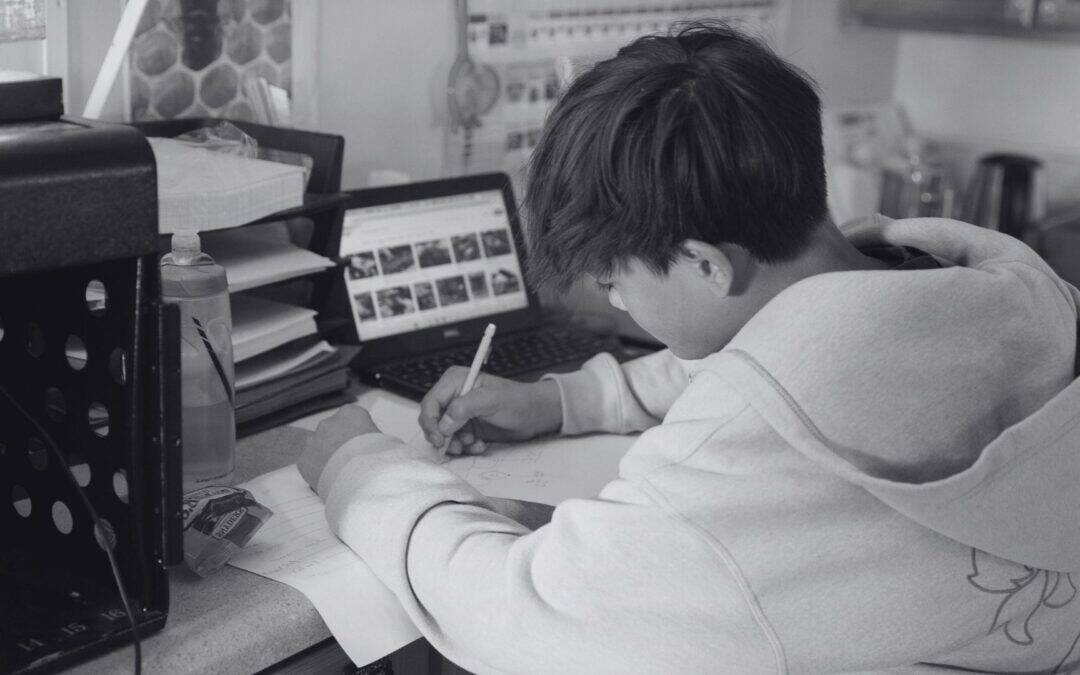
Equally, students spend time in conversations about prioritizing tasks. A highlighter can be a student’s best friend, a very simple tool, but it can help note which aspects of a larger project are necessary right now. Or how many problems of this math activity are critical for you to finish in “this amount of time that we have together.”
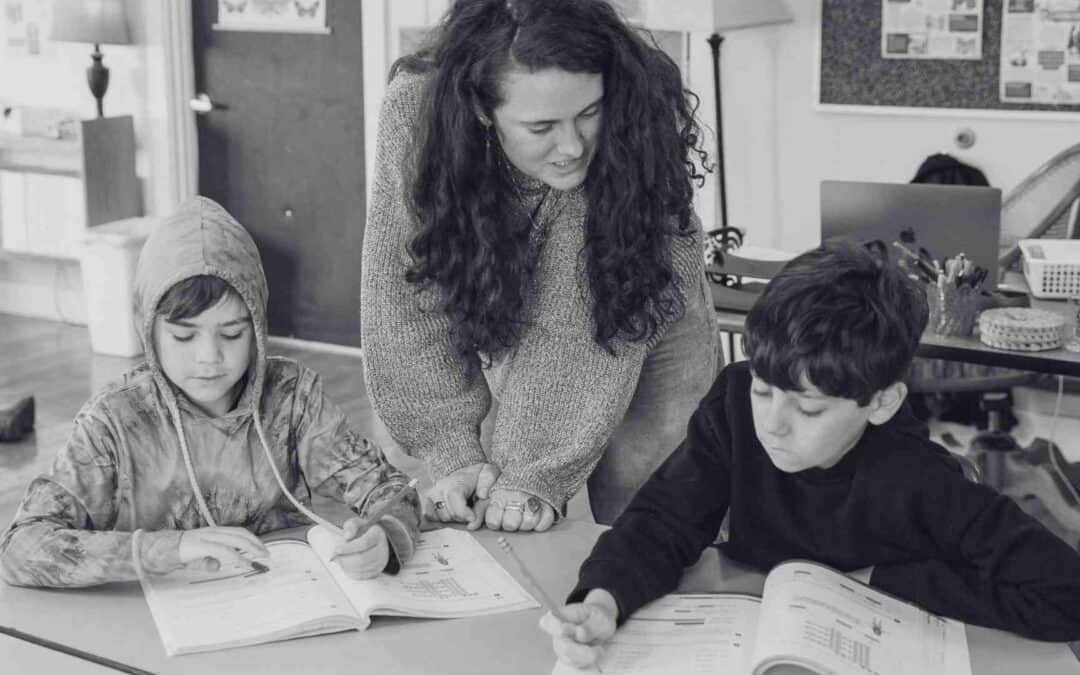
Those kinds of tools, again, can help students prioritize where they’re putting their energy and learn that skill, where initially it’s coming with the facilitation of a teacher or an adult in the classroom. Eventually that tool, those tools are being taken with the students so that they can apply them on their own as they engage in tasks with a little bit more autonomy in the future.
Technology, AI, and Executive Functioning
It goes without saying that the skills of executive functioning are also ever-evolving, particularly with the inventions of AI and the capacity to start to engage technology as a tool. At Rainbow, we are conscious consumers of technology and recognize that the role of AI in supporting students with efficacy in breaking tasks down and chunking their larger project-based learning activities is a real asset.
Yet at the same time, we want to ensure that the heart of what they’re learning, the sensation of pushing through the capacities for rigor, the thought process it takes to prioritize and plan, that those tools are still being built in them, regardless of the aids that are available and continue to become available in the future.
Supporting Executive Functioning at Home
If you have questions about executive functioning, that’s something that our teachers are experts on, and we look forward to talking with you.
Continue exploring ideas from our Director’s Kaleidoscope series, including topics like executive functioning, student autonomy, and project-based learning.
The Director’s Kaleidoscope: Exploring the many colorful aspects of learning at Rainbow Community SchoolWriting in a World of AI Hi, my name is Susie Fahrer,…
The Director’s Kaleidoscope: Exploring the many colorful aspects of learning at Rainbow Community SchoolDeep Listening: A Practice of Presence Hi, everybody. My name is Susie…
The Director’s Kaleidoscope: Exploring the many colorful aspects of learning at Rainbow Community SchoolExecutive Functioning Skills Introduction to Executive Functioning Hi, my name is Susie…
The Director’s Kaleidoscope: Exploring the many colorful aspects of learning at Rainbow Community School
Introduction: The Importance of Relationships – Warm Demanders – in Schools
Hi, my name is Susie Fahrer, and I am the Executive Director of Rainbow Community School and Omega Middle School. This morning, I am thinking about the concept of building relationships with students in schools with families.
As you can imagine, a relationship is one of the most critical elements in determining a young person’s success throughout their educational experience. Those are relationships that they develop with their teachers, with their administrators, and the ways in which the school staff is able to partner with families. Seeing those partnerships and understanding, for students, that they have many adults within a community to build trust and connection with, is an inherent part of creating a really powerful, long-term matriculation for a child.
One of the reasons it’s so critical is because we’re finding more and more that the science of building relationships is connected to the capacity of all of us to be our best selves, to achieve at our highest levels. This is in direct correlation to being able to learn, grow, develop, and meet your potential.
Understanding the “Warm Demander”
One of the ways that we talk about this here at Rainbow is a term that is relatively new to me, but one that, when I describe it, I imagine many of us will think of a person that fits this description. And it’s – the term is called a “warm demander.”
What it really describes is a person in your life who is able to build a relationship that creates clarity, structure, resources, and support to meet extremely high expectations. To understand what your potential is, to believe in yourself, to be reflected back that you can do incredibly challenging things, that you are resilient, and you are capable. Then, to be the coach on the sidelines, providing the resources to help you get there, and eventually to help you internalize those strategies.
My Experience with a Warm Demander
When I think back on my school experience, I was privileged to have many wonderful teachers. But the one that stands out for me, as a warm demander, was my sixth-grade teacher.
For me at that time, schooling was kindergarten through sixth grade in an elementary setting. At the same time, sixth grade became a time in our lives when we were really sort of being ushered into preparations for middle school.
My teacher at first surprised me in the ways in which I moved into that classroom and felt a sense of business, felt a sense of purpose, felt a sense of challenge. It was intimidating a little bit at first. But because this teacher was so skilled in building relationships with me and my peers and cultivating experiences where we could try something that felt really difficult, eventually, over time, we built out our endurance to achieve it. It’s something that I attribute highly to my capacity to have moved into middle school with success.
Encouraging Your Child with Warm Demanders
I encourage you to think through experiences that you’ve had where someone has been that really clear, consistent, supportive message to you and helped you succeed.
Then think about what it would be like to put your child in an environment where they are surrounded by warm demanders – folks who see their potential. Folks who reflect that back to them. People who recognize that our young people need to be challenged to do things for themselves.
We are here as a resource and a facilitator, but there’s so much that our children can do. When we give them the space to attempt, have positive risks, sometimes fail, but have the people around them that will be there to provide all of the necessary encouragement and affirmation to try again.
Learn More About Warm Demanders
If you’re interested in learning more about warm demanders, there are resources attached. And of course, always come visit us. Come chat with me if you’re already a member of the community and want to learn more about being a warm demander, but we welcome you to join us here at Rainbow.
Understand the power of relationships as it relates to your child’s education. We are grateful for the opportunity to serve our community. Be well.
Continue exploring ideas from our Director’s Kaleidoscope series, including topics like executive functioning, student autonomy, and project-based learning.
The Director’s Kaleidoscope: Exploring the many colorful aspects of learning at Rainbow Community SchoolWriting in a World of AI Hi, my name is Susie Fahrer,…
The Director’s Kaleidoscope: Exploring the many colorful aspects of learning at Rainbow Community SchoolDeep Listening: A Practice of Presence Hi, everybody. My name is Susie…
The Director’s Kaleidoscope: Exploring the many colorful aspects of learning at Rainbow Community SchoolExecutive Functioning Skills Introduction to Executive Functioning Hi, my name is Susie…
Time, during isolation, has taken on a new dimension. It seems to have life of its own, sometimes dragging us along on its adventures, other times dragging us down into the abyss.
April lasted for months, and suddenly, now it is time to graduate!
Since the beginning of time, humans have marked its passage with ritual. Ritual helps us to set the rest of our life aside and honor the present moment as the most important time. Although we cannot conduct our beloved graduation rituals together this year, my wish is that your family set time aside during graduation day so your child can feel how important this time in their life is. Every child experienced this time of learning in isolation differently. Some resisted, some suffered, some thrived. Your child, in their own special way, accomplished something challenging during this unique time in history, and they will be recognized.
I, too, am ready to graduate. I have been at Rainbow for 13 years, coincidentally, the same amount of time as a K-12 education. Rainbow has been the best education of my life, and it’s time for me to take what I have learned and serve in a new way: I will be a professor of educational leadership at Southern Oregon University.
While it turned out to be an odd time to transition Rainbow’s leadership, I hope you have found the process to be seamless. During these last two months I have been functioning in a consulting/advising role, while Susie Fahrer guides Rainbow through the complex decisions of our time. I am in awe of her ability to attend to every detail, graciously and patiently caring for everyone’s needs, while never losing sight of the larger picture. Susie’s vision is powerful, her intellect supreme, and her integrity is impeccable. She is my hero. The Spirit of Rainbow celebrates her as the new Head of School.
The Spirit of Rainbow
Our Board President, Stewart Stokes, sometimes makes a reference to “The Spirit of Rainbow.” This could mean the personality of Rainbow, or what is special about Rainbow; but Stewart is referring to an actual living entity, a soul. Rainbow is many things. Rainbow is you and me, the teachers, and all the children. It is a holistic philosophy and curriculum. It has a mission and a purpose. It is a physical place with buildings, gardens, and beauty. It is a community. Rainbow is all these things combined into a magical alchemical mixture that is transformed into so much more than the sum of its parts. The Spirit of Rainbow is a living, loving force.
Rainbow’s Heart Beats Strong
A Rainbow education is truly an education of the heart…and certainly not just for the children, but for each of us. Many times, in my tenure as executive director, I have acknowledged that I was learning at least as much as the children. Lessons of the heart. Part of the beauty of Rainbow as a living force, is the reciprocal nature of learning. The more the adults—teachers, parents, staff—are learning, the more the children are learning. We shine a light on one another (sometimes on the places we don’t want anyone to look). We support one another in allowing our hearts and minds to grow.
Dr. Arrien is an indigenous anthropologist who describes the heart as having four chambers: full, open, clear, and strong. Below I use the four-chambered heart as a metaphor to describe the most important lessons I have learned at Rainbow, and what I believe every child learns when they receive a Rainbow education.
Full-heartedness
This first chamber of the heart concerns “fullness.” When my heart is full, I am giving all of myself to the task at hand. I am present to whomever I am with—fully listening and caring for those who need me. Energetically, I am not holding back, or meting out what I have to give, for there is an abundance, a well-spring of brilliance, labor, and care that flows through me when I give fully. At Rainbow, I learned to recognize when I am being half-hearted, the opposite of full-hearted, a sign that I need to change or refuel until the spirit can freely flow through me again.
Thank you, Rainbow. My heart is full.
Open-heartedness
When I am closed-hearted, either my heart has shrunken, being too focused on the material world and all of its distractions and demands. Or, I am defensive, hoping no one sees my shadow. Thich Nhat Hahn calls it the illusion of separation: when I am closed-hearted I forget that I am intricately interconnected with all of nature and all beings—and what is good for all is also good for me. Rainbow has taught me that when I am most fearful, most striving, most worried about me—that is when I most need to open my heart—to be love and to allow myself to be loved.
Thank you, Rainbow. My heart is open.
Clear-heartedness
Sometimes life is overwhelming and chaotic. When I forget about the magic and magnificence of life, I try to control it. I think I have the power to accomplish all of my goals as if life is a big machine that needs me, its master, to run it. But it goes faster and faster, and soon it becomes impossible to keep up; fear tells me I can’t let go. However, when I listen to my heart, I have faith that when I let go, my true direction will become clear, creative solutions will arise, and I will move forward with ease. When life is uncertain (like these current times) and when I am confused, I have learned to be patient. Dr. Dan Siegel says that “a synonym for uncertainty is possibility.” Therefore, I wait for clear direction.
Thank you, Rainbow. My heart is clear.
Strong-heartedness
The final lesson of the heart is the most important. I believe that each of us is born with the capacity to be in harmony with the world around us. When we are strong-hearted what we are experiencing on the inside—our values, beliefs, thoughts, and emotions—is in alignment with what we say and how we behave on the outside. But from the day we are born, our physical needs and our social conditioning leads us away from our strong heart. When we are weak-hearted, we say one thing, but mean another. We make commitments that we don’t agree with—sometimes taking our life down a path that is further and further from the sacred. But when we are strong-hearted we have the courage to be our authentic selves. We speak Truth. We act with Integrity. The theme of Omega Middle School is, “Know thyself.” Indeed, your courageous, heart-centered Omega adolescents have often shown me what it means to be real.
Thank you, Rainbow. My heart is strong.
To our parents:
In a world that has gone wrong in so many ways, your children are blessed to be in a learning community where the lessons of the heart are taught—where love is the central component of their education, where they learn to pay attention to what their heart is saying so they “know themselves” before going out into the world. My parting advice is to do everything you can to make sure they complete that journey. As I often point out, heart, whole, and to heal all have the same root meaning. An education of the heart makes the human whole. It is an education of wellbeing. Teach your children well. Give them an education of the heart.
June 5 is my last day as Executive Director at Rainbow Community School, but my connection to the Spirit of Rainbow, like all things of the heart, is timeless and beyond the limitations of physical space. I believe that any spark I have added to Rainbow will continue to be kindled and kept alive after I am gone. Reciprocally, Rainbow, and the lessons I have learned here, will live on in my heart.
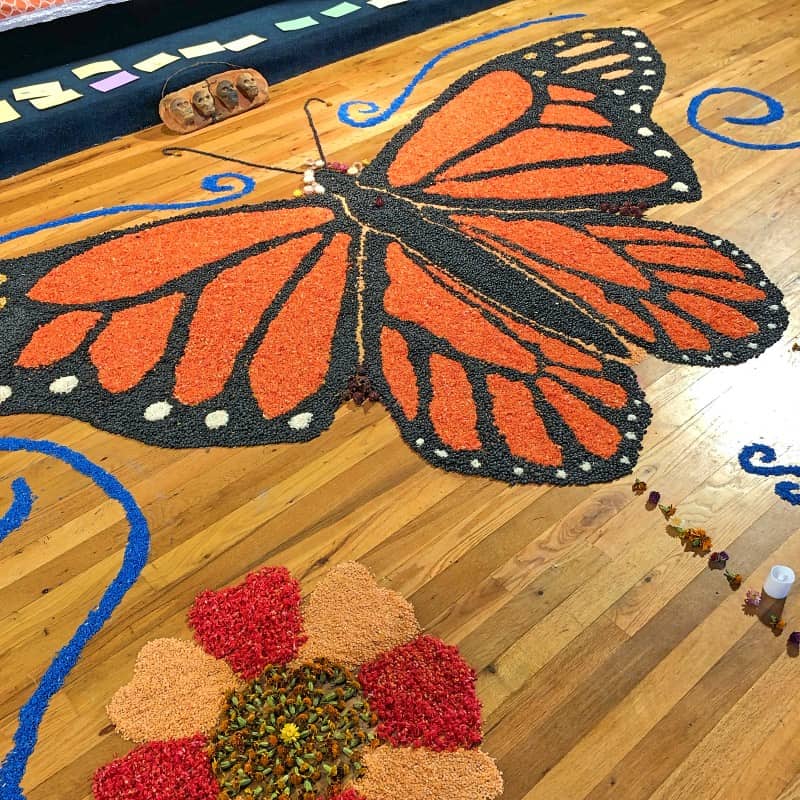
It’s only the beginning of November, yet we have already completed several cycles and symbolic events at Rainbow this school year. We have welcomed new families and new students, who by now are hopefully feeling a sense of community. We completed our student testing cycle for students in third through eighth grade. At this point, most classes have held their first of three parent class meetings. We have welcomed autumn, the harvest, and the coming days of darkness with the Halloween Harvest Hoedown, the Halloween Day celebration, Día de los Muertos, and a fire circle. Some of these events and transitions are marked with ritual and highlighted in this November Kaleidoscope.
Ritual – Being Present
Why ritual? When I am leading a ritual, I sometimes like to explain the reason for having a ritual by asking, “Your body is here, but where is your mind? Your heart?” Even the simplest of rituals, such as taking three breaths together, helps us to become fully present in mind, body, and spirit.
Interconnectivity
A second purpose of ritual is to help us connect as humans and to recognize our interconnectivity with all of humanity and nature. For example, in addition to centering, almost every meeting at Rainbow begins with a brief opening round where each person in a circle is invited to share a word, a phrase, or a short anecdote about how they are doing or something significant in their life. This simple ritual helps every person to name what is going on in their life so that they can be more present with the group. Often in opening round we learn that someone is in mourning or they are in physical pain, helping others to be more empathetic. Most of all, ritual helps to connect us, reminding us of our common humanity and creating a spirit of togetherness, which is especially important when we are about to engage in making decisions together.
Transitions
A third reason for ritual is to honor and aid in transitions. Ritual helps humans to move through change with dignity – giving up and letting go of the past, and moving bravely into the future. For growing children, rites of passage can help children move into adolescence and then into adulthood. In ancient and indigenous societies, rites of passage were/are central to the culture. In America’s current mass culture, the lack of rites of passage often leaves adolescents feeling empty and confused about growing up. Saying goodbye to childhood isn’t easy for adolescents, yet they also desire the trappings of adulthood. When we don’t provide a rite of passage, teens find other rites, that can be risky or unhealthy, such as drinking or sexual activity. Meaningful ritual can help our children and teens to develop a deep sense of connection and purpose in their lives.
Rites of Passage in Omega Middle School
This is partly why the Omega Middle School program is structured to be a multi-year rite of passage. From the ritual around the beginning-of-the-year Omega honor code to the final rituals of eighth grade, Omega students see themselves as important members of their community. They are honored for what they contribute to their community and for who they are and will become. Embracing one’s purpose is the heart of Omega.
Open House
I invite you to attend our Omega Middle School Open house coming up on Thursday, November 21. Even if your children are much younger, the Open House will help you understand the whole arc of development at Rainbow and why Omega Middle School students have such a healthy self-image and the confidence and character to succeed in high school and beyond.
The White Pine Tree
The Mourning Ritual
You may have noticed that our large white pine tree in the middle of the playground died over the summer as a result of a native pine beetle infestation. This is a sad loss. When the faculty discussed it, we knew ritual would help our children to say goodbye to the white pine and find meaning in its death. Sue Ford and Susie Fahrer composed a song for the tree, and for one of our Tuesday song circles, we all gathered around it and sang:
Bless this tree for giving us life Bless this tree morning noon and night Bless this tree flower fruit and cone Bless this tree oh see how we’ve grown.
You are a sacred sight You are nature’s light Rest you, return to the Earth Rest you, and bring rebirth.
This beautiful ritual helped us to reverently grieve with one another and to remember the beautiful cycle of death and rebirth. In the coming weeks, Tim Slatton (partner of West Wilmore) will be taking down the white pine with the help of our facilities keepers, Max Mraz and Shawn Fain. We trust they will respectfully put it to rest. Niki Gilbert, Omega Middle School science teacher, is creating a team of staff and students to make a thoughtful plan for the planting several new trees on campus. Rest ye and bring rebirth.
Video credit: Tracy Hildebrand
Authenticity and Wholeness Training
Teachers who love…themselves
Over the past few weeks, the teachers and I have continued our series of training on developing authenticity and wholeness in students through teacher development. For one of our Wednesday afternoon trainings I led a training on Mindfulness. Our theme for the day-long training on November 1, was Openness. In this training we acknowledge that teaching is a challenging profession. Teachers have to make hundreds, if not thousands of decisions a day, knowing that every decision they make could have profound effects on the lives of the children they love and for whom they are responsible. Teachers have to perform with empathy, creativity, and dynamism while under tremendous stress and without being thrown off by their own emotional triggers. Teaching is a messy, complex job that is impossible to do perfectly. Teachers are often very hard on themselves. Yet, if teachers are going to be compassionate toward students they also need to be compassionate with themselves.
Invoking the Sages
The Buddha, said “I have two things to teach. Suffering and the relief of suffering.” Deep within the Puritan roots of American society, there is a tacit belief that self-compassion is the same as selfishness. This couldn’t be further from the truth. Through the new field of positive psychology and with advances in neuroscience research, we now understand that self-compassion, or empathy for ourselves, is the key to empathizing with others. It doesn’t mean we give up or let ourselves off the hook for changes we need to make. It simply means we acknowledge that we are only human. Part of being human is sharing the suffering all of humanity has experienced since the beginning of time.
Self-Compassion
In addition to learning the science behind self-compassion, I engaged teachers in a simple 3-step exercise that I highly recommend for parents and children, too.
Step 1: When experiencing a challenging moment or being critical of yourself, acknowledge your situation and pain. You may simply say to yourself something like, “Ouch. That hurts.” Or, “this is stress.”
Step 2: Have compassion for yourself by recognizing that suffering is part of life. All of humanity shares a similar experience. You may say to yourself, “I am not alone.”
Step 3: Place your hands over your heart. Say to yourself, “May I be kind to myself,” and offer yourself a gift. It may be patience. It may be strength, or forgiveness.
A few days ago you received an email from Sandra McCassim, P-3 Division Head, that after 20 years at Rainbow, she is leaving at the end of this school year. I cannot possibly convey what this means to me personally. Sandra lifts up others in love as teacher, administrator, and friend. Her gentle wisdom has helped shape the loving culture here at Rainbow. Sandra was here many years before I came to Rainbow, and we have been through so much together. I am going to soak up every minute I have with her for the rest of this year.
Sandra will be instrumental in helping with the hiring of her replacement. Sandra and I have worked together to hire most of the excellent faculty we have on campus, and she reminds me that every time someone leaves the faculty, a new magical person brings new gifts. We are beginning our search for a new Division Head – a process which we are still defining, a process in which faculty will also be involved. Please feel free to contact me if you have any thoughts about the search. If you know a talented educational leader who is interested in joining the Rainbow team in the coming years, you can refer them to the employment page on our website where there will soon be information on how to apply.
Bringing Light to the Spirit of Education
I write this Kaleidoscope while sitting in the library at Teachers College at Columbia University in New York. West Willmore, Eddy Webb, and I presented at the Spirituality in Education Conference there.
As some of you know, The Collaborative for Spirituality in Education (CSE) at Teachers College has been working with Rainbow for a couple of years. Through generous funding from The Fetzer Foundation and The Rockefeller Brothers Fund, they have paid Rainbow Institute quite well to share our best practices.
No Child Left Behind
Since the No Child Left Behind (NCLB) Act in 2002, our nation has moved in the direction of “teaching to the test,” or only teaching what can be quantifiably measured. Of course what can be measured is only the smallest aspect of education – the most material aspect. Our politicians, most of whom were not educators, did not understand that such an emphasis on the material would gut our schools of the spiritual – that which is immeasurable and unseen in the literal sense of the word. Nor did they realize that when you gut the spiritual aspects of education, nothing can thrive, certainly not academics, because without spirit there is no life and no motivation to learn. Not surprisingly, 19 years after NCLB, academic achievement is lower than ever and the opportunity gap wider. Furthermore, as a nation, both children and adults are in the midst of a mental health crisis.
Spirituality in Education
The good news is that the pendulum is beginning to swing in the other direction. When one of the highest ranked educational schools in the country hosts a Spirituality in Education conference, it legitimizes a movement. Even the President of Teachers College spoke at the conference, stating that the conference represented the direction education needs to go. As Timothy Shriver (nephew of John Kennedy and an influential educational leader) said at the conference, “It isn’t a fad, it’s a field.”
In this now blossoming field of spirituality in education, Rainbow is a beacon for the world. Let our line shine. As Martin Luther King Jr. said, “Darkness cannot drive out darkness; only light can do that. Hate cannot drive out hate; only love can do that.” There is no greater light that the pure light of children. Thank you for sharing the bright light of your child with the world.
You can learn so much at the Omega Middle School Open House
Our Omega Middle School Open House is right around the corner. We hope you will take some time to be part of this event, no matter your child’s grade in elementary school or middle school. It gives you an opportunity to see a Rainbow / Omega education across the grades, culminating with the 7th and 8th grade years in which students engage in larger projects, presentations, and leadership opportunities.
What made me a supporter of Rainbow, was the kids’ strong sense of self. They knew who they were and were not. They knew their strengths and weaknesses. And even though high school and college brings its own set of social and educational challenges, the students I met were at peace with themselves, ready to take on the challenges of young adulthood with confidence and determination. —Bill Drew, parent of a current 5th grader
Here is this year’s schedule:
Morning Session 8:30 – 10 am
8:30 – 8:45 coffee/tea/chocolate in the auditorium foyer
8:45 – 9:00 short presentation about Omega Middle School
9:00 – 9:30 tour classes in progress
9:30 – 10 Q & A with current teachers & students back in the auditorium
Evening Session 6:30 – 8:00 pm
6:30 – 6:45 – pizza and salad in the auditorium foyer
6:45 – 7:00 – short presentation about Omega Middle School
7:00 – 7:15 – tour classrooms
7:15 – 8:00 – meet recent graduates and ask questions with our alumni panel
The five big reasons you should come to the Omega Open House:
1. Meet teachers
During the school year, it’s not always so easy to speak with a teacher who is not attending to other tasks – students, planning, teaching, training, in a meeting, etc. Having their undivided attention to answer all your questions about what they teach and how becomes such a gift! The open house provides you this opportunity. Meet all the teachers in our Omega Middle School: Susie (division head), Susan, Jason, Niki, Justin, Lisa, Jenny, and some of our specialists.
2. Meet students
We love opening up our campus so that you can meet students and see how incredible they all are. The programs and curriculum in the Omega program allows them to explore their interests more in-depth through our regular academic program and through our electives classes. We have extensive electives courses and our students can tell you about them.
3. Meet recent graduates
You also have an opportunity to hear from recent graduates who can give you candid answers about how prepared they felt for high school. They can share about their Rainbow experiences, the transition to high school, and tell you much more about their academic and extracurricular careers as a result of their Rainbow / Omega experience.
You can get a great feel for how this works with our past alumni panels who have spoken at other Open Houses:
4. Visit classes
On the morning of the Open House, you can see classes in progress. On any given day, students engage in different experiential activities involving collaboration, problem solving, math, language arts and social studies.
5. Get all your questions answered
We cannot stress enough the value in being part of an event like this. You get to see the “whole Rainbow story” and how proud we are of our young students and who they grow to be.
Last year, one parent attended and felt so moved by the event, he wrote a long letter of how this event alone helped him decide on a middle school for his child. Take a look! at Bill Drew’s Testimonial Letter.
We hope you will join us for an evening of connection, information, and fun! We’ll have door prizes and other giveaways, too!